


Dans un article du 9 novembre 2025 intitulé “The MAHA-Fueled Rise of Natural Family Planning” (L'essor du planning familial naturel alimenté par MAHA), on peut lire ce qui suit” Le New York Times La journaliste Caroline Kitchener a considérablement déformé les faits concernant la planification familiale naturelle (PFN), souvent appelée méthodes de sensibilisation à la fertilité (FAM) ou méthodes basées sur la sensibilisation à la fertilité (FABM).
En fait, non seulement Mme Kitchener a lamentablement déformé l'efficacité de ces méthodes, mais toute la teneur de l'article donnait une fausse image d'une forme inefficace de planification familiale pratiquée uniquement par des démagogues religieux et idéologiquement motivés. En outre, l'article prétendait que ces méthodes n'avaient gagné en popularité que dans le sillage du mouvement "Make America Healthy Again" (MAHA), lancé à l'origine par Robert F. Kennedy Jr, aujourd'hui secrétaire d'État à la santé, lors de sa campagne présidentielle de 2024.
Contrairement aux faussetés présentées par Mme Kitchener, Natural Womanhood éduque les femmes (et les hommes !) sur leur corps et les met en contact avec des ressources professionnelles pour aborder les questions de planification familiale et de santé personnelle qui apparaissent dans leurs diagrammes de cycle depuis 2012 - bien avant l'existence de MAHA (ou MAGA, d'ailleurs). Et la science et l'héritage de la PFN existent en fait depuis plus longtemps que cela.
Le NYT affirme que les FABM ne sont que “77% efficaces”.”
La méthode Marquette, enseignée par l'organisation Whole Mission citée dans l'article de Mme Kitchener, apprend aux femmes et aux couples à observer et à suivre les éléments suivants liquide cervical ainsi que les métabolites urinaires de deux hormones de reproduction, hormone lutéinisante et œstrogène. Plus récemment, certains instructeurs de Marquette ont commencé à enseigner à leurs clients l'utilisation de “FemTech”Des dispositifs tels que le Moniteur Mira au lieu du moniteur de fertilité Clear Blue original. Les utilisateurs de Marquette ont également la possibilité de ne suivre que le liquide cervical, de ne suivre que les métabolites hormonaux urinaires ou de procéder à des vérifications croisées entre les deux biomarqueurs de l'ovulation.
Même avec les variantes de la méthode Marquette, qui consistent à “choisir sa propre aventure”, des études menées à l'université Marquette (y compris Fehring et al., 2017) ont trouvé un taux de grossesse en utilisation parfaite d'environ 1 à 2 pour 100 années-femmes (98-99% efficace) et un taux de grossesse en utilisation typique d'environ 7 pour 100 années-femmes (93% efficace), en fonction des caractéristiques démographiques et de l'expérience de l'utilisatrice [1]. (Pour référence, les contraceptifs oraux combinés, alias “la pilule”, affichent des taux d'efficacité d'utilisation parfaite et d'utilisation typique presque identiques à ceux de la méthode Marquette).
Comme pour tous les MAEF, Cette méthode est d'autant plus efficace qu'elle est enseignée par un instructeur Marquette certifié. (En outre, les instructeurs Marquette sont également des professionnels de la santé, c'est-à-dire des infirmières). On est loin de l'affirmation “77% efficace” de Mme Kitchener, et cela va à l'encontre des implications de l'article selon lesquelles ces méthodes ne sont perpétuées que par ceux qui n'ont pas de formation scientifique ou médicale.
En effet, la méthode Marquette (qui n'est jamais mentionnée par son nom dans l'article) n'est même pas la le plus FABM efficace en matière de prévention de la grossesse.
Si l'évitement de la grossesse est la priorité absolue de l'utilisatrice d'un FABM (contrairement à la contraception, les FABM peuvent être utilisés pour éviter les grossesses), il est possible d'utiliser un FABM pour éviter les grossesses. ou la méthode la plus efficace pour éviter une grossesse est la méthode allemande appelée Sensiplan™, qui affiche un taux d'efficacité de 97-98% (similaire à la méthode SymptoThermal de la Couple to Couple League, basée aux États-Unis). Cette méthode permet aux utilisatrices de surveiller leurs sécrétions cervicales et leur température corporelle de base, ainsi que la position cervicale facultative. L'instruction certifiée Sensiplan™ est disponible aux États-Unis depuis 2017, et la Couple to Couple League a été créée aux États-Unis en 1971. Mme Kitchener ne mentionne ni l'un ni l'autre.
Mme Kitchener ne mentionne pas non plus le FABM original, le Méthode d'ovulation Billings, L'indicateur de l'état de santé de la femme a été mis au point par les docteurs australiens John et Evelyn Billings dans les années 1950. Des études de validation ultérieures, notamment celles menées par l'Organisation mondiale de la santé dans les années 1970 et 1980, ont confirmé la fiabilité de ces indicateurs basés sur le mucus. En outre, la méthode Billings, qui ne nécessite aucun matériel, a été enseignée et utilisée avec succès dans le monde entier par des femmes peu ou pas alphabétisées, de presque toutes les races, croyances et milieux socio-économiques ; en fait, en tant que méthode basée sur les sensations, c'est aussi la seule méthode FABM qui peut être utilisée par les malvoyants. (La méthode Creighton, la FEMM, ChartNeo et le Boston Cross-Check font partie des autres FABM populaires fondées sur des preuves que Mme Kitchener omet de mentionner ou de discuter, et toutes ont des taux d'efficacité similaires lorsqu'il s'agit d'éviter une grossesse. Creighton, FEMM et Neo ont également la particularité d'être dédiés à la prévention des grossesses. des protocoles médicaux pour traiter les problèmes liés au cycle menstruel et à la santé génésique.)
Plutôt que de discuter ou de citer les données les plus récentes sur ces FABM, Mme Kitchener renvoie à un graphique obsolète utilisé par ACOG, qui présente la fausse statistique de l“”efficacité du 77%" ; une version plus récente et plus actualisée du même graphique (provenant de la même source que celle utilisée par ACOG, qui peut être consultée à l'adresse suivante ici) reconnaît que, tout comme les contraceptifs, les FABM existent sur un plan international. spectre d'efficacité, en notant à juste titre que “de multiples FABM existent” : "Il existe de multiples FABM. En tant que groupe, ils couvrent les catégories 2 et 3".”
Ce graphique mis à jour par la source préférée de l'ACOG place en fait les FABM les plus efficaces dans la même catégorie d'efficacité que la pilule, l'injectable, le patch et l'anneau (dans la catégorie 2, ou 1-7 grossesses pour 100 femmes en 1 an) et les FABM les moins efficaces avec le préservatif masculin, le diaphragme, le spermicide, la cape cervicale, les régulateurs de pH vaginal, l'éponge, le préservatif féminin et le retrait (catégorie 3, ou plus de 8 grossesses pour 100 femmes en 1 an). De même, depuis 2019, les CDC affichent une note d'efficacité actualisée pour les FABM, indiquant qu'en tant que groupe, ils ont une “2-23%”(une modification a fait, en partie, grâce au travail de plaidoyer de Natural Womanhood).
Ce graphique mis à jour par la source préférée de l'ACOG place en fait les FABM les plus efficaces dans la même catégorie d'efficacité que la pilule, l'injectable, le patch et l'anneau (dans la catégorie 2, soit 1 à 7 grossesses pour 100 femmes en 1 an).
L'erreur de Mme Kitchener (si on peut vraiment l'appeler ainsi) est curieuse, étant donné que l'une des personnes interrogées les plus en vue de l'article - le Dr Marguerite Duane - est l'auteur principal de l'ouvrage l'étude complète la plus récente, évaluée par des pairs, sur l'efficacité des différents FABM les plus populaires [2]. L'étude du Dr Duane a notamment révélé un taux d'efficacité de 95-99% en cas d'utilisation correcte pour tous les FABM étudiés, et un taux d'efficacité supérieur à 85% en cas d'utilisation typique dans la plupart des études sur les FABM.
En d'autres termes, la statistique “77%” utilisée par Mme Kitchener est invérifiable dans le meilleur des cas, et inexacte et trompeuse dans le pire des cas - une erreur très préoccupante à commettre dans un article de plus de 2 000 mots consacré au sujet des FABM.
“Les applications de synchronisation du cycle ne sont pas des méthodes naturelles de planification familiale, mais elles sont néanmoins présentées dans l'article.
Il est intéressant de noter que l'article du NYT met en avant l'application de synchronisation des 28 cycles (et sa fondatrice, Brittany Hugoboom - également fondatrice de l'application de synchronisation des 28 cycles). Evie magazine) tout en ne citant aucune des méthodes de planification familiale naturelle et de santé des femmes fondées sur la connaissance de la fécondité..
Il est intéressant de noter que l'article du NYT met l'accent sur l'application de synchronisation des 28 cycles. tout en ne citant aucune des méthodes de planification familiale naturelle et de santé des femmes fondées sur la connaissance de la fécondité..
Contrairement à la grande majorité des applications de suivi des cycles, Les FABM sont fondées sur des preuves et enseignées par des instructeurs certifiés qui garantissent l'observation, le suivi et l'interprétation corrects des biomarqueurs de fertilité établis. Les méthodes comportent également diverses règles qui aident le couple à décider de s'abstenir ou de s'engager dans une activité sexuelle sur la base d'intentions partagées en matière de planification familiale. (Une partie du travail de l'instructeur FABM consiste à s'assurer que les règles de la méthode sont comprises. Il ne doit cependant pas jouer de rôle dans les discussions des conjoints sur les intentions en matière de planification familiale).
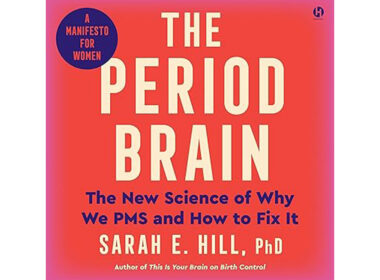
Pour plus d'informations, voici l'article de Natural Womanhood (en anglais) 2024 révision de l'application 28, qui la décrit comme une application de fitness esthétique pour les femmes soucieuses de leur vélo, et non comme quelque chose qui peut ou doit remplacer le FABM. Et si “synchronisation des cycles”Les séances d'entraînement ont une tendance et peuvent même être utiles, mais elles ne sont pas vraiment pertinentes dans le cadre d'une discussion sur l'utilisation des diagrammes de cycle pour la planification familiale (pas plus d'ailleurs que la citation du Dr Sarah Hill, auteure de Votre cerveau sur le contrôle des naissances, Elle a également déclaré qu'elle ne recommanderait jamais la PFN à son adolescente.
Le suivi du cycle est aussi une question de santé des femmes, mais pas parce que MAHA ou des influenceurs conservateurs l'affirment.
En réalité, il est bien établi que le cycle menstruel est le “cinquième signe vital” de la femme, l'ACOG ayant pour la première fois qualifié le cycle menstruel de signe vital pour les filles et les adolescentes dans un document intitulé "Le cycle menstruel, un signe vital pour les filles et les adolescentes". Avis du comité émis en 2015 [3]. Plus récemment, en juin 2025, Examens de la fertilité et de la stérilité a publié un rapport complet sur les irrégularités menstruelles chez toutes les femmes, et pas seulement chez les jeunes femmes, ainsi que sur les effets sanitaires associés, notamment le cancer, le diabète et le risque de maladie cardiaque [4].
Le rapport 2025, fruit d'une collaboration entre la Harvard T.H. Chan School of Public Health et d'autres institutions sanitaires de premier plan, établit un lien entre les irrégularités de la durée du cycle et de graves risques pour la santé, notamment un faible taux de cholestérol et un taux de cholestérol élevé. densité minérale osseuse (ce qui augmente le risque de fractures), rythmes cardiaques irrégulierset conditions métaboliques comme l'obésité et le diabète de type 2. Les résultats sont si significatifs que les auteurs de l'étude conseillent aux cliniciens de se documenter régulièrement sur les cycles menstruels de leurs patientes (et pas seulement pendant l'adolescence), car le suivi des cycles peut aider à détecter des maladies, à surveiller le bien-être et à orienter le traitement.
Le rapport 2025 établit un lien entre les irrégularités de la durée du cycle et de graves risques pour la santé, notamment une faible densité minérale osseuse, des rythmes cardiaques irréguliers et des troubles métaboliques tels que l'obésité et le diabète de type 2. Les résultats sont si significatifs que les auteurs de l'étude conseillent aux cliniciens de documenter régulièrement les schémas menstruels de leurs patientes, car le suivi des cycles peut aider à détecter des maladies, à surveiller le bien-être et à orienter le traitement.
Organisations comme FACTS about Fertility (en anglais) cherchent à améliorer les compétences des professionnels de la santé en leur apprenant à comprendre et à intégrer les paramètres du cycle menstruel dans leurs évaluations générales et aiguës de la santé des femmes. Encore une fois, l'article de Mme Kitchener a présenté (et même photographié) le Dr Marguerite Duane, fondatrice de FACTS about Fertility, mais uniquement dans le contexte du financement et des programmes gouvernementaux pour l'éducation en matière de fertilité. L'œuvre de la vie du Dr Duane, Toutefois, il ne s'agit pas d'une question de politique, mais d'une question d'éthique. Formation des professionnels de la santé approuvée par la CME et la CNE qui doivent apprendre à évaluer les paramètres du cycle féminin de la même manière qu'ils apprennent à évaluer les électrocardiogrammes pour la santé cardiaque.
En ce qui concerne les profanes, les instructeurs de la FABM, tels que Lisa Hendrickson-Jack ont atteint les masses de femmes soucieuses de leur santé bien avant MAHA. Le livre de Hendrickson-Jack, depuis Le 5e signe vital (publié en 2019) et son podcast populaire Fertility Friday (qui compte plus de 3,2 km d'adeptes), sont depuis longtemps des incontournables pour les femmes soucieuses de leur santé (tout comme les travaux de Dr. Jolene Brighten, Dr. Lara Briden, et d'autres). Et ces femmes ne sont pas les seules. Des dizaines d'autres instructeurs FABM et de professionnels de la santé non conventionnels, notamment des naturopathes, des acupuncteurs, des nutritionnistes, des kinésithérapeutes du plancher pelvien et bien d'autres encore, considèrent depuis des années que le cycle menstruel est important pour la santé des femmes.
Instructeurs FABM et Les utilisateurs sont très diversifiés
Au lieu de mettre en avant les divers professionnels pluridisciplinaires que l'on peut trouver dans le domaine de la sensibilisation à la fertilité, l'instructrice que Mme Kitchener a choisi de mettre en avant dans son article (Samantha Kopy, qui travaille pour Whole Mission) est manifestement catholique et croit que la difficulté à s'abstenir pendant les jours éventuellement fertiles “pourrait être un signe qu'il est temps d'avoir un bébé”, comme l'a indiqué Mme Kitchener, qui a regardé Mme Kopy donner un cours virtuel de FABM à des couples chrétiens depuis son domicile de l'Ohio, un mardi soir. Alors que Whole Mission indique clairement que ses services sont basés sur la foi afin que les clients potentiels puissent décider si c'est dans cette perspective qu'ils souhaitent apprendre un FABM, Mme Kitchener a clairement choisi de mettre en avant cet élément de l'éthique de l'organisation, donnant ainsi l'impression que l'approche de Whole Mission est représentative de tous les FABM.
S'il est vrai que de nombreux instructeurs FABM sont croyants, tous ne sont pas uniquement motivés par leur foi pour enseigner la sensibilisation à la fécondité ou ne ressentent pas le besoin d'intégrer la foi dans leur enseignement. En effet, même si l'on ne le devinerait pas en lisant l'article de Mme Kitchener, il y a un nombre croissant d'instructeurs FABM laïques, voire libéraux, qui soutiendraient, par exemple, la campagne de sensibilisation à la fécondité de l'Union européenne. l'utilisation de préservatifs pendant la période de fécondité, Il s'agit d'un programme d'éducation et de formation à la santé qui s'adresse à tous les niveaux de la société, qu'il s'agisse de l'interruption de grossesse non planifiée ou de l'instruction des couples LGBTQ à la recherche d'une aide au cycle pour la FIV ou l'IIU.
On ne le devinerait jamais en lisant l'article de Mme Kitchener, mais il existe un nombre croissant d'instructeurs FABM laïques, voire libéraux, qui soutiendraient, par exemple, l'utilisation de préservatifs pendant la période de fécondité, l'interruption de grossesse non planifiée ou l'instruction de couples LGBTQ à la recherche d'une aide au cycle pour la FIV ou l'IUI.
Certains plates-formes d'instructeurs donnent judicieusement aux instructeurs la possibilité d'inclure dans leur biographie leurs opinions personnelles sur la sexualité, l'avortement, etc. afin que les clients puissent choisir eux-mêmes une personne avec laquelle ils se sentent plus à l'aise lorsqu'ils partagent des informations personnelles. L'essentiel est que ce soit le client qui décide et qu'il y ait, en fait, un instructeur pour chaque âge, chaque étape et chaque type de femme. Mais là encore, c'est une réalité que Mme Kitchener ignore dans son article.
Étant donné que l'auteur s'est entretenu avec plus de 24 personnes expertes dans le domaine (dont l'un des auteurs de cet article), on ne peut qu'arriver à la conclusion que Mme Kitchener était non seulement consciente de cette diversité, mais qu'elle a activement choisi de l'omettre dans son article.
Lire entre les lignes : Une attaque contre la connaissance de la fécondité est une attaque contre l'autonomie accrue en matière de santé génésique.
Si l'objectif de Mme Kitchener était dès le départ de donner aux lecteurs la fausse impression que les FABM sont inefficaces, elle aurait pu s'épargner bien des ennuis en plaçant simplement la statistique inexacte et non vérifiée des “77% efficaces” au premier plan et au centre de l'article. Au lieu de cela, elle a enterré l'information dans un article rhétorique qui joue à donner aux FABM une image équitable tout en les dépeignant comme inefficaces et motivés par l'idéologie.
En outre, même si l'on espère que ce n'est pas le cas, l'article de Mme Kitchener semble vouloir nuire à la mission des défenseurs de la fertilité, qui souhaitent donner aux femmes plus l'autonomie, le consentement éclairé et la liberté de choix concernant leurs décisions en matière de santé et de procréation, et non moins, comme cela semble être l'idée maîtresse de son article.
“Nous luttons déjà contre d'incroyables préjugés à l'encontre des FABM, en particulier parmi les cliniciens qui s'occupent des populations défavorisées”, déclare Katie Vidmar, fondatrice de l'association Le projet d'alphabétisation corporelle. La grande majorité des Cliniciens du titre X, par exemple, ignorent la science réelle qui sous-tend ces méthodes et considèrent ces méthodes de planification familiale fiables et fondées sur des données probantes comme “options non viables” pour les populations qu'ils servent [5]. “Il est regrettable”, note M. Vidmar, “qu'au lieu de briser ce préjugé et d'œuvrer pour mettre fin à la marginalisation des femmes par une meilleure connaissance des questions de santé, Mme Kitchener et ses rédacteurs aient choisi de perpétuer le statu quo”.”
“C'est une honte”, note M. Vidmar, “qu'au lieu de briser ce préjugé et d'œuvrer pour mettre fin à la marginalisation des femmes par une meilleure connaissance des questions de santé, Mme Kitchener et ses rédacteurs en chef aient choisi de perpétuer le statu quo”.”
Quelles que soient les motivations de Mme Kitchener et de ses rédacteurs pour faire des FABM, de la PFN et du mouvement d'éducation corporelle un stratagème politique, ils ne peuvent pas changer le fait que la sensibilisation à la fertilité est riche, l'héritage scientifique de l'efficacité. Ils ne peuvent pas non plus changer la réalité selon laquelle ces méthodes ont amélioré la vie et la santé de millions de femmes de toutes races, religions et moyens économiques bien avant que le Président Trump, MAHA ou tout autre influenceur conservateur ne commence à parler de la santé des femmes, du planning familial ou de la fertilité. Enfin, ils ne changeront pas le dévouement d'innombrables défenseurs de la fertilité (y compris ceux d'entre nous ici à Natural Womanhood) pour continuer à assurer l'accès à ces méthodes longtemps après que les influenceurs soient partis.
Article étonnant. Très bien écrit. Dommage que le NYT n'ait pas pu utiliser son influence pour partager la vérité et l'importance de l'éducation corporelle pour les filles/femmes de tous horizons. Je vais partager cet article avec le plus grand nombre !