

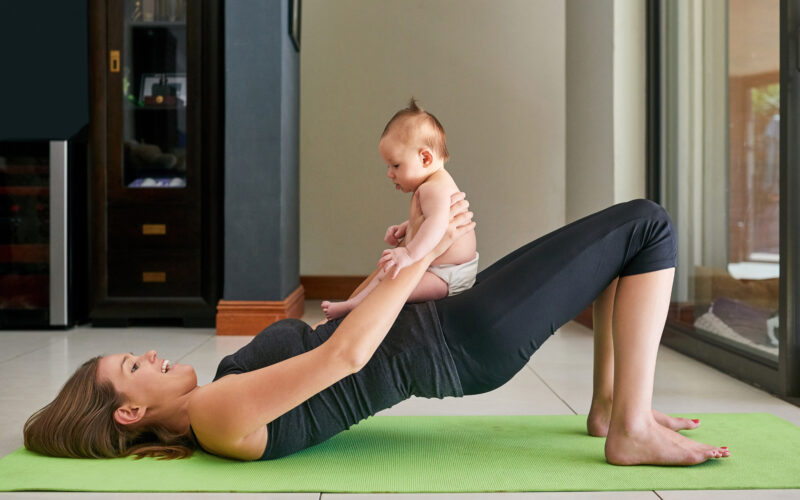
When is it safe to return to exercise after baby, and what kinds of exercise are best? How might physical activity affect postpartum depression risk or symptoms? Until recently, the answers to these questions were based largely on common sense, but new guidelines backed by robust research give clear, easy-to-understand recommendations and acknowledge what we don’t yet know about postpartum exercise.
Earlier this year, three years of research and collaboration among experts in various specialties culminated in the release of the 2025 Canadian Guidelines for Physical Activity, Sedentary Behaviour and Sleep Throughout the First Year Post Partum [1]. The guidelines were published in the British Medical Journal’s British Journal of Sports Medicine. They were developed by the Canadian Society for Exercise Physiology in consultation with the Society of Obstetricians and Gynaecologists of Canada (RC), the College of Family Physicians of Canada (MF), the Canadian Association of Midwives (EB-P), the Canadian Academy of Sport and Exercise Medicine (KF) and the Canadian Physiotherapy Association (NB).
Researchers combed through 19,043 titles and abstracts before narrowing down to analyze 574 unique studies. Nine guidelines, summarized here, were developed in the areas of postpartum exercise, sleep quality, and sedentary time.
Researchers: Postpartum is a “unique and critical window of opportunity”
A conversation around physical activity and its benefits, especially compared to sedentary time and its health risks, is highly relevant for postpartum (meaning mothers during their child’s first year of life) women in particular. The researchers noted that while historically much research and medical system focus has been on health during pregnancy, there’s increasing acknowledgment of the connection between postpartum health and long-term health.
The researchers noted that while historically much research and medical system focus has been on health during pregnancy, there’s increasing acknowledgment of the connection between postpartum health and long-term health.
Specifically, “The postpartum period is now believed to be a unique and critical window of opportunity to identify people at high risk for future chronic disease and to implement early interventions to improve lifelong health.” This brings to mind Registered Dietitian Lily Nichols’ observation in her book, Real Food for Pregnancy, that within 5 years of a gestational diabetes diagnosis, between 30% and 70% of women will go on to be diagnosed with Type 2 diabetes.
What gets in the way of postpartum women exercising?
At the same time, postpartum women face a unique set of challenges that make physical activity during this time difficult. Among these challenges are whether a woman gives birth vaginally or via major abdominal surgery (C-section) and the degree of pelvic floor dysfunction she experiences (both in connection to any tearing or lacerations she sustained during birth, but also due to the stress and strain of pregnancy in general).
Other hindrances may include perinatal mood and anxiety disorders (more on the connection between physical activity and mental health below) as well as the level of care her infant requires, ranging from normal newborn care, to intensive therapies if her child has ongoing medical issues requiring inpatient or outpatient care.
Further contributing factors include the amount of sleep a postpartum woman is (or isn’t!) getting, and how many nutrient-dense calories she is (or isn’t) taking in, along with her hydration status.
What are the benefits of postpartum exercise?
On the one hand, postpartum is a crucial time for physical activity. On the other hand, it’s a particularly challenging time to be active.
Despite the challenges, there are very good reasons to make time and put in the effort to be physically active while postpartum. Among them, according to the developers of the 2025 postpartum exercise guidelines: “Physical activity following childbirth was associated with a reduction in the odds of depression (45%), urinary incontinence (37%), and type 2 diabetes (28%), as well as improvements in the symptom severity of depression, anxiety, lumbopelvic pain, weight change, body mass index, and triglycerides.”
“Physical activity following childbirth was associated with a reduction in the odds of depression (45%), urinary incontinence (37%), and type 2 diabetes (28%), as well as improvements in the symptom severity of depression, anxiety, lumbopelvic pain, weight change, body mass index, and triglycerides.”
Specifically, the researchers write that women who follow the guidelines can expect “a large improvement” in their psychological wellbeing, pelvic floor health, musculoskeletal health, and cardiometabolic health.
Now that we’ve established how critical exercise is for new moms, let’s take a look at the 2025 Canadian postpartum exercise guidelines, which are straightforward and simple to follow.
Guidelines on postpartum exercises
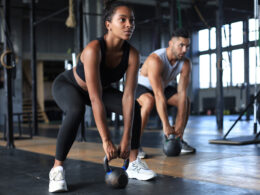
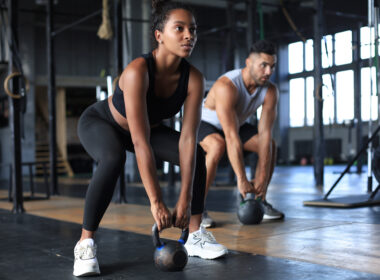
The Canadian guidelines recommend a minimum of 120 minutes of physical activity per week, spread out over four or more days. They also recommend an assessment (and treatment) by a pelvic floor physical therapist for all postpartum women.
To start out, women should start with light intensity movement like walking or gentle pelvic floor exercises geared towards healing diastasis recti ab separation. Women can advance to more intense exercise so long as there is not an increase in pain or increased postpartum bleeding and if wounds such as C-section incision or vaginal tearing continue to heal.
As tolerated, a combination of aerobic activity (think cardio or anything that gets your heart rate up and makes you a little sweaty) and resistance training (also called strength training or weight training) is recommended. Beyond the broad recommendation of incorporating both aerobic activity and resistance training, the guidelines offer no further detail because more specifics aren’t yet available based on research.
When to start exercising
Importantly, activity initiated during the first 12 weeks postpartum showed the greatest benefit in reducing postpartum depression symptom severity. But beyond this broad timeframe of physical activity beginning sometime during the first three months after baby’s birth, the guideline offers few specifics. However, they broadly suggest “initiating light-intensity physical activity after childbirth… as early mobilisation has been associated with better health outcomes,” and they clarify that “returning to running and resistance training is generally safe once surgical incisions or perineal tears have sufficiently healed and vaginal bleeding does not increase with [moderate to vigorous physical activity].”
The Canadian guidelines don’t specifically state when to begin exercise, but two principles may help guide newly postpartum women.
First, the dinner plate-sized internal wound left behind from the placenta detachment, combined with the physical and emotional stress of labor, plus the nutritional needs of breastfeeding (if applicable), and the nutritional stresses of pregnancy and labor mean that postpartum mothers are operating from a state of depletion, especially early on. Some women choose to practice a version of the 5-5-5 rule—5 days in the bed, 5 days on the bed, 5 days around the bed—as a reminder that rest is king (or queen!) in those first weeks, and to have a framework for others to understand why the mother isn’t jumping back into caregiving for older children, household chores, etc. (A realistic look at how a mom of 11 incorporated the 5-5-5 rule is here.)
Second, movement of any kind—even just moving from bed to couch or chair several times per day in the early days—helps decrease the risk of blood clots (which remains relatively high throughout the first six weeks postpartum). A short, easy, daily walk for fresh air, a brief break from caregiving, and (hopefully!) some sunshine may be just what the midwife or OB/GYN ordered. Of course, any increase in bleeding, pain, or soreness is a sign to dial things down.
Additionally, “Daily pelvic floor muscle training” is recommended. (On a personal note, while I have historically waited until six weeks postpartum to see a pelvic floor physical therapist, I am beginning to hear recommendations about getting assessed much sooner—even just a few weeks—after birth.)
To be clear, physical activity after childbirth, especially early on, has nothing to do with bouncing back, proving oneself (to others or ourselves), or jumpstarting weight loss. It has everything to do with practicing kindness towards and respect for our bodies.
Guidelines on sleep and sedentary time
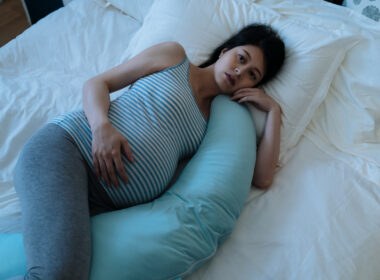
Importantly, the Canadian postpartum exercise guidelines also addressed how crucial quality sleep and limited sedentary time are to postpartum health and healing. Reassuringly, the sleep guidelines are quite modest, encouraging women to avoid screen time before bed and to sleep in a quiet, dark room. Similarly, the sedentary time recommendations are equally basic, “limiting sedentary time to 8 hours or less, including no more than 3 hours of recreational screen time, and breaking up long periods of sitting when possible.”
Who may not be able to follow the 2025 postpartum exercise guidelines?
The researchers acknowledged that certain postpartum women may have contraindications, or reasons they cannot follow the 2025 postpartum exercise guidelines. A sampling of contraindications comprises severe abdominal pain, unexplained vaginal bleeding, postpartum cardiomyopathy (heart muscle disease), worsening C-section incision pain, blood pressure higher than 140/90, calf pain or other symptoms of deep vein thrombosis (DVT) blood clot, and eating disorders.
The Get Active Questionnaire for Postpartum is a self-screening tool to help women identify whether they should check with a medical practitioner before starting exercise.
The bottom line on postpartum exercise guidelines
Perhaps the most important (yet understated) line in the 2025 postpartum exercise guidelines reads, “Adequate social, family and emotional support is required.” In other words, postpartum women can’t reap the benefits of physical activity through bootstrapping and self-reliance. In order to follow the directives to get 120 minutes of moderate to vigorous physical activity each week, spread out over four days, and to begin in the first 12 weeks postpartum, mothers require support.
In order to follow the directives to get 120 minutes of moderate to vigorous physical activity each week, spread out over four days, and to begin in the first 12 weeks postpartum, mothers require support.
They may need someone to hold the baby so they can get out for a walk alone, or they may choose to babywear while someone else watches their older children. Perhaps they need a spouse to take over bedtime so that they can put themselves to bed in order to be more rested (and have the energy to exercise) tomorrow. A postpartum meal train and/or freezer meal prep during a baby shower or sprinkle can help ensure adequate energy to exercise.
And since postpartum encompasses the whole year after birth, there should be an expectation that some level of additional support will be needed throughout that entire time period. Yes, even after “maternity leave” ends. Yes, even after the baby sleeps through the night, crawls, starts to eat solid foods, or meets any other milestone. Just as her baby changes rapidly throughout the first year of life, so too does the mother. Supporting a new mother through the postpartum period is crucial for her short and long-term mental and physical health (and, by extension, her baby’s).
If you want to learn more about exercising optimally during and after pregnancy, check out our podcast episode with pelvic floor physical therapist, Dr. Kayla Borchers, here.
This article was updated on January 23, 2026 to offer more guidance under the section “When to start exercising.”