




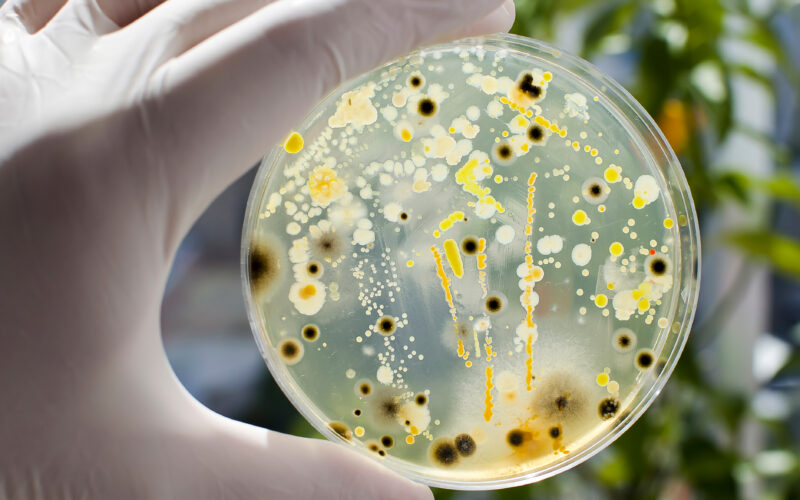
What if I told you that there was a bug that infects 50% of the population globally? Well, such a bug exists in the form of the bacteria Helicobacter pylori (H. pylori, or HP for short). While prevalence is higher in developing nations, about 30-40% of people in the United States are infected. H. pylori is a bacteria that infects the stomach, and while many people never show symptoms, it can cause chronic inflammation, stomach ulcers, and even increase the risk of stomach cancer [1].
But researchers have also been investigating another possible connection: H. pylori and infertility.
Could a stomach infection influence reproductive health? This article will unpack what we currently know about H. pylori, how people become infected, and why scientists are studying its potential role in infertility in both women and men.
What is H. pylori?
H. pylori is a spiral-shaped bacteria uniquely adapted to survive in the harsh acidic environment of the stomach. Most bacteria can’t tolerate stomach acid, but H. pylori produces an enzyme called urease, which helps neutralize the acid surrounding it. This allows the bacteria to colonize the stomach lining and persist there for years, or even decades.
Many people with H. pylori don’t realize they have it. Others may experience symptoms like:
- Bloating
- Nausea
- Stomach pain or burning
- Acid reflux
- Early fullness after eating
- Chronic gastritis
- Stomach ulcers
In some people, the infection remains relatively quiet. In others, the immune system mounts a chronic inflammatory response that damages the stomach lining over time. H. pylori has also been classified as a carcinogen by the World Health Organization because of its association with gastric cancer.
Importantly, H. pylori is not just a “stomach problem.” Chronic inflammation in one area of the body can have widespread effects elsewhere, such as hormone signaling, immune regulation, and nutrient absorption.
And that’s where fertility researchers became interested.
H. pylori is not just a “stomach problem.” Chronic inflammation in one area of the body can have widespread effects elsewhere, such as hormone signaling, immune regulation, and nutrient absorption. And that’s where fertility researchers became interested.
How can you get H. pylori?
H. pylori is typically acquired during childhood, though adults can become infected as well. Researchers believe transmission occurs primarily through oral-to-oral or fecal-to-oral routes, often through close household contact [1]. This can happen through contaminated food or water, poor sanitation, sharing utensils or other saliva exposure, and close living environments.
In many cases, people may carry the infection for years without knowing it. A diagnosis usually involves a breath test, stool testing for small HP proteins called antigens, blood testing, and endoscopy in certain cases.
Fortunately, H. pylori can often be treated successfully with a combination of antibiotics and acid-suppressing medications. However, antibiotic resistance has made treatment more complicated in recent years, and a reason for growing interest in the investigation of non-pharmacological treatment options such as various botanicals.
The possible connection between H. pylori and infertility
At first glance, it might seem strange that bacteria in your stomach could affect reproduction. After all, the stomach and reproductive organs are entirely separate systems. But the body doesn’t operate in isolated compartments.
Researchers have proposed several mechanisms by which chronic H. pylori infection could influence fertility, many of which revolve around chronic or systemic inflammation and changes to hormones. The key reproductive processes of ovulation, fertilization, and implantation are all sensitive to inflammation and immune signaling.
Researchers have proposed several mechanisms by which chronic H. pylori infection could influence fertility, many of which revolve around chronic or systemic inflammation and changes to hormones. The key reproductive processes of ovulation, fertilization, and implantation are all sensitive to inflammation and immune signaling.
What the research shows in women
In 2002, researchers at the University of Siena first noticed an increased prevalence of HP infections among women who had infertility (defined in the study as women who had been to an infertility clinic for treatment) [2]. These women had antibodies in their blood against one of the main virulent proteins (or one of the ways the bacteria causes disease) of HP called CagA, and these antibodies reacted to sperm when they tested in the lab. Typically, antibodies are very specific to their target, but in this case, there was cross-reactivity, meaning the antibodies started neutralizing the sperm instead of just the HP bacteria.
Another study from 2010 found antibodies against HP present in the cervical mucus of women experiencing infertility [3]. Like in the earlier study, these antibodies reacted with incoming sperm, potentially hindering their ability to find and fertilize the female egg. While the study wasn’t able to determine if the HP antibodies were the cause of the infertility, it is suspicious that the antibodies were found not only in the blood but also directly in the cervical mucus (the fluid that’s normally supposed to keep sperm alive and flourishing, and help facilitate their movement upwards through the female reproductive tract!)
Finally, HP infection has been implicated in various endocrine disorders, including polyendocrine metabolic ovarian syndrome (PMOS), formerly known as polycystic ovary syndrome (PCOS), which is a common cause of infertility. A group in 2009 identified higher rates of HP infection in women who had PMOS, suggesting a possible association, and opening the door for further research questions [4].
Why we can’t say the connection between HP and infertility is a sure thing
Despite the promising connections found in the studies above, the (scant) research between HP and infertility is (1) very old—there is nothing more recent than 2015—and (2) the studies are very low-quality, consisting of case-control studies or cohort studies of small numbers of women. Frustratingly, there are no randomized control trials or even studies with larger sample sizes. These weak associations suggest the connection may depend on many other factors besides HP infection, such as bacterial strain, genetics, immune response, nutrition, or other underlying health conditions.
What about male fertility?
But what about if the male has the HP infection? Several studies have reported that men with H. pylori infection—especially strains carrying the CagA protein—may have lower sperm motility and viability, and reduced sperm counts [5,6]. They propose the HP infection increases the level of pro-inflammatory cytokines, which could explain the reduction in sperm health.
As with the research on female infertility patients, these studies were also small, old, and only showed associations. Additionally, not all studies even show a significant negative effect from HP infection on fertility. A study from 2020 found no significant difference in sperm concentration or motility between men with and without H. pylori infection [7].
What we still don’t know
Despite growing interest in this topic, there are still major unanswered questions.
We do not yet know whether H. pylori directly causes infertility (this is the biggest gap!), whether treating the HP infection improves fertility outcomes, and how much of the effect is due to infection and inflammation compared to other health factors that individuals might have. It’s possible that H. pylori acts as one piece of a much larger puzzle, rather than a single root cause.
The bottom line
Fertility is incredibly complex, influenced by genetics, hormones, immune function, environmental exposures, nutrition, stress, age, and overall health. A chronic bacterial infection may contribute to that picture in some individuals, but at this point, we don’t have reason to suspect it’s the primary driver.
Still, the research on H. pylori and fertility raises an important point: reproductive health does not exist in isolation from the rest of the body. As scientists continue studying the gut, immune system, microbiome, and chronic inflammation, we may discover that seemingly unrelated conditions are more interconnected than we once believed.
Additionally, there’s power in paying attention to your body regardless of your desires to achieve or avoid pregnancy. Treating HP is highly recommended as eradication can reduce the risk of serious complications like stomach ulcers and stomach cancer. Even if the fertility connection remains uncertain, the research is a reminder that seemingly silent chronic conditions can have effects far beyond where they begin.
References
[1] Kayali S, Manfredi M, Gaiani F, Bianchi L, Bizzarri B, Leandro G, Di Mario F, De’ Angelis GL. Helicobacter pylori, transmission routes and recurrence of infection: state of the art. Acta Biomed. 2018 Dec 17;89(8-S):72-76. doi: 10.23750/abm.v89i8-S.7947. PMID: 30561421; PMCID: PMC6502203.
[2] Figura N, Piomboni P, Ponzetto A, Gambera L, Lenzi C, Vaira D, Peris C, Lotano MR, Gennari L, Bianciardi L, Renieri T, Valensin PE, Capitani S, Moretti E, Colapinto R, Baccetti B, Gennari C. Helicobacter pylori infection and infertility. Eur J Gastroenterol Hepatol. 2002 Jun;14(6):663-9. doi: 10.1097/00042737-200206000-00012. PMID: 12072601.
[3] Ambrosini G, Andrisani A, Fiore C, Faggian D, D’Antona D, Ragazzi E, Plebani M, Armanini D. Anti-Helicobacter pylori antibodies in cervical mucus: a new cause of infertility. Eur J Obstet Gynecol Reprod Biol. 2011 Apr;155(2):157-60. doi: 10.1016/j.ejogrb.2010.12.001. Epub 2010 Dec 28. PMID: 21193262.
[4] Yavasoglu I, Kucuk M, Cildag B, Arslan E, Gok M, Kafkas S. A novel association between polycystic ovary syndrome and Helicobacter pylori. Am J Med Sci. 2009 Sep;338(3):174-7. doi: 10.1097/MAJ.0b013e3181a63c8a. PMID: 19590426.
[5] Elena Moretti, Natale Figura, Maria Stella Campagna, Stefano Gonnelli, Francesca Iacoponi, Giulia Collodel,Sperm Parameters and Semen Levels of Inflammatory Cytokines in Helicobacter pylori–infected Men, Urology, Volume 86, Issue 1, 2015, Pages 41-47, ISSN 0090-4295, https://doi.org/10.1016/j.urology.2015.02.068.
[6] Collodel G, Moretti E, Campagna MS, Capitani S, Lenzi C, Figura N. Infection by CagA-positive Helicobacter pylori strains may contribute to alter the sperm quality of men with fertility disorders and increase the systemic levels of TNF-alpha. Dig Dis Sci. 2010 Jan;55(1):94-100. doi: 10.1007/s10620-008-0704-1. Epub 2009 Jan 22. PMID: 19160044.
[7] Feng C, Lv PP, Huang CC, Yang SQ, Yao QP, Shen JM, Jin M. Sperm parameters and anti-Müllerian hormone remain stable with Helicobacter pylori infection: a cross-sectional study. BMC Urol. 2020 Nov 26;20(1):188. doi: 10.1186/s12894-020-00725-z. Erratum in: BMC Urol. 2021 Feb 5;21(1):19. doi: 10.1186/s12894-021-00783-x. PMID: 33243200; PMCID: PMC7690008.