

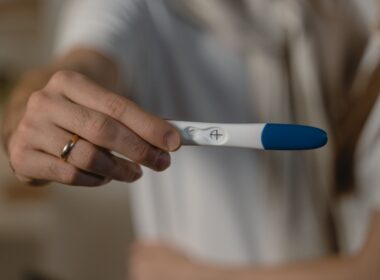


Polycystic ovary syndrome (PCOS) is a common female hormonal disorder, characterized by multiple cysts growing on or within the ovaries. PCOS is found in approximately 8-15% of women, but because the disease is both underresearched and underdiagnosed, the number of women affected could be significantly higher. Some of the most common symptoms of PCOS are excessive acne, hair growth or hair loss, heavy, painful, and irregular periods, insulin resistance, and infertility.
There is an increasing number of studies showing how hormonal disorders like PCOS affect far more than “just” the reproductive system. For example, we have previously written on the connection between PCOS and memory loss, demonstrating the neurological impact of issues with the reproductive system. Still, you may be surprised to learn that recent research shows that women with PCOS could be at a higher risk for hearing loss, specifically high frequency hearing loss.
Recent research shows that women with PCOS could be at a higher risk for hearing loss, specifically high frequency hearing loss.
What is high frequency hearing loss?
High frequency hearing loss is a form of hearing loss that makes it difficult for you to hear frequencies between 2000–8000 Hz. People with this type of hearing loss may struggle to hear high pitched voices or sounds in noisy environments. It may also be difficult for them to decipher between different sounds, making everything sound muffled.
High frequency hearing loss can be caused by excessive loud noise exposure, aging, or a variety of medical conditions. It is often sensorineural, meaning it is caused by damage to the auditory nerve pathway or the inner ear.
What is the relationship between PCOS and hearing loss?
It is well known that medical conditions like diabetes, insulin resistance, high blood pressure, heart disease, and other conditions associated with metabolic syndrome can cause hearing loss [1]. We also know that women with PCOS have a higher risk of insulin resistance and diabetes, and that (as we have previously written about) there is a connection between heavy periods (a known symptom of PCOS) and heart disease. With this evidence in hand, it makes sense that a 2024 systematic review and meta-analysis found that there could also be an association between PCOS and hearing loss [2].
Is it hyperandrogenism, or something else? Addressing the confounding variables between PCOS and hearing loss
Women with PCOS often have obesity, insulin resistance, dyslipidemia, and other metabolic conditions that are themselves associated with hearing loss, so it is difficult to determine whether any increased risk is attributable to PCOS itself or to these related health conditions. For example, insulin resistance, hyperinsulinemia, and other inflammatory diseases commonly found in PCOS patients often damage blood cells, leading to earlier high frequency hearing loss (HFHL).The authors of the 2024 review noted that insulin resistance itself is associated with HFHL.
One feature of PCOS that has received particular attention is hyperandrogenism, a hallmark of the syndrome characterized by elevated levels of androgens (male sex hormones), including testosterone. Researchers have proposed that the hormonal disturbances associated with PCOS could affect the inner ear, although the mechanisms remain uncertain. Several studies cited within the larger review observed that women with elevated LH, testosterone, and insulin (the PCOS group) had significantly higher rates of HFHL compared to women without PCOS [3,4]. Rather than demonstrating that elevated testosterone or other PCOS-related changes cause hearing loss, these studies have reported correlations between PCOS and subtle differences in hearing.
Because of the studies’ small sample sizes and observational design, the findings cannot establish that PCOS, elevated testosterone, or any other feature of the syndrome directly causes hearing loss. Instead, they add to a growing body of evidence suggesting a possible association that warrants further investigation in larger, well-controlled studies.
How do you treat hearing loss?
The best treatment for hearing loss is preventative treatment: Protect yourself from excessive loud noise exposure and schedule regular hearing tests with an audiologist. Women with PCOS or those with diseases like diabetes, insulin resistance, or heart disease who are at a higher risk for hearing loss, should talk with their doctors about the appropriate treatment methods for those diseases and care for their bodies accordingly.
Women with PCOS or those with diseases like diabetes, insulin resistance, or heart disease who are at a higher risk for hearing loss, should talk with their doctors about the appropriate treatment methods for those diseases and care for their bodies accordingly.
While diet, exercise, supplements like myo-inositol, and other lifestyle changes can be very effective at managing PCOS, metformin may be an additional treatment option to consider. An increasingly common medication prescribed for diabetes, insulin resistance, and PCOS symptoms, metformin has also been found to reduce the risk of hearing loss [5] [6] [7].
If you already have early or late onset hearing loss, there are a number of hearing aids and listening devices available to help mitigate how much your hearing loss affects your day-to-day life.
The bottom line on PCOS and hearing loss
Mounting research demonstrates an association between PCOS and neurological issues like hearing loss. However, more studies with larger sample sizes and varied study designs are needed to answer two key questions:
- Is the correlation between PCOS and hearing loss merely an association because of the common diseases (like diabetes, heart disease, insulin resistance, etc.) between the two medical conditions?
- Is there a direct relationship between PCOS and hearing loss associated with the hyperandrogenism that is at the root of PCOS and its symptoms?
Once those questions are answered, we may better be able to determine how to treat and prevent hearing loss, especially hearing loss associated with PCOS.
References
[1] Seo M, Lee YS, Moon SS. Association of hearing impairment with insulin resistance, β-cell dysfunction and impaired fasting glucose before onset of diabetes. Diabet Med. 2016 Sep;33(9):1275-82. doi: 10.1111/dme.13096. Epub 2016 Mar 6. PMID: 26871458.
[1] Chen TY, Chen MJ, Lien KH. Association of Polycystic Ovary Syndrome With Sensorineural Hearing Loss: A Systematic Review and Meta-analysis. Otolaryngol Head Neck Surg. 2025 Apr;172(4):1121-1132. doi: 10.1002/ohn.1081. Epub 2024 Dec 25. PMID: 39720938.
[3] Oghan F, Coksuer H. Does hyperandrogenism have an effect on hearing loss in patients with polycystic ovary syndrome? Auris Nasus Larynx. 2012 Aug;39(4):365-8. doi: 10.1016/j.anl.2011.06.006. Epub 2011 Aug 20. PMID: 21862266.
[4] Turan M, Ucler R, Garca MF, Kurdoglu Z, Cankaya H, Ayral A, Bozan N, Kıroglu AF, Kurdoglu M. The Relationship Between Hearing Thresholds and Hyperandrogenism in Polycystic Ovary Syndrome. Med Sci Monit. 2016 Nov 15;22:4380-4385. doi: 10.12659/msm.898670. PMID: 27846196; PMCID: PMC5115213.
[5] Tseng CH. Metformin Reduces the Risk of Hearing Loss: A Retrospective Cohort Study. Otolaryngol Head Neck Surg. 2023 Jun;168(6):1389-1400. doi: 10.1002/ohn.232. Epub 2023 Jan 27. PMID: 36939574.
[6] Chen HC, Chung CH, Lu CH, Chien WC. Metformin decreases the risk of sudden sensorineural hearing loss in patients with diabetes mellitus: A 14-year follow-up study. Diab Vasc Dis Res. 2019 Jul;16(4):324-327. doi: 10.1177/1479164119826292. Epub 2019 Feb 2. PMID: 30712377.
[7] Tseng CH. Metformin Reduces the Risk of Hearing Loss: A Retrospective Cohort Study. Otolaryngol Head Neck Surg. 2023 Jun;168(6):1389-1400. doi: 10.1002/ohn.232. Epub 2023 Jan 27. PMID: 36939574.