

Perimenopause took me by surprise. Things had been feeling “off” for a while: my nights were shorter, my moods were unpredictable, my weight fluctuated, and my brain fog was getting worse. Luckily, I had a great doctor who provided the care I needed. What began as a period of frustration and confusion ended with wisdom, empowerment, and self-awareness.
Although perimenopause can feel disorienting—as though your body has become a stranger to you—it should not be feared. With a little preparation and self-care, you can navigate this transition with confidence. Here are five ways to prepare yourself and make this phase a new chapter in which you enjoy life again.
Finding a doctor who truly listens is vital. I was fortunate to have one who did, but that’s not the case for everyone.
Many healthcare professionals lack training in perimenopause and menopause care. This may come as a shock, but even with over fifty million women in menopause in the United States alone, there are only roughly over two thousand healthcare practitioners licensed in this field of medicine (Tamsen Fadal, How to Menopause, 61).
Many healthcare professionals lack training in perimenopause and menopause care. This may come as a shock, but even with over fifty million women in menopause in the United States alone, there are only roughly over two thousand healthcare practitioners licensed in this field of medicine.
Dr. Mary Claire Haver also addresses this disparity in her book, The New Menopause. After experiencing menopause herself, she realized how little education existed for doctors and how that leads to suboptimal (or nonexistent) care for women. Dr. Haver was so convicted, that she decided to specialize exclusively in menopause medicine, publish two books on the topic, use social media to promote awareness and educate, and advocate for better care for women. (You can read Natural Womanhood’s review of The New Menopause, here.)
Where to look for a perimenopause doctor
So … Where can you find a doctor who “gets it?” Start by asking women you trust about their experiences. You want someone who provides genuine care and understanding during this stage of life.
If word-of-mouth doesn’t get you anywhere, the Menopause Society’s website offers an international directory of trained professionals. Whether you are in North America, Europe or Asia, there is a doctor nearby ready to take care of you. Virtual clinics, such as Midi Health or Alloy, are also excellent options for women who need specialized care from the comfort of their home. Many insurance and HSA/FSA plans cover their services and medications.
Preparing for your first appointment
Once you have scheduled your visit, come prepared. Bring a list of your symptoms, questions, and any labs you’d like to request. If you need help in getting prepared, consider consulting Dr. Haver’s website, The Pause Life. There, you can download a free lab checklist to know which labs you should request from your doctor. The ladies over at The Hormone Genius Podcast also have a new perimenopause course which includes information on lab tests (as well as hormone therapy, lifestyle factors, and more).
Requesting an advanced lipid panel, bone density scan, and inflammation markers is a good way to get an overall picture of your health. The results of these tests will guide your doctor in curating a personalized plan to alleviate your symptoms and support your long-term health.
#2 Get your hormones checked
In addition to the tests mentioned above, you will want your doctor to check your hormone levels—especially estrogen, progesterone, and testosterone.
Even before our first ovulation and first period (menarche), these hormones play a key role in almost every aspect of our health: together, they affect and support our mental health, metabolism, immune system, bone strength, heart function, and more. And as those hormones start declining during perimenopause, you might notice symptoms such as missed periods, lower libido, vaginal dryness, hot flashes, loss of muscle mass, and increased midsection weight gain.
In particular, falling estrogen levels in perimenopause raise your risk for both coronary heart disease and neurodegenerative disease. Falling estrogen can also lead to unbalanced cortisol levels, which can exacerbate inflammation and increase anxiety. (For more on the connections between cortisol, aka “the stress hormone,” and estrogen, see this article from Natural Womanhood.)
All of this is to say: Don’t put off having your hormone levels tested by a doctor who understands perimenopause and menopause. Proper testing helps identify imbalances and allows your doctor to recommend safe and effective treatment options.
Don’t put off having your hormone levels tested by a doctor who understands perimenopause and menopause. Proper testing helps identify imbalances and allows your doctor to recommend safe and effective treatment options.
If your perimenopause symptoms are significant, discussing bioidentical hormone replacement therapy (HRT) may be worthwhile. Working with your doctor to review the benefits, risks, and dosage options can help you feel more in control and supported during this transition. Your hormones may be going crazy, but you don’t have to!
#3 Take vitamins and supplements that actually work
Various supplements can also provide help in supporting your health during perimenopause, but only when chosen thoughtfully. Make sure your doctor is well-versed in supplementation, and discuss anything you want to add your regimen with him or her. Some supplements can interact with medications or existing conditions, and not all products marketed for perimenopause are effective. Make it a priority to ensure your supplements are of good quality, safe for you, and pure in how they are manufactured (Haver).
Commonly recommended vitamins and supplements for perimenopause include: collagen, creatine, probiotics, vitamins D3 and K2, calcium, magnesium, and omega-3 fatty acids. These can help with your skin, gut, muscle mass, heart and can even help reduce your stress and help you sleep better. When used wisely, supplements can help you feel stronger, more balanced, and better equipped to handle the changes of perimenopause. While there’s no substitute for a nutritious diet (and most of these nutrients can be found in the whole foods we eat), sometimes, life gets busy and we forget to fuel our body properly. That’s where supplementation can help fill in the gaps.
#4 Eat a healthy diet
On that note, for many women in perimenopause, what to eat and drink can feel like an unsolvable puzzle. This was the case for me—no matter what I ate, I felt bloated and sluggish. When my doctor suggested an anti-inflammatory diet, I feared it would require preparing separate meals for my family and myself. To my surprise, it was much simpler than I had anticipated. Reducing carbs, sugars, dairy, and gluten and making small swaps, like using raw honey instead of refined sugar, made a noticeable difference for me. I focused on whole, nutrient-rich foods that supported my hormones, increased energy, and reduced inflammation.
On that note, for many women in perimenopause, what to eat and drink can feel like an unsolvable puzzle. This was the case for me—no matter what I ate, I felt bloated and sluggish. When my doctor suggested an anti-inflammatory diet, I feared it would require preparing separate meals for my family and myself. To my surprise, it was much simpler than I had anticipated.
Yes, I had to learn about proper protein intake (hint: you probably need more than you think!) and start reading nutrition labels. But, within a few weeks, I noticed a change in my weight and no longer felt bloated or sluggish. I also liked watching my family try new things, especially my kids.
Consider fasting (like a woman)
I also explored some of the tips found in Dr. Haver’s The Galveston Diet, and Dr. Mindy Pelz’s Fast Like a Girl. Combining insights from both allowed me to eat sustainably while exploring intermittent fasting safely and effectively—and without the guesswork. It provided a practical framework for maintaining a healthy weight, and my supporting hormonal health, while still enjoying food. (You can read the Natural Womanhood review of Fast Like a Girl, here.)
Stay hydrated
And one last thing, don’t forget to drink water! Hydration is always key, but it can make a big difference during perimenopause. If drinking enough water feels like a struggle (it was for me), invest in a water bottle you actually enjoy using. Remember, about seventy percent of your body is made up of water, and it’s constantly being depleted throughout the day. Keep replenishing it—your body will thank you for it.
#5 Move your body and lift heavy weights
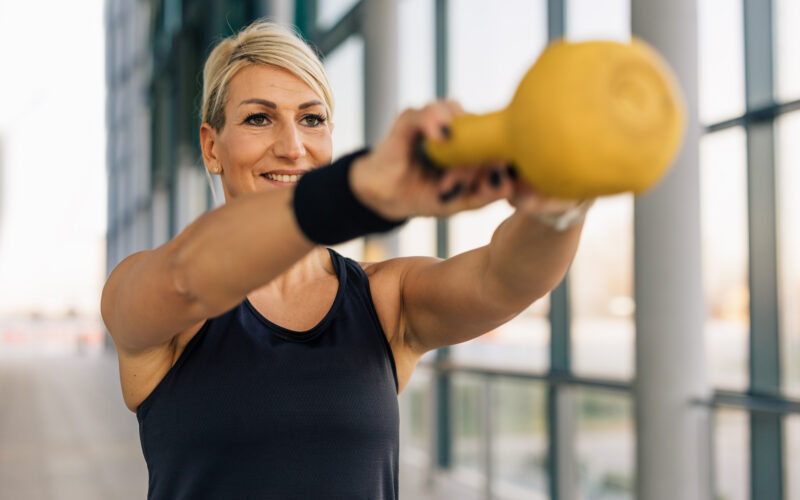
Exercise is non-negotiable: you must absolutely take care of the muscle mass you’re losing as a result of your estrogen levels declining. This loss, known as sarcopenia, is typically diagnosed in women over the age of sixty. However, women in their thirties already begin “to lose between 3 and 5 percent of their own muscle mass each decade” (Haver). Dr. Haver and other experts in this field agree: strength training (also called resistance training, which can involve using free weights, bands, and/or bodyweight) is essential. At this stage, it’s no longer about looking good (although that’s a nice bonus, of course); you are looking to improve your bone, cardiac, and mental health, just to name a few aspects of well-being that can be aided by exercise (Fadal).
Exercise is non-negotiable: you must absolutely take care of the muscle mass you’re losing as a result of your estrogen levels declining. This loss, known as sarcopenia, is typically diagnosed in women over the age of sixty. However, women in their thirties already begin “to lose between 3 and 5 percent of their own muscle mass each decade” (Haver)
Start slowly and safely, and take advantage of YouTube
Lifting weights does not mean bulking up or looking masculine; instead, it builds lean muscle, tones the body, protects bones, and boosts your metabolism. But if you’ve never lifted a weight in your life, or if it’s been a while since you have, starting slow is key! Don’t pick up a twenty-pound dumbbell right away. Start with a two- or five-pounder, and gradually increase your weights to prevent injury and loss of motivation.
The best news is that all of this can be done from the comfort of your own home with a few weights, bands, and maybe an exercise mat. YouTube has excellent free resources for guided workouts. I personally recommend Denise Austin, Petra Genco, and fabulous50s. Their workouts are approachable, upbeat, and home-friendly (some of them even have you use a chair and kitchen counter to work out).
When in doubt, take a walk
Sometimes there’s no need to overcomplicate things: we know that walking is one of the best forms of exercise you can do. Find a walking buddy and enjoy some company with your fresh air, or enjoy some alone time with your favorite playlist or podcast.
The key is to move your body in ways that feel good and fit your lifestyle. Strength, energy, and confidence all begin with consistency. Find what you love and get moving and lifting!
The bottom line: Take charge of your perimenopause journey
You can’t escape perimenopause. You can try to ignore it, but you probably won’t succeed. And yes, some days won’t be pleasant. But that doesn’t mean you have to be miserable each and every day. There’s so much to explore when it comes to preparing for perimenopause, but these five areas are where your energy and time will make the biggest difference.
Perimenopause can last up to a decade in some cases. That is a long time to just “grin and bear it” until you finally hit menopause. My final piece of advice? Don’t just get through perimenopause: make these years count. These five steps make a great start.
References / Book List
How to Menopause, Tamsen Fadal
The New Menopause, Dr. Mary Claire Haver, MD
The Galveston Diet, Dr. Mary Claire Haver, MD
Fast Like a Girl, Dr. Mindy Pelz, DC