


If you’ve ever expressed a desire to find a workout routine you can safely stick to while pregnant, you might’ve heard someone caution, “if you do ab exercises while pregnant, you’re going to squish your baby!” or “pregnant women just do core exercises because they want to look skinny after birth” or maybe “exercise, especially core work, is dangerous for pregnant women and their babies.” This old-school mentality of treating pregnancy like an illness is thankfully making its way (slowly) out of the culture, but when it comes to core exercise during pregnancy, there are still a lot of misconceptions. As a mom of two and a gym-addict with a Bachelor’s degree in Exercise Physiology, this topic is a huge passion of mine. So let’s tackle these myths together.
What are “abs”?
When most people think of “abs,” they probably envision a perfectly chiseled six-pack in a men’s underwear commercial. In reality, the six-pack muscle (called the rectus abdominis) is just one of 7 groups of muscles making up the core, most of which you might’ve never thought of when doing a “core workout.”
Think of the core as a hollow box of muscle. The rectus abdominus is in the front, the diaphragm makes the roof, the pelvic floor makes the bottom, the erector muscles (muscles along your spine holding your back erect) and glutes make up the back of the box, while the transverse abdominis and obliques make up the sides.
One physical therapist, Anna Ribaudo, explains, “The core is like the frame of the house. If your frame was not built properly, nothing above or below it is going to be stable.” A stable core can reduce the risk of injuries including strains of abdominal muscles, back muscles, and muscles around the pelvis. The core muscles also protect and support the organs, and a weak core can lead to increased risk of hernias (when an internal part of the body pushes through a weakness in the muscle or surrounding tissue wall).
A strong core’s role in pregnancy
Having a strong core going into pregnancy, throughout pregnancy, and in the postpartum period is one of the best things you can do for a pain free pregnancy and faster postpartum recovery. A strong core can:
- Reduce lower back and pelvic pain by supporting your growing belly
- Decrease daily aches and pains by improving posture
- Protect the pelvic floor and therefore reduce issues like bladder leaking, heaviness, or prolapse
- Support labor and delivery with stronger “pushing muscles” and breathing
- Improve postpartum recovery, diastasis recti, and hernias
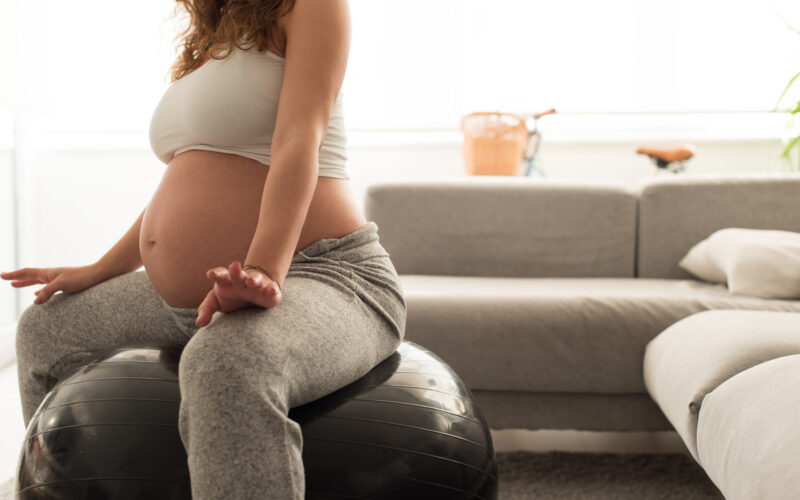
There are quite a few studies showing just how effective core training can be on improving quality of life in pregnant women. One 2021 study published in the International Journal of Gynecology and Obstetrics followed 209 first time moms between 24-27 weeks pregnant through to the birth of their children [1]. One hundred and nine women received core training using a birth ball, while the other 100 received prenatal exercise training without a specific focus on strengthening the core.
Throughout pregnancy, the core training group reported that “the waist pain and fatigue ratings of women were significantly lower [in the core training group compared to the control group],” though exact numbers were not provided. When it came to rates of a successful vaginal delivery (compared to needing a C-section), 74.3% of the core training group had a vaginal delivery while only 62% of the non-core group had a vaginal delivery. The rate of episiotomy being performed was also significantly less for the core training group at only 14.7% while the non-core group had an episiotomy rate of 25% [1].
A 2025 systematic review of the literature compiled the results from nine randomized control trials covering the effects of strength training on quality of life in 1581 pregnant women. Quality of life changes were tracked using a variety of participant questionnaires Across these nine studies, it was found that women in strength training programs at least 12 weeks long with 1 to 2 sessions per week of moderate to vigorous intensity saw that most significant improvement in quality of life compared to women in the control group that were merely encouraged to exercise. These specific parameters found to improve were muscle strength, weight gain, low back pain, pelvic pain, fatigue, anxiety, sleep duration, and others.
Across these nine studies, it was found that women in strength training programs at least 12 weeks long with 1 to 2 sessions per week of moderate to vigorous intensity saw that most significant improvement in quality of life compared to women in the control group that were merely encouraged to exercise. These specific parameters found to improve were muscle strength, weight gain, low back pain, pelvic pain, fatigue, anxiety, sleep duration, and others.
The findings of the meta-analysis of these nine studies suggest pregnant women “participate in a structured and supervised strength training program administered by sport science professionals” [2]. Specific strength exercises should consist of “function exercises for both the upper and lower body […] with particular emphasis on the core and pelvic floor” [2, emphasis added].
Is core exercise safe during pregnancy?
As long as you’re cleared by your midwife or OBGYN and follow some pregnancy-specific safety guidelines, core exercise during pregnancy is, as previously mentioned, a great idea to maintain a better quality of life.
That being said, there are a few special guidelines for pregnant women that are very important to follow for the safety of mother and baby alike. Exercises, movements, or positions that should be avoided during pregnancy include:
- Any exercise with an increased risk of falling (like standing and balancing on a Bosu Ball)
- Twisting (like Russian Twist), which places undue pressure on the abdomen and uterine ligaments
- Hanging exercises (like hanging leg raises or even just pullups), which increase risk of uterine pressure, and could increase risk of a hernia or worsen diastasis recti
- Exercises like crunches, especially after the first trimester, as these increase intraabdominal pressure
- Laying flat on your back after the first trimester, which increases pressure on your vena cava, the large vein bringing back blood to your heart
- Any exercise where you see coning or doming of your stomach, indicating an increase in intraabdominal pressure
- Holding your breath while exercising (called the valsalva maneuver), which leads to increased intraabdominal pressure, and can spike blood pressure and lead to dizziness or fainting
- Any fast, jerky, or sudden movements–instead, practice slow and controlled movements
Safe exercise ideas in pregnancy
Even if you’re following the pregnancy exercise safety guidelines, there are still many core exercises you can perform, no matter what your physical activity level is. It is important to scale your exercises and their intensity as your pregnancy progresses to accommodate your growing belly as well as your and your baby’s safety. Here are some examples of exercise that can be performed throughout the course of your pregnancy (and you can find these as well as video examples for each exercise, here):
There are still many core exercises you can perform, no matter what your physical activity level is. It is important to scale your exercises and their intensity as your pregnancy progresses to accommodate your growing belly as well as your and your baby’s safety.
First Trimester
- Leg lifts: strengthen lower abs and transverse abdominis
- In and Outs: strengthen lower abs and transverse abdominis
- Side Planks: strengthen obliques and deep abdominal muscles
- Dead Bugs: strengthen the entire rectus abdominis and transverse abs
- Up-Down Planks: strengthen your whole core while maintaining stability through continuous motion
Second Trimester
- Sitting alternating leg lifts: strengthen hip flexors
- Bird Dogs: stabilizing core from a safe and uncompromising position
- Modified Side Planks
- Mountain Climbers: stabilize the transverse abs while targeting lower abs
Third Trimester
- Quadruped Leg Extensions: strengthen glutes and core stabilizer muscles
- Modified Planks
- Pallof Press: strengthen obliques and transverse abs
- Farmers Carry: great whole-body exercise which also strengthens the obliques and transverse abs
These days, there are quite a few resources for pregnant women looking for exercise prescriptions depending on your pre-pregnancy physical activity level. Here are a few of my personal recommendations:
For women who love pilates, barre, yoga, or other group exercise classes, try Barre Definition. This program has workouts every day, every week, throughout pregnancy, where the exercises change with your body. Owner Jacquelyn Umof (certified in Pre/Postnatal Exercise) teaches the classes and the videos are recorded throughout her own pregnancy, so there is a good sense of camaraderie. She has a strong focus on core strengthening exercises as well as pelvic floor activation (for first and second trimester) and pelvic floor relaxation (for third trimester). Postpartum moms can use her program that starts very slowly and gently with diaphragmatic breathing and gradual core strengthening to get you back to having a strong and functional core.
For women who love strength training and struggle finding a pregnancy program geared towards their level of physical activity, Plus+1 Pregnancy may be perfect for you. Made by a team of OBGYNs, pelvic floor physical therapists, certified pre and post natal coaches, and pregnancy & postpartum corrective specialists, a 4-day-per-week exercise program, you follow owner Meg Gallagher through her own pregnancy through video examples of each workout. Not only does she have core exercises built in every day, but full body exercises that can be done at the gym or at home; all exercises are modified week-by-week to ensure safety for mother and baby.
I’ve used both of these programs and cannot stress how much I loved both of them!
The bottom line on core exercise during pregnancy
Just because you’re pregnant doesn’t mean you shouldn’t exercise—in fact, quite the opposite is true! Keeping your core strong can dramatically improve pregnancy pains, mobility, and quality of life as well as help you get back on your feet sooner postpartum. Just make sure you’re cleared by your midwife or OBGYN, and listen to your body throughout your pregnancy exercise journey!
Want even more advice on exercise during (and after) pregnancy? Check out this episode of The Natural Womanhood Podcast: What women need to know about exercising before, during, and after pregnancy, w/ Pelvic Floor Physical Therapist, Dr. Kayla Borchers.
References
- Zhang R, Xiao Y, Wei W, Wu B. Effect of birth ball abdominal core training on pregnancy fatigue, waist pain and delivery outcomes. Int J Gynecol Obstet. 2022; 158: 613–618. doi:10.1002/ijgo.14045
- Redondo-Delgado P, Blanco-Giménez P, López-Ortiz S, García-Chico C, Vicente-Mampel J, Maroto-Izquierdo S. Effects of strength training on quality of life in pregnant women: A systematic review. Acta Obstet Gynecol Scand. 2025; 104: 1231-1243. doi:10.1111/aogs.15122