

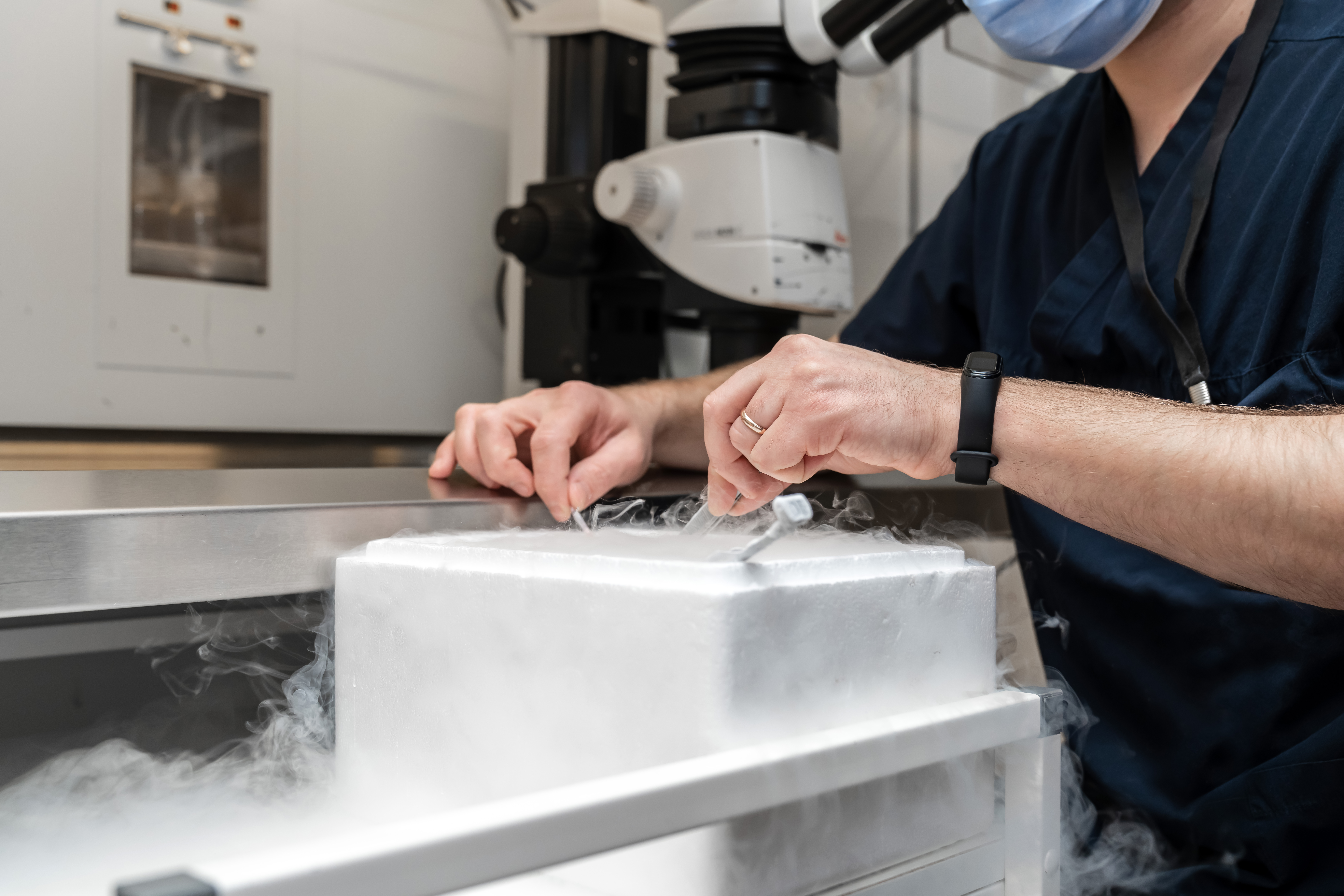


A recent study published in the American Journal of Obstetrics and Gynecology reported that “The number of patients undergoing planned oocyte cryopreservation has increased exponentially, with 4,153 patients [undergoing the procedure] in 2014 compared to 16,436 in 2021.” The age at which women are choosing to freeze their eggs has also decreased, going from a mean age of 36 in 2014, to 34.9 in 2021.
This increase is likely due to the American Society for Reproductive Medicine’s condoning egg freezing as routine for “social” reasons, and not simply for those undergoing medical treatments that can impact fertility. As discussed in a previous article, in addition to freezing eggs prior to cancer treatment or in the hopes of circumventing fertility issues such as endometriosis, some women also choose to freeze their eggs because they want to focus on their careers before starting a family, or because they haven’t yet found a suitable spouse and want to “preserve” their chances of having a baby as they get older.
However, egg freezing isn’t necessarily a panacea for prolonging fertility, since, in addition to health risks inherent within the egg retrieval process, there’s no guarantee that the eggs will survive thawing, that they will fertilize during later in vitro fertilization (IVF), or that the embryos will implant, especially if underlying issues with infertility have not been resolved [2] [3]. (Again, see this Natural Womanhood article for further information about the risks and success rates of egg freezing.)
For the woman who wants to know all of her options for protecting and preserving her fertility, this article will detail the other steps (beyond egg freezing) that a woman can take for her health and fertility now, to increase her chances of being able to conceive quickly and naturally in the future. (And for those being encouraged to freeze their eggs before beginning cancer treatment, see our article on ovarian tissue freezing for another potential option.)
For the woman who wants to know all of her options for protecting and preserving her fertility, this article will detail the other steps (beyond egg freezing) that a woman can take for her health and fertility now, to increase her chances of being able to conceive quickly and naturally in the future.
Want a good picture of your current fertility and reproductive health? Start tracking your cycle with a fertility awareness method (FAM)
Fertility Awareness-Based Methods (FABMs), also known as Fertility Awareness Methods (FAMs), or methods of Natural Family Planning (NFP), all involve observing and analyzing visible, trackable signs of fertility (often referred to as fertility “biomarkers”), for family planning and health monitoring. Because the menstrual cycle is the “fifth vital sign” of a woman’s overall health, using a FAM can help her (and her doctor) determine whether there may be any underlying issues with her reproductive health. FAMs help couples get to the root cause(s) of their health problems as opposed to masking or circumventing them, as is the case with in vitro fertilization (IVF), and often help them improve their overall health in the process (as fertility and overall health are intimately intertwined).
The most effective fertility awareness methods include: the Creighton Model, the SymptoThermal Method, the Billings Ovulation Method, FEMM (Fertility Education and Medical Management), and the Marquette Model. Each of these evidence-based methods of fertility tracking include some combination of tracking and charting cervical mucus, hormone levels, basal body temperature patterns, and/or changes in the cervix.
Get to the root cause of fertility issues through FAM
A healthcare professional who specializes in FAMs can analyze a woman’s chart to determine many things about her reproductive and overall health, including (but not limited to): whether cervical mucus patterns show a consistent rise in estrogen and progesterone, which might indicate issues with ovulation; observation of abnormal bleeding, which could be caused by uterine fibroids, polyps in the cervix or uterus, and even cancer in the cervix or uterus; whether couples are timing intercourse appropriately to take advantage of the fertile window; and more.
All of these methods are beneficial in diagnosing underlying conditions like endometriosis (one of the most common causes of infertility), polycystic ovary syndrome (PCOS), thyroid issues, fibroids, hormone imbalances, and more [4]. The most helpful biomarkers for diagnosing underlying issues with fertility can vary from woman to woman depending on her suspected medical condition. For example, a low basal body temperature or infrequent ovulation can indicate hypothyroidism, so a SymptoThermal Method that combines mucus observation and basal body temperature recording may be more beneficial to use to pinpoint these conditions [5].
Fertility treatment via Restorative Reproductive Medicine
Healthcare professionals trained in NaProTechnology, a form of restorative reproductive medicine (RRM) that utilizes Creighton Model cycle charts, uses ultrasounds, x-rays, blood tests, exploratory surgery, and other diagnostic tools to pinpoint underlying disorders and hormonal imbalances. You don’t need to have been solely using the Creighton Model before meeting with a NaProtechnology physician to receive testing and treatment (although practitioners vary in their preferred methods for diagnosis).
NaPro and other RRM treatments include, but are not limited to: post-coital sperm analysis with samples collected through the use of a perforated condom to determine causes of poor sperm quality that may be remedied through surgical correction, and/or lifestyle and nutrition improvements; medical treatments for ovulatory issues; assessment and surgical correction of uterine and tubal structure; diagnosing and treating hormone or immune issues; and other surgical procedures to treat endometriosis, polycystic ovary syndrome, and blocked tubes [6].
RRM outcomes
You may be wondering, “If I undergo restorative surgical treatments, what’s the likelihood that I’ll get pregnant anyway? Wouldn’t freezing my eggs and using IVF be better?” Since FAMs and RRM aim to improve overall health in addition to improving fertility, this is one reason you may want to consider this approach over freezing your eggs for later use in IVF. Another reason is that RRM has also been shown to be as effective, if not moreso, than IVF for treating infertility.
Since FAMs and RRM aim to improve overall health in addition to improving fertility, this is one reason you may want to consider this approach over freezing your eggs for later use in IVF. Another reason is that RRM has also been shown to be as effective, if not moreso, than IVF for treating infertility.
A retrospective cohort study published in November 2025 evaluated the outcomes for 1,310 infertile couples treated at a NaProTechnology (NPT) fertility clinic in Spain over a 5-year period. The results were significant: “Considering a median duration of NPT of 10.9 months (range 8.1–17.0), the adjusted cumulative take-home baby rate was 62.1%. Rates varied significantly by female age, with higher success observed in younger women: 83.7% at 18–30 years, 53.3% at 36–40 years, and 24.4% over 40 years” [7].
Furthermore, a 2024 study conducted by the Irish clinic that developed NeoFertility (another form of RRM), compared their 2019 live birth rates to the 2019 Human Fertilization and Embryology Authority data, and found that “RRM treatment had a live birth rate of 40.4% compared to 24.4% per treatment cycle for IVF.” They likewise found that “RRM twin pregnancy rate was 2.5% compared to 7% for IVF” [8].
A May 2025 article from the International Institute for Restorative Reproductive Medicine states that: “There are many factors that influence an individual couple’s RRM success rate. On average more than 50% of couples who complete their RRM treatment will have a live birth, and higher rates are achieved with continuing care,” and “studies show RRM is associated with significantly lower preterm birth rates… Preterm babies are at higher risk for a variety of complications including to their respiratory, digestive, cardiovascular and neurological systems. RRM preterm birth rates in the U.S. are 8% compared to 14.1% for IVF; the overall U.S. preterm birth rate is 10.4%.”
Diet, lifestyle, and healthy habits
In addition to using various modalities to treat underlying health issues, RRM also stresses healthy diet and lifestyle habits that can be implemented to improve fertility—which a woman can start today, whether she wants to get pregnant now or in the future. Diets high in trans fats, carbohydrates (especially from added sugars), highly processed meats and other foods, caffeine, and alcohol can increase the risk of infertility, and particularly impact reproductive hormone regulation, insulin resistance (a cause of infertility in both men and women), endometriosis, and PCOS [9]. Conversely, diets high in fiber (via whole foods like vegetables, fruits, and unrefined carbohydrates), as well as healthy fats and proteins, have been shown to positively impact fertility, as does moderate physical activity as well.
In addition to using various modalities to treat underlying health issues, RRM also stresses healthy diet and lifestyle habits that can be implemented to improve fertility—which a woman can start today, whether she wants to get pregnant now or in the future.
Further, mitochondrial function, the source of energy for the egg, can decrease with age and impact egg quality and fertilization [10]. B-vitamins, along with various other vitamins and supplements (such as fish oil and magnesium), can help improve mitochondrial function [11]. The antioxidant CoQ10 may also help mitochondrial function by combating the oxidative stress that impacts ovarian function and egg quality, and the antioxidant N-acetylcysteine (known as NAC) may help with insulin resistance and hormone balancing for PCOS [12].
The bottom line on truly protecting and preserving your future fertility
While egg freezing may seem like the answer to delaying childbearing and taking control of one’s fertility, FAMs, RRM, and lifestyle and diet changes, (as well as reproductive tissue cryopreservation for those preparing to undergo cancer treatments) provide men and women with choices that allow them to take control of their natural fertility while also helping them to live their healthiest lives. Furthermore, getting to the bottom of reproductive health issues with cycle tracking and RRM (especially instead of bandaiding over those issues with birth control, which can prematurely age one’s ovaries) is a smart move for protecting your fertility now and in the future.