

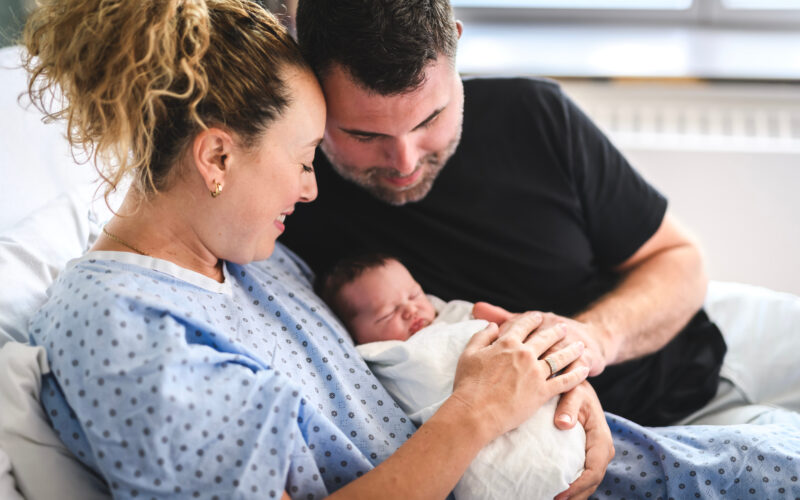
You may wonder why there’s any discussion about what happens to your placenta after birth. You push out your baby, the doctor delivers the placenta, and that’s it. Right? Not always. While the majority of mothers hand their placentas over to the hospital, where it is discarded as medical waste, some mothers choose to keep their placentas and either bury them, eat them raw, or process them into placenta capsules.
Though some critics argue this practice is distasteful, others believe that placenta consumption allows the mother to make use of the nutrients it may afford her. The placenta is turned into ingestible capsules and consumed in hopes of receiving potential benefits such as decreased postpartum mood disorders, increased breast milk supply, and increased iron support.
It’s important, however, to see whether there is evidence to support its consumption. Like many women’s health issues, there isn’t enough research. Examining available data, however, is a crucial starting point for determining whether placenta consumption is right for you.
What is the placenta?
We’ve previously done a deep-dive into the placenta and all of its various essential functions, but here’s the Cliff’s Notes version: The placenta is a temporary organ. It only grows during pregnancy, and is then expelled by the mother’s body shortly after the birth of her baby.
Approximately 10 days after conception, the embryo has already differentiated into either the cells to grow the placenta or the cells to grow a baby. Yes, the placenta is your baby’s and grows from his or her cell differentiation. By 12 weeks of gestation, the placenta is responsible for passing nutrition to the baby, as well as filtering waste from the baby and exchanging gases. It will continue to perform these critical functions until the baby is delivered.
After the placenta has been delivered and the baby’s cord has been cut, the placenta can be treated in three different ways. The placenta can be taken and discarded as medical waste, used for research, or taken and disposed of or utilized as the parents choose.
Why might someone consider placenta encapsulation?
When one chooses to consume the placenta postpartum, it’s understandable that the decision is not made on a whim. According to one review, mothers who take the time to research this option are usually coming from a previous, poor postpartum outcome, have been told it’s helpful to postpartum recovery by a loved one or midwife, or have heard anecdotal stories about placenta encapsulation from other women [1].
Additionally, the Association of Placenta Preparation Arts raves about the health benefits of placenta consumption postpartum. They claim, “Each placenta is different and each person has different needs, therefore the benefits are likely to be different for each person. We have heard everything, from increased energy and milk supply to radiant skin and hair. The important thing to remember is that the placenta is not a highly-regulated drug—it is nutrition. Like most things you ingest, there are chemical compounds, minerals, vitamins, and even hormones that will have an effect on your body.”
The claimed benefits of placenta consumption are:
- Prevention or decreased incidence of postpartum mood disorders
- Increased breast milk supply
- Increased energy and stamina
- Replenishment of iron and other depleted nutrients
- Improved hormone balance
In my casual interviews with mothers who’ve chosen to encapsulate and consume their placentas, both positive and negative outcomes have been reported. One mother told me, “I had extremely bad postpartum depression after my first child. Suicidal thoughts, everything. It was really bad. After my second, I went straight to medication, but hated the side effects. I was determined to go a more natural route. I heard about placenta encapsulation, researched it, and decided to try it after our third. It’s been one of the best decisions I’ve made. I still have the capsules, and they help me regulate hormonal rage when my cycle is about to start. I also have a tincture made from my placenta for whenever the capsules run out.”
But even more women reported that consuming encapsulated placenta made them feel hormonally imbalanced, and found that it increased their anxiety or made them feel shaky. I found it interesting that there is quite an array of experiences with placenta consumption. Like many nutritional supplements, there isn’t a one-size-fits-all approach to processing or consumption, which likely leads to different therapeutic results.
How is the placenta processed into capsules?
If you want to take your placenta home after birth, you’ll have to speak to your healthcare professional and fill out some paperwork. But keep in mind, some institutions may put up a fight with you about taking it from the hospital. If you give birth at home, it’s a much simpler process. Simply communicate with your midwife your desire, and she will properly put it to the side for processing; she may even be the one who processes it.
If your midwife doesn’t process the placenta, or if you give birth in a hospital, you’ll have to hire someone to process your placenta, usually a doula or certified placenta encapsulator. It’s important to note that there is no regulation around placenta processing.
At processing, the placenta is cleaned, sliced, and dehydrated at 129 ℉ (54 ℃) in semi-sterile conditions, then ground and put into capsules for the mother to consume at designated intervals or kept for later use. This non-sterile environment may be a reason for caution.
This 2018 systematic review—discussed in detail below—reports that women who participate in this practice often “take two capsules three times a day during the first 14 days postpartum, corresponding to approximately 3000 mg placenta powder daily.” Again, because this is a nutritional supplement without any regulation, dosage will depend on your preparer and your specific needs [2].
The average cost of placenta encapsulation varies depending on location and specifics, averaging $200-$500 per placenta. However, social media discussions mention some mothers paying nearly $1,000 to have their placenta encapsulated.
A review of the latest research studies
There is room for more research regarding placenta consumption. I was able to find one literature review and two stand-alone studies that women considering placenta encapsulation should read and consider. These studies looked at the benefits and risks of placenta consumption.
2018 systematic review
This 2018 systematic review of 8 different studies between 1917 and 2018 meticulously breaks down each study to help identify the possible benefits and risks of placenta consumption [2].
Motivation
The researchers state, “Obstetricians and pediatricians are faced with an increasing demand from patients, but general recommendations on placentophagy founded upon scientific data have yet to be produced.” This systematic review aimed to provide more information for women and their care teams to make informed decisions.
Methodology
Researchers reviewed “collection databases using the keywords “placentophagy,” “placentophagia,” “human placentophagy,” “maternal placentophagy,” and “placenta encapsulation.” Additionally, they offered a selective review of gynecological, anthropological, and legal literature.
Findings
- There are reports of the placenta being used as a therapeutic agent from the viewpoint of traditional cultures, including Chinese medicine, the Kol people of India, and Indigenous groups of Argentina.
- Dehydrated placenta contains the essential trace element iron, though intake of placenta capsules does not adequately treat iron deficiency anemia.
- The placenta potentially contains very low amounts of toxic trace elements, such as arsenic, lead, cadmium, and mercury; however, these are below the toxicity threshold.
- There are significant amounts of hormones found in the placenta, including oxytocin, estrogens, progesterone, human placental lactogen, ACTH, and CRH, but one study found that concentrations are drastically reduced by dehydration and processing.
- Though concentrations of hormones are low, it is conceivable that it may have a positive effect on a mother with postpartum depression.
- Placentas are not sterile, as previously believed. They have their own non-pathogenic microbiome. Furthermore, contamination from potentially pathogenic organisms cannot be ruled out, though heating the placenta to 129℉ (54℃) was found to significantly reduce microbiological species and kill Candida albicans (yeast).
2019 matched cohort study
This 2019 study looked at the effect of placenta consumption on depressive episodes, energy, vitamin B12 levels, and lactation support in women with a history of mood disorders [3].
Motivation
Though there is little evidence to support placenta consumption, the researchers state that placenta consumption is continuing to increase because of the perceived benefits on mood disorders, lactation, energy, and overall nutritional support. Therefore, their study set out to test the hypothesis that women who consumed their placenta would have fewer depressive episodes, more energy, higher vitamin B12 levels, and require less lactation support.
Methodology
The researchers evaluated 138 women split into two different groups: women who did not consume their placenta and those who did at a 4:1 ratio. They evaluated how the women responded to the Edinburgh Postnatal Depression Scale and Sleep-Wake Activity Inventory, vitamin B12 levels, and the use of pharmaceutical lactation support.
Findings
They found no difference between the two groups according to the Edinburgh Postnatal Depression Scale or Sleep-Wake Activity Inventory scales, vitamin B12 levels, or domperidone use. They conclude, “These data provide no support for the idea that postpartum placentophagy improves mood, energy, lactation, or plasma vitamin B12 levels in women with a history of mood disorders.”
2023 matched comparison study with propensity analysis
Finally, this 2023 study evaluated whether or not placenta consumption actually decreases postpartum mood disorders in the community birth setting [4].
Motivation
The researchers sought to compare postpartum depression (PPD) screening scores between two groups of women: those who consumed placenta postpartum and those who did not, to evaluate whether the commonly held claim that placenta consumption decreases PPD.
Methodology
The researchers evaluated the medical records of 6,038 women in the community birth setting. They first compared PPD screening scores from the Edinburgh Postnatal Depression Scale (EPDS) for two groups: placentophagic and non-placentophagic. Each group had 1,876 women. The scoring model evaluated over 90 different characteristics, including medical and obstetrical history, demographics, pregnancy, and delivery complications.
Findings
In the unmatched and unadjusted analysis, placentophagy was associated with increased risk of PPD. 9.9% of women who consumed their placenta scored higher on the EPDS, whereas those who did not consume their placenta scored 8.4%. After controlling for over 90 individual characteristics, it was clear that placentophagy is associated with a 15-20% higher chance of PPD.
The researchers state they do not know why the placentophagic mothers scored higher, but they suspect reverse causality plays an important role and suggest further research. It may be that women who consume their placentas and have a history of PPD may be more desperate for a solution, and when placenta consumption isn’t enough to heal the underlying root cause of PPD, there is a greater disparity of therapeutic results.
The bottom line on placenta encapsulation: Do the purported benefits outweigh the risks of placenta consumption?
Together, these studies provide an important guide for women in making an informed decision about placenta consumption.
Though there is some research on placenta consumption, there is still very little evidence of any real benefits. The majority of positive reports are anecdotal, and when compared to the studies available, there is nothing to say that placenta consumption actually positively affects postpartum mothers. More than likely, it causes a placebo effect for the mothers who have a positive outcome.
Though there is some research on placenta consumption, there is still very little evidence of any real benefits.
Additionally, it’s important to recognize the very real correlation between increased PPD and placenta consumption from the 2023 study, as well as the lack of any difference between those who consumed their placenta and those who didn’t in the 2019 study.
With all that being said, you might be better off nourishing your body with whole foods, a good prenatal vitamin (yes, even after your baby is born!), and lots of rest postpartum, rather than taking on the anecdotal benefits and possible risks associated with placenta encapsulation.