



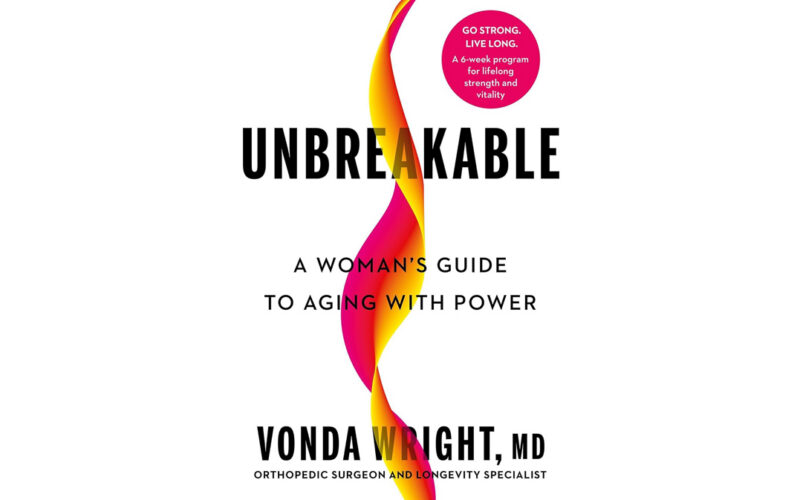
Je vais avoir cinquante ans cette année et cela fait un certain temps que je remarque que mon corps vieillit. Cela a commencé par quelques rides et quelques cheveux gris, ce qui n'est pas bien grave. La crème antirides et une visite au salon de coiffure ont suffi. Mais lorsque les douleurs musculaires et articulaires sont apparues, il est devenu plus difficile d'ignorer ces “nuisances”. Il était temps d'affronter la réalité : mon corps vieillissait de partout. C'est pourquoi j'ai été ravie d'examiner Incassable.
Écrit par un chirurgien orthopédique, j'espérais, après l'avoir lu, mieux comprendre ce qui causait mes douleurs corporelles et comment y remédier. En tant que personne souffrant d'arthrose, j'avais l'impression que ce livre pourrait m'aider à mieux identifier la cause profonde de ma douleur. J'étais impatiente de rendre mon corps “incassable”, comme le souligne l'auteur tout au long du livre.
J'ai abordé ce livre avec un certain scepticisme, étant donné le nombre de chemins trompeurs que les femmes sont encouragées à suivre, souvent à un coût élevé en termes de temps et d'argent.
Lisez jusqu'à la fin pour savoir si vous devriez acheter, emprunter ou simplement sauter ce livre.
Le Dr Vonda Wright est une chirurgienne orthopédique spécialisée dans le système musculo-squelettique. Son travail est axé sur le mouvement, la prévention des blessures et la récupération. Elle exerce en Floride, où elle fournit des soins cliniques et chirurgicaux.
Forte d'une longue expérience auprès des athlètes, elle apporte à la fois une expertise médicale et une vision pratique du maintien de la qualité de vie. la santé des os et des muscles-Même pour les personnes qui ne sont pas extrêmement actives. Elle a également écrit plusieurs livres sur le sujet, dont beaucoup s'adressent aux athlètes, ce qui n'est pas surprenant étant donné sa proximité avec le monde du sport professionnel (son mari est un joueur de hockey professionnel à la retraite).
En outre, elle maintient une forte présence en ligne à travers médias sociaux, YouTube, la sienne podcast, Elle a également participé à des émissions matinales et télévisées, ainsi qu'à des émissions de radio et de télévision et à des émissions de télévision. site web, Elle y partage ses conseils pour aider les femmes à atteindre leur potentiel “inébranlable”.
Quel est le public visé par Incassable?
Ce livre s'adresse aux femmes qui périménopause ou ménopauseL'objectif de l'auteur est d'aider les femmes à “évaluer où elles en sont et à passer par un processus d'optimisation de leur santé”. L'objectif de l'auteur est d'aider les femmes à "faire le point sur leur situation et à s'engager dans un processus d'optimisation de leur santé".”
Après avoir vu un grand nombre de ses patients souffrir de blessures évitables, notamment à la suite de chutes, elle s'est sentie obligée de remettre en question le message selon lequel les femmes devraient simplement accepter de vieillir. Au lieu de cela, elle affirme qu“”il est temps de dire assez".”
Quels sont les principaux domaines de contenu de la Incassable?
Incassable se présente comme un plan d'action pour renforcer la résistance aux effets physiques du vieillissement. Le livre est divisé en trois phases : la préparation, la construction et l'entretien.
Incassable se présente comme un plan d'action pour renforcer la résistance aux effets physiques du vieillissement. Le livre est divisé en trois phases : la préparation, la construction et l'entretien.
L'auteur vise à aider les lecteurs à comprendre ce qui cause le vieillissement, comment y remédier et comment atteindre et maintenir leur état “incassable”.
Le livre comprend également : un programme d'exercices détaillé sur six semaines, une variété de recettes à haute teneur en protéines avec anti-inflammatoire et une vue d'ensemble de la gestion de la douleur et des blessures.
Points forts Incassable
L'expertise médicale de l'auteur est le meilleur atout de ce livre. Ses connaissances et son expérience directe du fonctionnement des muscles et des os et de la prévention des blessures sont évidentes et donnent de la crédibilité à ses recommandations. Elle explique que le vieillissement n'est pas un événement unique mais une série de processus, appelés “bombes à retardement”, impliquant notre ADN, notre métabolisme, notre système immunitaire et nos cellules. Bien que complexe, cette perspective ajoute de la profondeur et renforce l'importance des soins proactifs.
Le Dr Wright explique que le vieillissement n'est pas un événement unique mais une série de processus, appelés “bombes à retardement”, impliquant notre ADN, notre métabolisme, notre système immunitaire et nos cellules. Bien que complexe, cette perspective ajoute de la profondeur et renforce l'importance des soins proactifs.
Les conseils nutritionnels sont rafraîchissants et pratiques. Les recettes utilisent des ingrédients accessibles et peuvent être facilement incorporées dans la vie quotidienne, ce qui est remarquable dans un espace souvent rempli de conseils écrasants.
Le plan d'entraînement structuré est un autre point fort. Il est détaillé, bien conçu et encourage de manière responsable les lecteurs à demander l'aide d'un professionnel si nécessaire.
Limites ou angles morts
L'approche médicale du livre peut le rendre difficile à suivre. Le langage est souvent technique et certaines sections, en particulier celles qui expliquent les processus cellulaires, semblent denses. Même avec une certaine familiarité avec la terminologie médicale, je me suis retrouvée à parcourir ou à devoir chercher des termes tels que “épuisement des télomères”, “inflammasome” et “biogenèse mitochondriale”.”
Le chapitre sur la ménopause est étonnamment bref et semble peu développé, surtout si l'on tient compte de sa pertinence pour le public cible. C'est décevant, d'autant plus que l'auteur fait référence à sa propre expérience du vieillissement plus tôt dans le livre.
Le programme d'exercices, bien que complet, manque d'indications visuelles. Les lecteurs doivent se rendre sur un site web pour voir les démonstrations, ce qui ajoute une étape supplémentaire. En outre, l'équipement requis peut rendre le programme moins accessible à ceux qui n'ont pas de salle de sport à domicile ou d'abonnement à une salle de sport.
La section sur la gestion de la douleur et le traitement des blessures m'a également semblé limitée. Elle se concentre sur quelques pathologies, telles que l'arthrose, l'épaule gelée et les lésions de la coiffe des rotateurs, mais n'aborde pas de manière plus large d'autres problèmes courants, la kinésithérapie ou les stratégies de rétablissement. Cet aspect aurait pu faire l'objet d'un chapitre à part entière plutôt que d'une brève annexe.
L“”évaluation incassable" qu'elle conseille au lecteur d'effectuer, afin d'évaluer où il se trouve, n'est pas très pratique. Elle nécessite beaucoup de temps, d'efforts et d'équipements qui ne sont pas forcément à la portée de la plupart des lecteurs. Bien qu'elle soit clairement présentée, elle semble en fin de compte écrasante et ne vaut pas l'investissement.
Le programme d'exercices de six semaines nécessite environ quatre heures par semaine, sans compter le temps de déplacement pour se rendre dans une salle de sport. Pour de nombreuses femmes ayant un emploi du temps chargé, ce n'est peut-être pas réaliste.
Verdict : à acheter, à emprunter ou à sauter Incassable tout à fait ?
Incassable offre des conseils crédibles et fondés sur le plan médical, en particulier dans les domaines de la santé des os, des muscles et de la santé en général. Cependant, son langage technique, son programme d'exercices exigeant et sa profondeur limitée dans des domaines clés peuvent ne pas répondre aux besoins de tous les lecteurs.
Incassable offre des conseils crédibles et fondés sur le plan médical, en particulier dans les domaines de la santé des os, des muscles et de la santé en général. Cependant, son langage technique, son programme d'exercices exigeant et sa profondeur limitée dans des domaines clés peuvent ne pas répondre aux besoins de tous les lecteurs.
Pour ceux qui sont prêts à y consacrer beaucoup de temps et de ressources, il peut s'agir d'un achat intéressant. Pour le reste d'entre nous, l'emprunter, puis appliquer ses conseils de manière sélective, peut être l'option la plus pratique.
En fin de compte, bien qu'instructif, le livre n'a pas été totalement accessible ou engageant. Je n'en suis pas ressortie avec le sentiment d'être “incassable”. Au contraire, j'avais hâte d'arriver à la fin.