


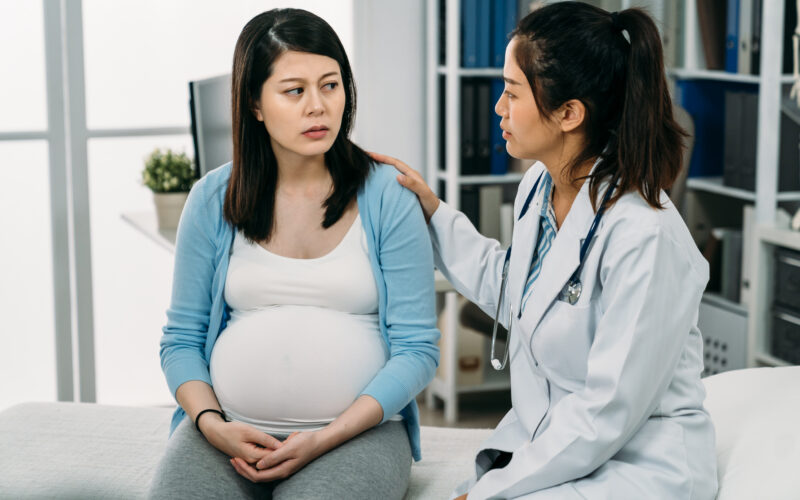
Hoy en día, casi una de cada cinco mujeres en edad fértil toma un antidepresivo, casi siempre un inhibidor selectivo de la recaptación de serotonina (ISRS) como Zoloft, Prozac o Lexapro. Para muchas, estos medicamentos son un salvavidas a la hora de lidiar con la depresión grave, los trastornos de ansiedad persistentes y otras afecciones; para otras, el tratamiento comenzó como un apoyo durante una etapa difícil, tal vez con la esperanza de poder dejar la medicación algún día. No importa por qué empezaste a tomar un ISRS, si eres una mujer en edad fértil, es posible que te preguntes: ¿qué pasa cuando quiero quedar embarazada?
Los médicos suelen tranquilizar a las mujeres asegurándoles que los ISRS son totalmente seguros durante el embarazo, pero la ciencia no está tan clara como parece. En realidad, un número cada vez mayor de estudios, liderados por médicos como Dr. Adam Urato (una especialista en medicina materno-fetal con más de dos décadas de experiencia en la atención a mujeres embarazadas en Massachusetts) ofrece una visión más matizada.
Cada vez son más los estudios que indican que la cuestión de la seguridad de los ISRS durante el embarazo requiere un análisis matizado
Desde hace más de diez años, Urato ha cuestionado el mensaje simplista que difunde la comunidad médica sobre los ISRS, documentando la relación entre el uso de estos fármacos y nacimiento prematuro, preeclampsia, la hemorragia posparto y los efectos preocupantes sobre el desarrollo cerebral del feto. Ha sido coautor de amplios metaanálisis en los que se han examinado miles de embarazos y ha testificado ante comités de expertos de la FDA, instando constantemente a una divulgación más honesta de los riesgos. Como señala, muchas pacientes informan que solo se les dice que los ISRS no suponen ningún riesgo para el bebé, lo cual, según él, no es ni preciso ni adecuado.
En este artículo, analizaremos los resultados contradictorios de las investigaciones sobre el impacto de los ISRS durante el embarazo, con un análisis sincero de los riesgos de no tratar depresión también durante el embarazo. Nada de lo que se dice en este artículo debe interpretarse como un consejo médico ni como una forma de generar miedo en torno a los ISRS y otras terapias de salud mental. Como siempre, nuestro objetivo en Natural Womanhood es ofrecer a las mujeres la mejor información posible, para que puedan tomar decisiones empoderadas e informadas sobre su propia salud y sus embarazos.
Posibles riesgos de los ISRS en las distintas etapas del embarazo: lo que revelan los estudios
Los ISRS no se quedan simplemente en el organismo de la madre. Durante el embarazo, atraviesan la placenta y llegan al organismo del bebé en desarrollo en etapas críticas de su crecimiento. Los resultados pueden variar según cada caso concreto, pero esto es lo que han revelado múltiples estudios en general.
Primer trimestre
Malformaciones cardíacas: Algunos estudios han relacionado la paroxetina (Paxil) específicamente con mayor riesgo de ciertos defectos cardíacos [1,2], y un estudio de 2016 meta-análisis Se observó que el uso de paroxetina durante el primer trimestre se asociaba con un riesgo aproximadamente el doble de padecer ciertas malformaciones cardíacas [3].
Pero aquí está el matiz: un gran Estudio estadounidense de 2014 Un estudio de más de 949 000 embarazos no encontró un aumento estadísticamente significativo de los defectos cardíacos en general tras controlar los factores maternos [4]. Otros estudios exhaustivos reseñas tampoco se observó un aumento significativo en las malformaciones congénitas en general [5]. ¿A qué se debe esta discrepancia entre los resultados de los estudios? La respuesta parece ser que específico Los ISRS (en particular la paroxetina) pueden conllevar riesgos distintos a los de otros fármacos, y, afortunadamente, el riesgo absoluto de que el feto sufra defectos cardíacos sigue siendo relativamente bajo.
¿A qué se debe la discrepancia entre los resultados de los estudios? La respuesta parece ser que específico Los ISRS (en particular la paroxetina) pueden conllevar riesgos distintos a los de otros fármacos, y, afortunadamente, el riesgo absoluto de que el feto sufra defectos cardíacos sigue siendo relativamente bajo.
Etapas avanzadas del embarazo y el período inmediatamente posterior al parto
Parto prematuro: Las pruebas en este caso han ido cambiando. A Metaanálisis de 2014 Huybrechts y sus colegas también encontraron una relación entre el uso de antidepresivos durante el segundo y tercer trimestre y un mayor riesgo de parto prematuro [6]. A Metaanálisis de 2016 Se observó que las mujeres que recibieron ISRS durante el embarazo presentaban un riesgo significativamente mayor de parto prematuro (OR 1,45), incluso tras ajustar los resultados por la depresión materna [7].
En 2024, sin embargo, un meta-análisis Se observó que el uso de antidepresivos por parte de la madre durante el embarazo no se asociaba con el parto prematuro cuando se ajustaban adecuadamente los datos para tener en cuenta la depresión materna, independientemente del momento en que se tomaran [8]. Estos nuevos datos sugieren que los estudios anteriores podrían haber estado sesgados por la depresión subyacente, más que por la medicación en sí. En resumen, este ámbito concreto aún requiere más investigación.
Una vez más, ¿a qué se debe esta discrepancia? En este caso, parece deberse en gran medida a cómo se clasificó la depresión en sí misma dentro de los estudios, y es justo decir que no todas las depresiones son iguales. Las mujeres con una depresión más grave y resistente al tratamiento tienen más probabilidades de recibir ISRS y tienen, por sí mismas, una mayor probabilidad de dar a luz antes de tiempo, y los estudios primarios incluidos en el análisis de 2016 variaban considerablemente en cuanto al grado de control de esta asociación.
Las mujeres con una depresión más grave y resistente al tratamiento tienen más probabilidades de recibir ISRS y tienen más probabilidades, por sí mismas, de dar a luz antes de tiempo.
Mala adaptación neonatal: Este dato se mantiene bastante constante en los distintos estudios. Aproximadamente entre el 25 % y el 30 % de los recién nacidos expuestos a ISRS durante la última etapa del embarazo presentan síntomas similares a los de abstinencia tras el nacimiento. Entre ellos se incluyen: nerviosismo, temblores, irritabilidad y dificultad para respirar [9,10,11]. La buena noticia es que estos síntomas suelen ser leves y pasajeros, desaparecen en cuestión de días o semanas y, hasta ahora, no parecen tener consecuencias a largo plazo. Sin embargo, ver a un recién nacido sufrir síntomas de abstinencia puede resultar difícil de sobrellevar para las mamás primerizas, sobre todo si ellas mismas ya están pasando por un estado de ansiedad elevado.
Hipertensión pulmonar persistente (HPP): A Metaanálisis en red de 2019 Se descubrió que la exposición a los ISRS o IRSN durante el embarazo se asociaba con un riesgo aproximadamente el doble de padecer esta grave afección pulmonar (OR 1,82) [12]. “Un riesgo el doble” puede parecer mucho, pero conviene tener en cuenta que eso supone aproximadamente entre 2 y 3 casos por cada 1.000 nacidos vivos, en comparación con una tasa de referencia de alrededor de 1,2 casos por cada 1.000 nacidos vivos [13,14]. Así que sí, el riesgo se duplica en términos relativos, pero en términos absolutos sigue siendo poco frecuente.
La cuestión del desarrollo neurológico
Todo el mundo quiere saber sobre autismo. Las investigaciones al respecto son frustrantemente poco claras. Algunos estudios han sugerido que existe una relación entre la exposición prenatal a los ISRS y un mayor riesgo de autismo [15,16], mientras que otros no han encontrado ninguna asociación significativa tras tener en cuenta las enfermedades psiquiátricas maternas [17,18]. Un estudio de Kaiser Permanente de 2023 reveló que las madres con trastornos psiquiátricos tenían más probabilidades de tener hijos con autismo, pero no encontró ninguna relación con el uso de ISRS en sí mismo [19].
¿Qué significa esto? Al igual que con muchas de las otras afecciones mencionadas anteriormente, es difícil afirmar con certeza si la medicación conlleva algún riesgo para el desarrollo neurológico o los trastornos de salud mental subyacentes de la madre.
Al igual que con muchas de las otras afecciones mencionadas anteriormente, es difícil afirmar con certeza si la medicación conlleva algún riesgo para el desarrollo neurológico o los trastornos de salud mental subyacentes de la madre.
Por otro lado, la depresión no tratada también conlleva riesgos importantes
Ante toda esta incertidumbre, la forma más sencilla de reducir el riesgo potencial de los ISRS es evitarlos durante el embarazo. Por supuesto, la realidad es mucho más complicada que eso. Al analizar los riesgos de los ISRS, también debemos reconocer que la depresión no tratada (y otros problemas de salud mental) durante el embarazo también puede ser peligrosa.
Suicidio es una de las principales causas de mortalidad materna en los Estados Unidos. Depresión materna no tratada se asocia con una atención prenatal deficiente, el parto prematuro, el bajo peso al nacer, un vínculo materno-infantil comprometido, mayores índices de consumo de sustancias y la aparición de depresión posparto [20]. Es más, las mujeres que dejan de tomar antidepresivos durante el embarazo presentan tasas de recaída notablemente más altas, con una estudio de referencia se observó una tasa de recaída de 681 por cada 1000 personas entre quienes dejaron de tomar antidepresivos, en comparación con 261 por cada 1000 personas entre quienes continuaron tomándolos [21].
Las mujeres que dejan de tomar antidepresivos durante el embarazo presentan tasas de recaída notablemente más altas, con una estudio de referencia se observó una tasa de recaída de 681 por cada 1000 personas entre quienes dejaron de tomar antidepresivos, en comparación con 261 por cada 1000 personas entre quienes continuaron tomándolos.
A Metaanálisis de 2021 se observó que, al limitar los análisis a las mujeres con diagnóstico de depresión, no se encontraron asociaciones entre el uso de antidepresivos y la mayoría de los resultados adversos en los recién nacidos [22]. Esto sugiere que parte del riesgo podría estar relacionado con la afección subyacente más que con la medicación en sí. Esto explica en parte por qué los estudios tienen dificultades para llegar a un consenso claro y coherente, y por qué, en la práctica, es importante que las mujeres embarazadas consulten a sus profesionales de atención prenatal, psiquiatras y cualquier otra persona necesaria para recibir la atención y el apoyo adecuados.
Así que nos enfrentamos a una disyuntiva realmente difícil: los posibles riesgos de los medicamentos frente a los posibles riesgos de la depresión. Y precisamente por eso estas decisiones deben ser individualizadas, y por eso las mujeres merecen contar con la información necesaria para tomar decisiones informadas sobre su salud (y la de sus bebés).
Tanto si estás embarazada como si estás pensando en quedarte embarazada, no te pierdas la segunda parte de esta serie sobre los ISRS y el embarazo: “¿Se puede reducir gradualmente o suspender un ISRS de forma segura durante el embarazo?”
Referencias
[1] Bakker MK, Kerstjens-Frederikse WS, Buys CH, de Walle HE, de Jong-van den Berg LT. Uso de paroxetina durante el primer trimestre y defectos cardíacos congénitos: un estudio de casos y controles basado en la población. Birth Defects Res A Clin Mol Teratol. Febrero de 2010; 88(2):94-100. doi: 10.1002/bdra.20641. PMID: 19937603.
[2] Knudsen TM, Hansen AV, Garne E, Andersen AM. Mayor riesgo de cardiopatías congénitas graves en los hijos de madres expuestas a inhibidores selectivos de la recaptación de serotonina durante las primeras etapas del embarazo: un estudio epidemiológico basado en datos validados de EUROCAT. BMC Pregnancy Childbirth. 25 de septiembre de 2014; 14:333. doi: 10.1186/1471-2393-14-333. PMID: 25258023; PMCID: PMC4183770.
[3] Bérard A, Iessa N, Chaabane S, Muanda FT, Boukhris T, Zhao JP. El riesgo de malformaciones cardíacas graves asociadas al uso de paroxetina durante el primer trimestre del embarazo: una revisión sistemática y un metaanálisis. Br J Clin Pharmacol. Abril de 2016;81(4):589-604. doi: 10.1111/bcp.12849. Publicación electrónica: 26 de enero de 2016. PMID: 26613360; PMCID: PMC4799922.
[4] Huybrechts KF, Palmsten K, Avorn J, Cohen LS, Holmes LB, Franklin JM, Mogun H, Levin R, Kowal M, Setoguchi S, Hernández-Díaz S. Uso de antidepresivos durante el embarazo y riesgo de defectos cardíacos. N Engl J Med. 19 de junio de 2014;370(25):2397-407. doi: 10.1056/NEJMoa1312828. PMID: 24941178; PMCID: PMC4062924.
[5] Gao SY, Wu QJ, Sun C, Zhang TN, Shen ZQ, Liu CX, Gong TT, Xu X, Ji C, Huang DH, Chang Q, Zhao YH. Uso de inhibidores selectivos de la recaptación de serotonina durante el embarazo temprano y malformaciones congénitas: una revisión sistemática y un metaanálisis de estudios de cohortes con más de 9 millones de nacimientos. BMC Med. 12 de noviembre de 2018; 16(1):205. doi: 10.1186/s12916-018-1193-5. PMID: 30415641; PMCID: PMC6231277.
[6] Huybrechts KF, Sanghani RS, Avorn J, Urato AC. Parto prematuro y uso de antidepresivos durante el embarazo: una revisión sistemática y un metaanálisis. PLoS One. 26 de marzo de 2014; 9(3):e92778. doi: 10.1371/journal.pone.0092778. PMID: 24671232; PMCID: PMC3966829.
[7] Eke AC, Saccone G, Berghella V. Uso de inhibidores selectivos de la recaptación de serotonina (ISRS) durante el embarazo y riesgo de parto prematuro: una revisión sistemática y un metaanálisis. BJOG. Noviembre de 2016;123(12):1900-1907. doi: 10.1111/1471-0528.14144. Publicación electrónica: 30 de mayo de 2016. PMID: 27239775; PMCID: PMC9987176.
Referencias Continuación
[8] Wang J, Roy D, Wang MY, Dinh D, Lao A, Mendoza V, Xu G, Chatterton CG, Ahmadieh N. Momento de inicio del tratamiento antidepresivo durante el embarazo y el parto prematuro: una revisión sistemática y un metaanálisis. O G Open. 1 de agosto de 2024; 1(3):22. doi: 10.1097/og9.0000000000000022. PMID: 41001227; PMCID: PMC12456488.
[9] Levinson-Castiel R, Merlob P, Linder N, Sirota L, Klinger G. Síndrome de abstinencia neonatal tras la exposición intrauterina a inhibidores selectivos de la recaptación de serotonina en recién nacidos a término. Arch Pediatr Adolesc Med. Febrero de 2006;160(2):173-6. doi: 10.1001/archpedi.160.2.173. PMID: 16461873.
[10] Forsberg L, Navér L, Gustafsson LL, Wide K. Adaptación neonatal en bebés expuestos prenatalmente a antidepresivos: seguimiento clínico mediante la Escala de Abstinencia Neonatal. PLoS One. 3 de noviembre de 2014; 9(11):e111327. doi: 10.1371/journal.pone.0111327. PMID: 25365553; PMCID: PMC4218720.
[11] Grigoriadis S, VonderPorten EH, Mamisashvili L, Eady A, Tomlinson G, Dennis CL, Koren G, Steiner M, Mousmanis P, Cheung A, Ross LE. El efecto de la exposición prenatal a antidepresivos en la adaptación neonatal: una revisión sistemática y un metaanálisis. J Clin Psychiatry. Abril de 2013; 74(4):e309-20. doi: 10.4088/JCP.12r07967. PMID: 23656856.
[12] Masarwa R, Bar-Oz B, Gorelik E, Reif S, Perlman A, Matok I. Exposición prenatal a inhibidores selectivos de la recaptación de serotonina e inhibidores de la recaptación de serotonina y norepinefrina y riesgo de hipertensión pulmonar persistente del recién nacido: una revisión sistemática, un metaanálisis y un metaanálisis en red. Am J Obstet Gynecol. Enero de 2019; 220(1):57.e1-57.e13. doi: 10.1016/j.ajog.2018.08.030. Publicación electrónica del 28 de agosto de 2018. PMID: 30170040.
[13] Chambers CD, Hernández-Díaz S, Van Marter LJ, Werler MM, Louik C, Jones KL, Mitchell AA. Inhibidores selectivos de la recaptación de serotonina y riesgo de hipertensión pulmonar persistente del recién nacido. N Engl J Med. 9 de febrero de 2006; 354(6):579-87. doi: 10.1056/NEJMoa052744. PMID: 16467545.
[14] Kieler H, Artama M, Engeland A, Ericsson O, Furu K, Gissler M, Nielsen RB, Nørgaard M, Stephansson O, Valdimarsdottir U, Zoega H, Haglund B. Inhibidores selectivos de la recaptación de serotonina durante el embarazo y riesgo de hipertensión pulmonar persistente en el recién nacido: estudio de cohorte poblacional de los cinco países nórdicos. BMJ. 12 de enero de 2012;344:d8012. doi: 10.1136/bmj.d8012. PMID: 22240235.
[15] Boukhris T, Sheehy O, Mottron L, Bérard A. Uso de antidepresivos durante el embarazo y el riesgo de trastorno del espectro autista en los niños. JAMA Pediatr. Febrero de 2016;170(2):117-24. doi: 10.1001/jamapediatrics.2015.3356. PMID: 26660917.
[16] Harrington RA, Lee LC, Crum RM, Zimmerman AW, Hertz-Picciotto I. Uso prenatal de ISRS y descendencia con trastorno del espectro autista o retraso en el desarrollo. Pediatrics. Mayo de 2014;133(5):e1241-8. doi: 10.1542/peds.2013-3406. Publicación electrónica: 14 de abril de 2014. PMID: 24733881; PMCID: PMC4006441.
Referencias Continuación
[17] Hviid A, Melbye M, Pasternak B. Uso de inhibidores selectivos de la recaptación de serotonina durante el embarazo y riesgo de autismo. N Engl J Med. 19 de diciembre de 2013;369(25):2406-15. doi: 10.1056/NEJMoa1301449. PMID: 24350950.
[18] Suárez EA, Bateman BT, Hernández-Díaz S, Straub L, Wisner KL, Gray KJ, Pennell PB, Lester B, McDougle CJ, Zhu Y, Mogun H, Huybrechts KF. Asociación entre el uso de antidepresivos durante el embarazo y el riesgo de trastornos del desarrollo neurológico en los niños. JAMA Intern Med. 3 de octubre de 2022; 182(11):1149–60. doi: 10.1001/jamainternmed.2022.4268. Publicación electrónica previa a la impresión. PMID: 36190722; PMCID: PMC9531086.
[19] Ames JL, Ladd-Acosta C, Fallin MD, Qian Y, Schieve LA, DiGuiseppi C, Lee LC, Kasten EP, Zhou G, Pinto-Martin J, Howerton EM, Eaton CL, Croen LA. Trastornos psiquiátricos maternos, tratamiento con inhibidores selectivos de la recaptación de serotonina y trastornos del desarrollo neurológico. Biol Psychiatry. 15 de agosto de 2021; 90(4):253-262. doi: 10.1016/j.biopsych.2021.04.002. Publicación electrónica 14 de abril de 2021. PMID: 34116791; PMCID: PMC8504533.
[20] Grigoriadis S, Graves L, Peer M, Mamisashvili L, Tomlinson G, Vigod SN, Dennis CL, Steiner M, Brown C, Cheung A, Dawson H, Rector NA, Guenette M, Richter M. La ansiedad materna durante el embarazo y su relación con los resultados perinatales adversos: revisión sistemática y metaanálisis. J Clin Psychiatry. 4 de septiembre de 2018; 79(5):17r12011. doi: 10.4088/JCP.17r12011. PMID: 30192449.
[21] Cohen LS, Altshuler LL, Harlow BL, Nonacs R, Newport DJ, Viguera AC, Suri R, Burt VK, Hendrick V, Reminick AM, Loughead A, Vitonis AF, Stowe ZN. Recaída de la depresión mayor durante el embarazo en mujeres que mantienen o interrumpen el tratamiento antidepresivo. JAMA. 1 de febrero de 2006; 295(5):499-507. doi: 10.1001/jama.295.5.499. Fe de erratas en: JAMA. 12 de julio de 2006; 296(2):170. PMID: 16449615.
[22] Vlenterie R, van Gelder MMHJ, Anderson HR, Andersson L, Broekman BFP, Dubnov-Raz G, El Marroun H, Ferreira E, Fransson E, van der Heijden FMMA, Holzman CB, Kim JJ, Khashan AS, Kirkwood BR, Kuijpers HJH, Lahti-Pulkkinen M, Mason D, Misra D, Niemi M, Nordeng HME, Peacock JL, Pickett KE, Prady SL, Premji SS, Räikkönen K, Rubertsson C, Sahingoz M, Shaikh K, Silver RK, Slaughter-Acey J, Soremekun S, Stein DJ, Sundström-Poromaa I, Sutter-Dallay AL, Tiemeier H, Uguz F, Varela P, Vrijkotte TGM, Winterfeld U, Zar HJ, Zervas IM, Prins JB, Pop-Purceleanu M, Roeleveld N. Asociaciones entre la depresión materna, el uso de antidepresivos durante el embarazo y los resultados adversos del embarazo: un metaanálisis de datos de participantes individuales. Obstet Gynecol. 1 de octubre de 2021;138(4):633-646. doi: 10.1097/AOG.0000000000004538. PMID: 34623076.

Gracias por su artículo tan equilibrado. Como psiquiatra, me enseñaron a analizar toda esta información sobre los posibles riesgos y beneficios con las mujeres. Para la mayoría de mis pacientes, los riesgos conocidos de no tratar la depresión o la ansiedad durante el embarazo superan los riesgos potenciales, poco frecuentes o desconocidos de los ISRS, pero cada persona debe tomar su propia decisión basándose en sus valores más importantes y en su propia tolerancia al riesgo y a la incertidumbre.
Creo que es especialmente importante destacar la conclusión principal: los datos presentados aquí, en su conjunto, muestran riesgos MUY bajos para el desarrollo del bebé y las complicaciones derivadas del uso de ISRS. Sin embargo, la conclusión es que la interrupción del uso de los ISRS Y los trastornos de salud mental subyacentes en la madre tienen, de manera abrumadora, MÁS efectos negativos tanto en la salud de la madre como en la del bebé. No creo que este punto quede particularmente claro en este artículo. Sí, sin duda cualquier medicamento conlleva riesgos; sin embargo, cuando la evidencia apunta claramente a que los trastornos de salud mental no tratados causan más daño, esto no debería presentarse de manera tan “matizada” como lo hace este artículo. Más bien, sí, las mujeres deben saber que existen riesgos, pero los profesionales de la salud tienen la responsabilidad de apoyar y alentar a sus pacientes a leer e interpretar los estudios de manera realista, teniendo en cuenta su salud integral.