
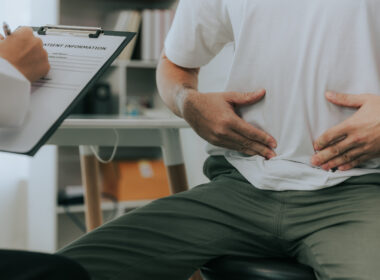


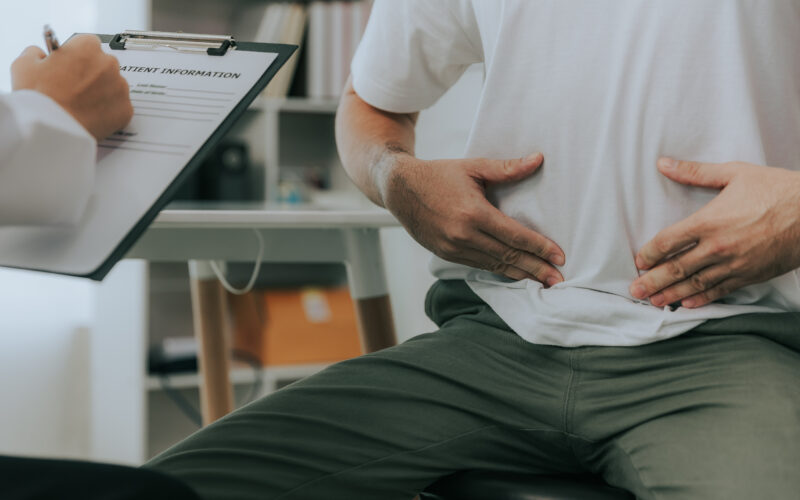
Our gut is found at the physical center of our body, and has traditionally served as our metaphorical center as well. We’re told to “trust our gut” when something doesn’t seem right. Sometimes in life we undergo a “gut-wrenching experience,” and surely most of us have, at some point, also experienced the sensation of “butterflies in our stomach.”
For a long time, anatomy and physiology textbooks would disagree, stating that the gut is simply where food turns into poop. However, the medical community is starting to put the gut back in its central place due to its important role in whole-person health, including fertility—for women and for men.
A hard-working organ
First off, what do we mean by “gut?” The gut can refer to the entire gastrointestinal system, which includes all the parts of your body that are directly involved in processing food. This involves the mouth, esophagus, stomach, and intestines as well as the organs that help out along the way (like the liver and pancreas).
However, when talking about a healthy gut, the spotlight shines especially on the intestines. If you remember from high school biology, the small intestine finishes breaking down food and absorbs nutrients, and the large intestine absorbs water and condenses the leftover waste. But this process is not a one-man show, and it doesn’t stop with digesting food.
The intestines house trillions of microorganisms (mostly bacteria) that, in return for a comfy place to live, help their host by breaking down undigested carbs, producing micronutrients, signaling molecules, and even hormone and neurotransmitter building blocks [1]. And, just by being there, these microscopic helpers keep you healthy by protecting their turf from harmful bacteria.
To keep track of all these microbes, as well as everything that goes into the mouth, the lining of the gut houses the majorité of all the cellules immunitaires in the body, making it the body’s largest immune-system organ [2]. The gut also acts as an endocrine organ, producing more than 30 different hormones. And to top it off, the gut also has a complex network of neurons and both informs the brain of distress and responds to distress (which is why stress often makes people feel—literally—sick to their stomachs).
What exactly is gut dysbiosis?
The fact that the gut plays such a key role in multiple body systems helps to explain why an unhappy gut causes so many problems. When a person’s unique gut microbiome is disrupted, it’s called dysbiose. In dysbiosis, there are fewer helpful microbes than there should be, more harmful ones, and less microbe diversity. According to the Clinique de Cleveland, poor diet, stress, antibiotics, infection, lack of sleep, lack of physical activity, and excessive alcohol can all contribute to dysbiosis.
The fact that the gut plays such a key role in multiple body systems helps to explain why an unhappy gut causes so many problems. When a person’s unique gut microbiome is disrupted, it’s called dysbiose.
When this happens, the body is deprived of the important micronutrients and other by-products the bacteria make, and the immune system is activated. Inflammation occurs and reactive oxygen species (ROS) are produced by immune cells to fight harmful bacteria. Unfortunately, some harmful bacteria don’t mind ROS, while excessive ROS create a state of oxidative stress that can harm helpful bacteria and human cells alike, and is an important factor in progressing the inflammatory response [3].
Furthermore, inflammation weakens the barrier between the gut interior and the rest of the body, through which toxic by-products from harmful bacteria can leak, leading to more inflammation. (In case you haven’t noticed it yet, vicious cycles are the name of the game here.) The gut lets the brain know that things are going terribly, and cortisol is released. Cortisol helps to decrease inflammation short-term, but cortisol will eventually lead to more inflammation if the problem is not resolved, becoming—you guessed it—another vicious cycle.
How gut dysbiosis affects the testes
Each of these results: inflammation, increased ROS, and the absence of helpful-bacteria products, will negatively impact sperm production in men. Inflammation causes problems by increasing body temperature and because the immune cells use more than their fair share of the available oxygen (especially to make ROS). Inflammation also damages the blood-testis barrier.
Similarly to how the brain has a special blood-brain barrier, the testes have special protection to maintain their unique environment for sperm production and to keep out immune cells (since sperm are genetically distinct from the rest of the cells in the body, and can be flagged as a threat by the immune system). Without this barrier, sperm can be damaged by immune cells and by environmental toxins that can end up in the blood (including perturbateurs endocriniens) [4].
Similarly to how the brain has a special blood-brain barrier, the testes have special protection to maintain their unique environment for sperm production and to keep out immune cells (since sperm are genetically distinct from the rest of the cells in the body, and can be flagged as a threat by the immune system). Without this barrier, sperm can be damaged by immune cells and by environmental toxins that can end up in the blood (including endocrine disruptors).
The barrier can be further disrupted by those pesky ROS. Think of them like a bouncy ball thrown in an antique store. These highly-reactive molecules bounce around and damage DNA, the sperm itself, and the proteins that help make sperm. Sperm are tiny and particularly vulnerable to damage, and too much damage will cause them to self-destruct in a process known as apoptosis. Furthermore, the male body produces millions of sperm a day, which requires lots of micronutrients, which aren’t available without the healthy bacteria that are supposed to populate the gut. Last but not least, elevated cortisol can suppress gonatotropin-releasing hormone, in turn suppressing LH and FSH, and ultimately suppressing testosterone and sperm production.
The gut-testis axis
The effect of gut health on the testes is clear in terms of cause-and-effect, but the gut-testis axis hypothesis draws attention to how the testes in turn affect the gut, specifically through testosterone production.
The testes are the primary producers of testosterone in the male body. Testostérone is an anti-inflammatory hormone, and it plays an important role in metabolism, especially in building muscle and using fat reserves. While these are well known effects of testosterone, this 2025 review analyzing recent research into the gut-testis axis found that higher testosterone levels were associated with greater microbiome diversity, that certain bacteria species are much more abundant in men than women, and that some groups of bacteria are associated with higher testosterone and some with low testosterone. Comment testosterone and gut bacteria interact is still a topic of exploration, but different types of bacteria have been shown to produce testosterone building-blocks, consume testosterone, and can modify testosterone to prevent it from being excreted in urine and instead keep it in circulation for longer [5]. Some bacteria have even been shown to make testosterone eux-mêmes!
To summarize, in dysbiosis, increased harmful bacteria leads to fewer available micronutrients, and more inflammation, ROS production, and stress, all of which hurt testosterone levels and spermatogenesis. In turn, low testosterone contributes to more inflammation and a less diverse microbiome, perpetuating the cycle. Low testosterone worsens the cycle in indirect ways as well by contributing to more body fat (further increasing inflammation levels), and through fatigue (lack of physical activity contributes to both dysbiosis and inflammation).
To summarize, in dysbiosis, increased harmful bacteria leads to fewer available micronutrients, and more inflammation, ROS production, and stress, all of which hurt testosterone levels and spermatogenesis. In turn, low testosterone contributes to more inflammation and a less diverse microbiome, perpetuating the cycle. Low testosterone worsens the cycle in indirect ways as well by contributing to more body fat (further increasing inflammation levels), and through fatigue (lack of physical activity contributes to both dysbiosis and inflammation).
When the gut is healthy, there are plenty of helpful bacteria that create important by-products for sperm production, maintaining healthy hormone levels, and antioxidants that keep the ROS level in check. Sperm and testosterone production can carry on as planned, and healthy levels of testosterone soothes inflammation and promotes an ideal microbiome.
How to get the gut-testis axis functioning well
The first step towards a happier gut is to lower stress. This means prioritizing sleep, getting at least 150 minutes of moderate physical activity a week, and finding ways to relax and wind down every day. The next step is to make sure that things can move through the gut, meaning increasing fiber intake with fruits, vegetables, nuts, and whole grain foods, and by drinking plenty of water. Aside from helping with regular bowel movements, gut bacteria also take fiber and turn it into short-chain fatty acids, which are important in sperm production.
The next step is lowering saturated fat and sugar intake. A 2013 study on Danish men found that higher saturated fat intake was associated with lower sperm count and lower sperm concentration; specifically a 60% lower sperm concentration compared to the men with the lowest saturated fat consumption [6]. This Étude de 2016 found that high-fat diets were also associated with dysbiosis [7]. High sugar intake is known to contribute to dysbiosis, lower short-chain fatty acid production, and increase inflammation.
Speaking of inflammation, it’s important to remember that each person has a unique genetic makeup and microbiome, so it’s also important to find your own dietary triggers. A common recommendation is to keep a food diary for a period of time and make a note of GI-related symptoms to help identify how different foods make you feel. If you feel best going gluten-free, trying a low FODMAP diet, using intermittent fasting, or simply avoiding certain foods that bother your stomach, then stick with what helps you feel best!
If your gut’s been struggling for a while, it may be time to bring in reinforcements. Fermented foods like yogurt, kefir, or kombucha can offer an easy way to introduce more helpful bacteria into your gut. If there aren’t many fermented foods on your list of favorite snacks, probiotic supplements are easy to find; look for high CFU (colony forming unit) counts and multiple strains. Supplemental probiotics can be especially helpful in rescuing the gut microbiome after antibiotic use or after a GI infection.
The bottom line on the gut and male fertility
In Western medicine, we’re used to thinking about the body in all its separate parts. A gastroenterologist can help you with your digestive issues and a urologist is there to answer questions about reproductive health, and never the two shall meet. However, the recent studies into the gut-testis axis really highlight the interconnectedness between each of the body’s many systems and how dysfunction in one area is often connected with problems and symptoms in other parts of the body.
Just as the menstrual cycle is held up as the cinquième signe vital for women for its importance in identifying underlying health issues (when it’s tracked via a fertility awareness method!), male fertility can also be seen as an important marker of overall health. Straightforward steps like improving diet, increasing sleep and physical activity, and taking a probiotic can be a non-invasive first step to addressing male-factor infertility.