


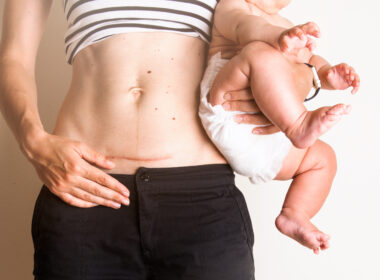


Una vez que ha pasado la primera etapa posparto y la vida ha vuelto a una (nueva) normalidad, muchas mujeres desean perder el ‘peso del embarazo’ que ganaron durante la gestación o comenzar un nuevo camino hacia la salud y el bienestar físico. Sin embargo, si sigues amamantando incluso cuando empiezas a introducir alimentos sólidos en la dieta de tu bebé, es posible que no sepas muy bien cómo puedes bajar de peso de manera segura y eficaz. Probablemente ya sabes que Necesitas más calorías para producir leche para tu bebé, pero también sabes que Para bajar de peso es necesario tener un déficit calórico. Entonces, ¿cómo puedes reducir de forma segura tu ingesta diaria de calorías sin afectar tu producción de leche? ¿Puedes seguir dietas especiales como la cetogénica y seguir amamantando? ¿Y qué hay del ejercicio? ¿Es seguro? ¿O puedes bajar de peso simplemente amamantando y sin hacer nada más?
Cada persona vive la pérdida de peso posparto de manera diferente
Antes de abordar estas preguntas, es importante señalar que cada mujer en el posparto es diferente en lo que respecta a la pérdida de peso. Algunas mujeres parecen adelgazar sin esfuerzo en las semanas y meses posteriores al parto mientras amamantan a sus bebés; otras solo ven una disminución de peso una vez que introducen alimentos sólidos; y otras se quejan de que les resulta difícil perder peso hasta que por completo destetar a su bebé. Dependiendo de tu estado de salud y tu peso antes del embarazo, así como de la pérdida de peso natural que se produce inmediatamente después del parto, es posible que sí o que no necesites pruebe para bajar de peso. Esto nos lleva a nuestra primera pregunta importante…
¿Perderé peso solo por dar el pecho?
No es fácil determinar si se perderá peso solo por amamantar, y tampoco hay una respuesta sencilla. El embarazo, el parto y la lactancia tienen un impacto enorme efecto en el metabolismo de una mujer, independientemente de cuál sea su estado metabólico antes de quedar embarazada [1]. Los investigadores han postulado que la lactancia actúa como una especie de “reinicio” que ayuda a las mujeres a recuperar su metabolismo basal previo al embarazo, lo cual es una gran noticia para aquellas de nosotras que amamantamos durante meses (¡o años!) después del nacimiento de un bebé [2]. Sin embargo, cuantos más hijos tengas, mayor es el riesgo aumenta para la obesidad y las enfermedades metabólicas. Es importante destacar que esto no tiene tanto que ver con el embarazo en sí, sino más bien con el impacto de tener dificultades para bajar de peso después del parto [3] [4]. Y, como te dirá cualquier mujer que haya tenido más de un hijo (sobre todo si los ha tenido con poca diferencia de edad), es muy fácil caer en un círculo vicioso en el que se gana peso durante el embarazo y no se logra perderlo todo antes del siguiente embarazo.
Pérdida de peso con la lactancia materna frente a la alimentación con fórmula
Entonces, ¿la lactancia materna es ese “reinicio” milagroso que nos ayuda a recuperar el peso que teníamos antes del embarazo? A veces. Investigación tiene en general encontrado que, aunque las mujeres que amamantan queman más calorías, también comer más calorías, especialmente en la fase posparto temprana [5] [6] [7] [8]. Sin embargo, resulta curioso que la pérdida de peso en las mujeres que alimentan a sus bebés con fórmula parezca ser mucho más rápida en los primeros meses posparto (ya que, por lo general, comen mucho menos en ese momento), pero una vez transcurridas las primeras doce semanas, parece que las mujeres que amamantan sí pierden peso más fácilmente.
La pérdida de peso en las mujeres que alimentan a sus bebés con leche de fórmula parece ser mucho más rápida durante los primeros meses después del parto (ya que, por lo general, comen mucho menos en esa etapa), pero una vez transcurridas las primeras doce semanas, parece que las mujeres que amamantan pierden peso con mayor facilidad.
Un estudiar se observó que, al cumplirse el primer año, las mujeres que amamantaban perdían casi 2,3 kg más de media que aquellas que no lo hacían [8]. Otros estudios Sin embargo, esto entra en conflicto con otros hallazgos, ya que se ha observado que, si bien las mujeres que amamantaron en el pasado suelen ser ligeramente más delgadas a los 45 años, es probable que esto se deba en gran medida no tanto a la lactancia materna como a otros hábitos saludables que adopta ese mismo grupo demográfico [9].
¿La solución definitiva para bajar de peso después del parto? Depende
¿Qué podemos deducir de esto? Bueno, la lactancia materna puede ayudarte a perder unos kilos de más de lo que perderías de otra manera, pero el aumento en la ingesta de energía (más comida) que necesitas podría contrarrestar el mayor gasto energético que supone la lactancia. En otras palabras, las investigaciones aún no han determinado por qué algunas mujeres pierden peso más fácilmente que otras durante la lactancia, pero es muy posible que la lactancia materna por sí sola no contribuya mucho a tu pérdida de peso.
Las investigaciones aún no han determinado por qué algunas mujeres pierden peso más fácilmente que otras durante la lactancia, pero es muy posible que la lactancia por sí sola no contribuya mucho a la pérdida de peso.
¿Qué se considera peligroso durante la lactancia?
Antes de entrar en las estrategias específicas para bajar de peso y analizar si son útiles o no, es importante mencionar que no se recomienda la restricción calórica ni hacer dieta durante las primeras doce semanas después del parto. Durante este primer período posparto, es importante centrarse en nutrir el cuerpo y empezando a curarse—ambas cosas pueden y deben ser realizadas por comer bien y empezando a mueve suavemente tu cuerpo.
Si quieres amamantar (lo cual tiene muchas beneficios para las mujeres y sus bebés), también debes asegurarte de comer lo suficiente para alcanzar (y luego no perder) un una buena producción de leche. Por lo general, 1.800 calorías se considera el absoluto mínimo cantidad de calorías que una mujer que amamanta puede consumir al día sin preocuparse de que disminuya su producción de leche; pero, una vez más, en las primeras semanas posparto, es probable que esta cantidad sea (lamentablemente, lamentablemente) insuficiente (Lee más sobre este tema aquí).
Sin embargo, si ya han pasado las primeras 12 semanas después del parto y quieres empezar a bajar de peso de forma deliberada, ten en cuenta que las calorías adicionales que necesitas para seguir amamantando probablemente harán que la pérdida de peso sea un proceso más lento de lo que sería en otras circunstancias, ya que es considerado seguro perder solo alrededor de medio kilo por semana durante la lactancia (e incluso eso puede resultar demasiado rápido, por lo que tal vez tengas que aumentar tu ingesta calórica si notas que tu producción de leche disminuye). Incluso 12 semanas o más después del parto, intentar bajar de peso con medidas más drásticas (como ayunos de varios días o una restricción calórica extrema, por ejemplo) puede ser perjudicial para ti y para tu bebé, ya que tu cuerpo quema al menos 500 calorías solo con la lactancia materna.
La evidencia sobre los métodos para bajar de peso durante la lactancia
A continuación, te ofrecemos una breve descripción de algunos de los métodos más populares para bajar de peso y si son seguros (y eficaces) durante la lactancia (todos ellos suponen que han pasado al menos 12 semanas desde el parto).
Restricción calórica
Uno de los métodos más comunes para bajar de peso se conoce como CICO: calorías que se ingieren, calorías que se queman. Es ciencia básica Que para bajar de peso es necesario consumir menos calorías de las que se queman, pero esto se puede lograr de varias maneras. El simple hecho de contar las calorías y asegurarse de que no superen el gasto energético diario total (TDEE) es un método básico para bajar de peso que gusta a mucha gente, ya que ofrece la libertad de comer lo que uno quiera dentro de unos límites definidos.
Una vez más, si estás intentando reducir tu ingesta calórica mientras amamantas, es importante que no bajes de las 1.800 calorías como mínimo. Típico Calculadoras del TDEE se no tener en cuenta las calorías que se queman durante la lactancia, por lo que debes usar una calculadora específica para la lactancia como éste del Centro de Riesgos Infantiles.
En general, la restricción calórica es una eficaz estrategia para bajar de peso durante la lactancia, ya que hay estudios que demuestran que, cuando se hace correctamente, no afecta a la producción de leche [10]. También es importante tener en cuenta que, si decides seguir este método, tendrás que reducir tu ingesta calórica a medida que comiences a destetar a tu bebé (lo cual empieza cuando le das alimentos sólidos) y, como consecuencia, la cantidad de leche que produces comenzará a disminuir de forma natural.
En general, la restricción calórica es una estrategia eficaz para bajar de peso durante la lactancia, y los estudios demuestran que, cuando se hace correctamente, no afecta a la producción de leche.
Ejercicio
Hacer ejercicio es esencial, independientemente de si estás embarazada, en periodo de lactancia o en cualquier otra situación. En lo que respecta específicamente a la pérdida de peso, el ejercicio funciona en gran medida de la misma manera que la restricción calórica: modifica la relación CICO, de modo que ahora se ‘queman’ más calorías de las que se ‘ingieren’. Sin embargo, el ejercicio tiene muchos más beneficios que el simple hecho de aumentar la cantidad de calorías que se queman. Se ha demostrado que el entrenamiento de fuerza, en particular, aumentar la sensibilidad a la insulina, lo que significa que tener más masa muscular ayuda a controlar el nivel de azúcar en sangre (¡lo que a su vez favorece la pérdida de peso!) [11]. El ejercicio posparto también tiene muchos otros beneficios, como la reducción de los problemas del suelo pélvico y la prevención de depresión posparto (PPD) [12].
En cuanto a la cuestión de hacer ejercicio durante la lactancia, los estudios han se muestra que el ejercicio moderado (entre 30 y 45 minutos al día) es seguro y eficaz para bajar de peso [13]. El ejercicio no solo ayuda a las mujeres a bajar de peso durante la lactancia, sino que también puede aumentar las propiedades antioxidantes y mejorar los perfiles lipídicos y hormonales de la leche materna.
El ejercicio no solo ayuda a las mujeres a perder peso durante la lactancia, sino que también puede aumentar las propiedades antioxidantes y mejorar los perfiles lipídicos y hormonales de la leche materna.
Ayuno intermitente
El ayuno intermitente (AI), tal y como se entiende habitualmente, consiste en alargar los intervalos entre comidas para limitar la ingesta de alimentos a una determinada ‘ventana’ horaria. El ayuno ofrece muchos beneficios para reducir la inflamación, ayudar a combatir la resistencia a la insulina y proteger contra las enfermedades crónicas [14]. Mientras que el ayuno se pueden realizar para las ciclistas teniendo en cuenta los cambios hormonales que se producen durante el ciclo menstrual (y hay buenos pruebas (aunque se ha demostrado que la fertilización in vitro puede mejorar la fertilidad en algunos casos), no es necesariamente la mejor idea someterse a un tratamiento de fertilización in vitro mientras se está amamantando.
Una vez más, recomendaciones sanitarias no recomienda cualquier tipo de ayuno durante los primeros días de la lactancia, cuando se está estableciendo la producción de leche y el bebé se alimenta con frecuencia. Sin embargo, las recomendaciones son menos claras en las etapas posteriores de la lactancia (por ejemplo, a partir de los cuatro meses posparto). Simplemente aún no hay mucha información sobre el ayuno intermitente como estrategia para bajar de peso o mejorar la salud durante la lactancia; y, en ese sentido, necesitamos mejor información al respecto para todas las mujeres, ya que sus beneficios se han estudiado principalmente en hombres.
Datos sobre el ayuno religioso
Dicho esto, hay algunos estudios que analizan el ayuno religioso durante la lactancia, como por ejemplo durante el Ramadán o el Yom Kippur. Esto estudiar muestra que las mujeres que ayunan por motivos religiosos no experimentaron, en general, ningún tipo de cambio en su producción de leche ni en la composición nutricional de esta durante el ayuno, lo que significa que puede ser una práctica segura para sus bebés, pero no nos dice necesariamente nada sobre la salud de las propias madres [15]. Otro estudio más pequeño estudiar que comparó a las madres que ayunaban con las que no ayunaban durante el Ramadán tampoco mostró diferencias en la composición de la leche entre ambos grupos [16].
Dada la escasa información disponible sobre el ayuno intermitente para bajar de peso durante la lactancia, es recomendable que consultes con tu médico si tienes pensado realizar cualquier tipo de ayuno mientras amamantas; y si decides probarlo, un ayuno suave durante la noche puede ser un buen punto de partida. (Es decir: no comer nada después de Son las 7 de la tarde y no hay nada para comer hasta a las 7 de la mañana del día siguiente). Sin embargo, también es importante señalar que todas las principales religiones que practican el ayuno (como catolicismo, Islamy judaísmo) coinciden en que cualquier mujer embarazada o en período de lactancia está exenta de los requisitos del ayuno religioso.
Dietas cetogénicas
Otro método popular para bajar de peso es seguir una dieta cetogénica, que consiste en definido como limitar la ingesta diaria de carbohidratos a entre 20 y 50 g. Seguir la dieta cetogénica puede ser un éxito estrategia para bajar de peso, especialmente para quienes tienen síndrome metabólico o diabetes tipo 2 [17].
Sin embargo, las dietas cetogénicas no son necesariamente una opción segura para las mujeres que están amamantando. Limitar los carbohidratos de forma extrema, como ocurre en la dieta cetogénica, puede provocar una afección denominada cetosis lactacional (LKA). Cetoacidosis diabética es una afección en la que la falta de producción de insulina en el cuerpo provoca una acumulación de ácidos, conocidos como cetonas, en la sangre. Es más común en personas con diabetes tipo 1 y puede poner en peligro la vida. En el caso de las mujeres que están amamantando, es posible que sufran cetoacidosis cuando el cuerpo no tiene suficientes carbohidratos para usar como combustible, ya que el cuerpo de una mujer lactante también utiliza el aporte de carbohidratos para producir leche materna. Debido al aumento de las necesidades energéticas de la lactancia, las mujeres que amamantan son mucho más propensas a entrar en un estado de cetoacidosis que las mujeres que no están amamantando.
Existen varios casos de la LKA en la literatura científica, aunque se trata de un diagnóstico poco frecuente [18] [19]. Debido a que la LKA puede poner en peligro la vida, el tratamiento con cetosis durante la lactancia es No recomendado. Es es Sin embargo, es recomendable llevar un control de los macronutrientes y seguir una dieta rica en proteínas y grasas, con un consumo moderado de carbohidratos (centrándose especialmente en carbohidratos de alimentos integrales de alta calidad).
Debido a que la LKA puede poner en peligro la vida, no se recomienda tomar Keto durante la lactancia. es Sin embargo, es recomendable contar los macronutrientes y seguir una dieta rica en proteínas y grasas, con un consumo moderado de carbohidratos (centrándose especialmente en carbohidratos de alta calidad procedentes de alimentos integrales).
Lo esencial sobre la pérdida de peso durante la lactancia
Aunque cualquier método de adelgazamiento es peligroso durante los primeros meses después del parto, existen algunas opciones para las mujeres que amamantan y desean acelerar su pérdida de peso en los meses posteriores al parto, siempre y cuando se tenga claro que lo mejor para las mamás es un enfoque de pérdida de peso suave, gradual y sostenible. y sus bebés. Alcanzar un peso saludable después del parto es crucial a la hora de sentar las bases para una buena salud a largo plazo y evitar enfermedades crónicas en el futuro, y es reconfortante saber que existen opciones para bajar de peso si es algo que deseas o necesitas mientras sigues amamantando [4].
Referencias
[1] Janet C. King, «Fisiología del embarazo y metabolismo de los nutrientes»123, The American Journal of Clinical Nutrition, volumen 71, número 5, 2000, páginas 1218S-1225S, ISSN 0002-9165, https://doi.org/10.1093/ajcn/71.5.1218s. (https://www.sciencedirect.com/science/article/pii/S0002916523071484)
[2] Stuebe AM, Rich-Edwards JW. La hipótesis del reinicio: la lactancia y el metabolismo materno. Am J Perinatol. Enero de 2009;26(1):81-8. doi: 10.1055/s-0028-1103034. Publicación electrónica: 21 de noviembre de 2008. PMID: 19031350; PMCID: PMC3006166.
[3] Gunderson, E., Murtaugh, M., Lewis, C. et al. Aumento excesivo de peso y del perímetro de la cintura asociado al embarazo: Estudio sobre el desarrollo del riesgo de enfermedad coronaria en adultos jóvenes (CARDIA). Int J Obes 28, 525–535 (2004). https://doi.org/10.1038/sj.ijo.0802551
[4] Rooney BL, Schauberger CW, Mathiason MA. Impacto de la variación de peso perinatal en la obesidad a largo plazo y las enfermedades relacionadas con la obesidad. Obstet Gynecol. Dic. 2005;106(6):1349-56. doi: 10.1097/01.AOG.0000185480.09068.4a. PMID: 16319262.
[5] van Raaij JM, Schonk CM, Vermaat-Miedema SH, Peek ME, Hautvast JG. Costo energético de la lactancia y balances energéticos de mujeres lactantes holandesas bien nutridas: reevaluación de las necesidades energéticas adicionales durante la lactancia. Am J Clin Nutr. Marzo de 1991;53(3):612-9. doi: 10.1093/ajcn/53.3.612. PMID: 2000814.
[6] Brewer MM, Bates MR, Vannoy LP. Cambios posparto en el peso materno y los depósitos de grasa corporal en mujeres lactantes frente a no lactantes. Am J Clin Nutr. Febrero de 1989;49(2):259-65. doi: 10.1093/ajcn/49.2.259. PMID: 2916446.
[7] Sadurskis A, Kabir N, Wager J, Forsum E. Metabolismo energético, composición corporal y producción de leche en mujeres suecas sanas durante la lactancia. Am J Clin Nutr. Julio de 1988;48(1):44-9. doi: 10.1093/ajcn/48.1.44. PMID: 3389329.
[8] Dewey KG, Heinig MJ, Nommsen LA. Patrones de pérdida de peso materna durante la lactancia prolongada. Am J Clin Nutr. Agosto de 1993;58(2):162-6. doi: 10.1093/ajcn/58.2.162. PMID: 8338042.
Referencias Continuación
[9] Rush D, Lumey LH, Ravelli AC, Myers B. La asociación indirecta entre la lactancia y el peso corporal durante la perimenopausia. Eur J Clin Nutr. Enero de 1996;50(1):12-6. PMID: 8617185.
[10] Leghi GE, Netting MJ, Lai CT, Narayanan A, Dymock M, Rea A, Wlodek ME, Geddes DT, Muhlhausler BS. La reducción de la ingesta energética materna durante la lactancia disminuyó el peso corporal materno y las concentraciones de leptina, insulina y adiponectina en la leche materna sin afectar la producción de leche, la composición de macronutrientes de la leche ni el crecimiento del lactante. Nutrients. 31 de mayo de 2021; 13(6):1892. doi: 10.3390/nu13061892. PMID: 34072910; PMCID: PMC8227075.
[11] Niemann MJ, Tucker LA, Bailey BW, Davidson LE. Entrenamiento de fuerza y resistencia a la insulina: el papel mediador de la composición corporal. J Diabetes Res. 8 de mayo de 2020;2020:7694825. doi: 10.1155/2020/7694825. PMID: 32455135; PMCID: PMC7235686.
[12] Kołomańska-Bogucka, D., y Mazur-Bialy, A. I. «Actividad física y aparición de la depresión posparto: una revisión sistemática». *Medicina* (Kaunas). 2 de septiembre de 2019; 55(9):560. doi: 10.3390/medicina55090560. PMID: 31480778; PMCID: PMC6780177.
[13] Calcaterra G, Sinigaglia G, Pinti M, Bucciarelli V, Martini C, Moscucci F, Barillà F, Nodari S, Montemurro V, Sciomer S, Gallina S, Mehta JL, Mattioli AV. Lactancia materna y ejercicio materno: un enfoque sinérgico para mejorar la salud cardiometabólica. Clin Nutr ESPEN. Dic. 2025;70:607-615. doi: 10.1016/j.clnesp.2025.10.029. Publicación electrónica 10 de nov. de 2025. PMID: 41223967.
[14] Longo VD, Mattson MP. Ayuno: mecanismos moleculares y aplicaciones clínicas. Cell Metab. 4 de febrero de 2014; 19(2):181-92. doi: 10.1016/j.cmet.2013.12.008. Publicación electrónica: 16 de enero de 2014. PMID: 24440038; PMCID: PMC3946160.
[15] Allegaert K, Smits A. El ayuno materno agudo o la abstinencia de líquidos no afectan significativamente a la composición de macronutrientes de la leche materna: relevancia clínica y para la investigación. Children (Basilea). 10 de junio de 2020; 7(6):60. doi: 10.3390/children7060060. PMID: 32531924; PMCID: PMC7346150.
[16] Başıbüyük M, Aktaç Ş, Kundakçı S, Büke Ö, Karabayır N. Efecto del ayuno del Ramadán en la leche materna. Breastfeed Med. Agosto de 2023; 18(8):596-601. doi: 10.1089/bfm.2023.0144. PMID: 37615571.
[17] Daley SF, Masood W, Annamaraju P, et al. La dieta cetogénica: aplicaciones clínicas, indicaciones basadas en la evidencia y puesta en práctica. [Actualizado el 13 de diciembre de 2025]. En: StatPearls [Internet]. Treasure Island (FL): StatPearls Publishing; enero de 2026. Disponible en: https://www.ncbi.nlm.nih.gov/books/NBK499830/
[18] de Amorim ALB, Rodrigues EF, Sussi EL, Neri LCL. Restricción de carbohidratos durante la lactancia: una revisión sistemática. Nutr Res. Mayo de 2024;125:91-100. doi: 10.1016/j.nutres.2024.02.007. Publicación electrónica: 29 de febrero de 2024. PMID: 38565002.
[19] Cole Seaton, Kristopher Sutherly, Michael A. Miller, «Cetoacidosis durante la lactancia: un diagnóstico poco frecuente pero importante que deben reconocer los médicos de urgencias», The American Journal of Emergency Medicine, vol. 37, n.º 2, 2019, p. 374.e1, ISSN 0735-6757, https://doi.org/10.1016/j.ajem.2018.10.014.