

Editor’s note: This article discusses a traumatic experience of childhood exposure to graphic sexual images.
Like many women, I used to face profound discomfort around sex. For some, the problem is solely a physical one, such as not being able to produce enough natural lubricationou vaginisme, which makes anything from tampon insertion to penetration excruciating (if not impossible). For others, discomfort with sex is primarily a psychological issue, like deep-rooted fears surrounding physical intimacy that often come from a place of trauma. Unfortunately for me, I was plagued with a mix of both for much of my teenage and young adult years, well before I was sexually active.
I found a great deal of healing from these symptoms by learning a fertility awareness method as a single woman. And, when I did eventually marry, and learned to apply my knowledge of fertility awareness for the purposes of family planning (known as Planification familiale naturelle, or simply NFP), I had surprisingly little trouble with sex. But without fertility awareness and NFP, I truly believe that I would have struggled with having and desiring sex in marriage.
So, what changed about my views of my body and sexuality after learning to chart my cycles? In this reflection, I want to share my story of how gaining body literacy and appreciation through fertility awareness and NFP led to a profound, deeply positive impact on my views of sex, male and female bodies, and marriage.
Early exposure to graphic content led to my distorted view of sex growing up
Early on, my perspective on sexuality was negatively colored by the media to which I was exposed. At around 10 years old, an older relative watched movies around me featuring sexual assault scenes, one of which I remember being particularly graphic.
Looking back, it’s clear to me that this family member was probably desensitized to such material, and likely brushed it off as just part of the entertainment consumed after a long day. However, these visuals were incredibly impactful to my impressionable young brain. For many years, I equated those scenes with sex. They jumped to the forefront of my mind and viscerally pulled me back to that same state of fear and confusion whenever the topic of sex came up.
This formative event also occurred before I had the proper vocabulary to use surrounding sex. I simply didn’t know how to express the confusion and hurt I felt over what I saw.
Fear of the male body
Later on, when I eventually learned about female and male genitalia in my sexual education/health class, I experienced fainting spells for the first time. While I had sometimes felt lightheaded from being too hot or dehydrated, this was a completely different trigger. Although I couldn’t articulate why at the time, I now believe my fainting came from a deep fear of male genitalia. After all, my first association with it was that it was used to hurt women, as in the movie scenes I saw. Now that I knew what it looked like, I was physically repulsed. Even thinking about it as clinically as possible would cause me to feel intensely physically uncomfortable.
Later on, when I eventually learned about female and male genitalia in my sexual education/health class, I experienced fainting spells for the first time… Although I couldn’t articulate why at the time, I now believe my fainting came from a deep fear of male genitalia. After all, my first association with it was that it was used to hurt women, as in the movie scenes I saw.
Fear of my female body
Despite my book knowledge, the female body also felt foreign to me. I experienced similar feelings of discomfort to my experience in sex-ed when I began using tampons for swim team. I feared the tightness of my vaginal opening when inserting and removing the tampon, needing to take deep breaths to push through the mental and physical discomfort until the dizziness would fade away.
Scared to even penser about sex
Perhaps incorrectly, coming from a Christian background, I got the impression that I just wasn’t supposed to think about anything even remotely related to sex. And this is despite the fact that when I was 12, my mom purchased age-appropriate books for me explaining what to expect during puberty, and told me to come to her if I had any questions. She also made her expectation very clear that it was essential to wait until marriage to have sex. And I knew my dad felt the same way, even if he never told me directly. However, I took this to the extreme, believing that sex must not even be pensée about at all until the time came.
From sex-ed and the books and conversation with my mom, I had some building blocks for understanding how couples engaged in sex, and that marriage was the ideal time for it. However, looking back, I can see that I lacked the follow-up lesson from my parents on how sex was a bon act—and one that spouses could thoroughly enjoy together.
All of these combined factors left me with the feeling that sex was a strange enigma. And somehow, despite my fears, I still had a normal desire for sex with a husband someday.
Sorting through my—and my mom’s—beliefs about birth control
Fast-forward to around the time I was 18 years old. A thought had suddenly occurred to me. I knew I wanted to have children someday, and I realized I would need a way to plan them out. However, being Catholic, I knew that birth control went against my faith. I went to my mom to ask her what I should do about this conundrum. My mom had always been there for me when I had tough questions.
To my great shock, my mom told me not to worry about the Church’s teaching on contraception. She told me she felt it was outdated, and that it was “too controlling of the Church to interfere in a married couple’s life like that.” Despite being an otherwise faithful Catholic, my mom had used the Pill throughout her marriage to my dad and saw no issue with it.
While my mom’s response shocked and confused me at the time, as an adult now, I understand where she was coming from. Her generation had grown up hearing only about the many purported benefits of the Pill, and how overpopulation was a major impending disaster in the world. They also wrongly associated natural family planning (NFP, which est approved by the Church) with the notoriously ineffective rhythm method. However, even as a teen faced with my mom’s confounding advice, I felt that I couldn’t ignore what my faith taught. I knew it was counter-cultural, but I trusted that my faith would help lead me to the right answers.
Learning about natural family planning, and pursuing knowledge in fertility awareness
Feeling as if I hit a dead end, I searched online for what a Catholic was supposed to do when it came to family planning. This is when I first learned about natural family planning, or NFP. It reminded me of the rhythm method I’d learned about in my health class, and how it was known to be unreliable. But, in my research, I quickly learned the difference between the two.
NFP is an umbrella term for different methods to avoid conception by periodic abstinence, of which the rhythm method is one outdated, imprecise form. I learned of newer, more accurate methods of NFP that use evidence-based biomarkers of fertility, and are therefore more scientifically sound and better able to inform couples’ family planning decisions.
Now that I knew that effective forms of NFP were out there, I wanted to learn more about how I could prepare to use one before marriage. I settled on the Méthode SymptoThermique of fertility awareness, which seemed like the best choice considering that the only equipment I needed was a thermometer. Determined to learn my body better, I began charting my basic menstrual cycle. This involved daily checking of my température basale du corps, my glaire cervicale, and my cervix, so I could gain familiarity with the signs my body would give me, even if I didn’t need to know how to apply them to family planning decisions just yet.
Learning to chart my cycles brought me familiarity—and peace—with my body
After a while, an unexpected change started to occur. The first few weeks of checking my cervical mucus drudged up those same difficult physical and emotional feelings I had when using tampons, and nearly caused me to faint. Shortness of breath overtook me, and I had to be careful not to fall to the floor until I could steady myself. But, after a few months of learning to relax my vaginal muscles, my fainting spells slowly lessened until they nearly completely faded away.
Checking my mucus eventually became nearly effortless, which I never would have thought possible. I was even able to read medically accurate information regarding sex and childbirth without feeling repulsed and discomforted. On the whole, I was starting to feel comfortable with sexual and reproductive topics at a level I had never experienced before.
After a while, an unexpected change started to occur… Checking my mucus eventually became nearly effortless, which I never would have thought possible. I was even able to read medically accurate information regarding sex and childbirth without feeling repulsed and discomforted. On the whole, I was starting to feel comfortable with sexual and reproductive topics at a level I had never experienced before.
With charting, I became more in-tune and comfortable with my body. I could anticipate when my period would come, and be prepared. I even felt brave enough to try period cups for the first time, which I likely wouldn’t have touched before learning to chart my cycles.
Preparing for marriage, and learning NFP
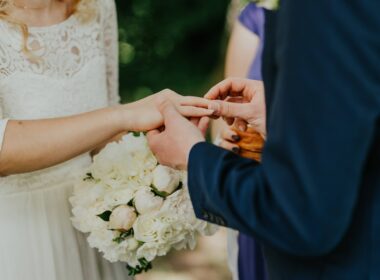
A few years later, when I was 20, I met my future husband. Within a year, we began discussing what a marriage between us would look like. I told him that I wanted to follow the Church’s teaching and use NFP for spacing children. He was a little surprised by this, as he had assumed that birth control would eventually be used because that’s what everyone else did. It was clear to me that he hadn’t actually thought about birth control before!
After we discussed the topic further and got more information, he was fully on board with using NFP. So, when we got engaged a few years later, he made sure we signed up for the NFP class offered by the Ligue de couple à couple so he could learn how to read my fertility biomarkers alongside me, and so we could both learn to apply the knowledge I’d gained from charting my cycles to our future family planning decisions.
One part of our engagement formation required by the Church (known as “Pre-Cana”) involved a retreat, where (among other conversations and activities), we wrote down and discussed our honest feelings about what could possibly pose a problem with intimacy in our marriage. In my journal, I wrote the following:
“My past fears regarding male genitalia may prove to be a barrier at first, but I am hoping that I’ve fully overcome that mental hurdle so we can both fully enjoy sex together.”
Despite the uncertainty, my then-fiancé and I were confident that if any issues came up, then we would be able to work through it together.
Finding freedom with NFP
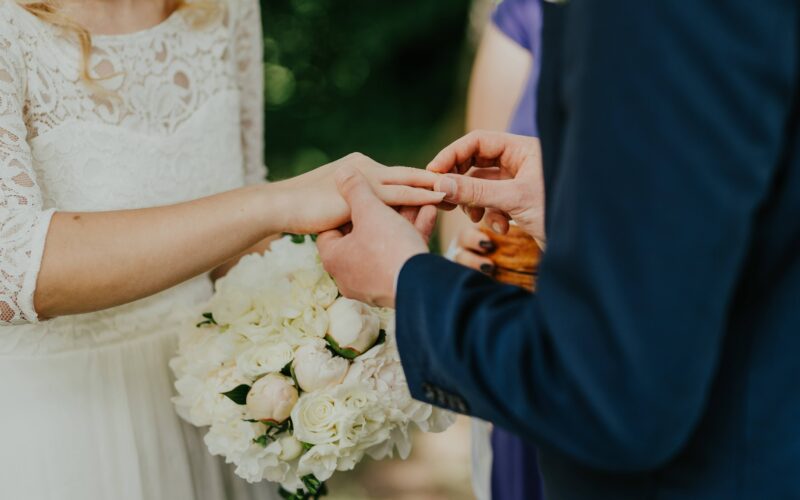
With all its benefits, NFP isn’t a magical solution. On our honeymoon, there were still minor difficulties in having sex for the first time. Although enjoyable, it took some time for sex to feel comfortable and easy for me. However, I firmly believe that if I hadn’t been charting, which allowed me to become in tune with my body, sex would have been much more difficult for me in our early marriage. NFP also helped me learn to mentally and physically appreciate sex for the gift that it is. I felt that this appreciation helped me learn to relax my muscles, and fully enter into the mentality that sex was, in fact, a good act to share with my husband.
Although enjoyable, it took some time for sex to feel comfortable and easy for me. However, I firmly believe that if I hadn’t been charting, which allowed me to become in tune with my body, sex would have been much more difficult for me in our early marriage. NFP also helped me learn to mentally and physically appreciate sex for the gift that it is. I felt that this appreciation helped me learn to relax my muscles, and fully enter into the mentality that sex was, in fact, a good act to share with my husband.
NFP also helped my husband and I to delay conception for the first month of our marriage to settle into our life together before taking the plunge into parenthood (although our first pregnancy announcement was still quick enough to surprise most of our friends and family!). Furthermore, because we need to discuss our family plans during my fenêtre fertile each month, there are frequent opportunities for us to be open to life—and thanks to NFP, we’ve been able to concisely time the conception of each child. But each month, no matter our family planning intentions, we embrace my body’s ability to create new life, rather than fight against it.
Through the freeing mindset that NFP has brought to our marriage, I’ve found immense healing in knowing that I can be fully united to my husband without the fear and confusion surrounding sex that once proved an immense stumbling block.
What I plan to do differently
Looking back, I can see how I would have greatly benefitted from mentorship from a trusted adult on how to accept the beauty of male and female bodies, and the great gift that sex can be between spouses.
My faith as a Catholic is what initially led me on a path towards appreciating my body as a woman, and now, as a married mother of three (so far), NFP almost feels like second nature to me. But I felt I was on my own in initially incorporating fertility awareness into my life, and in figuring out how to heal from my childhood trauma. Now for my own children, I fully plan on providing them with the knowledge that took me years to uncover.