
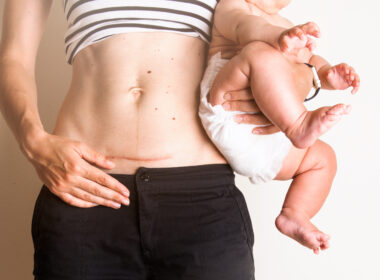


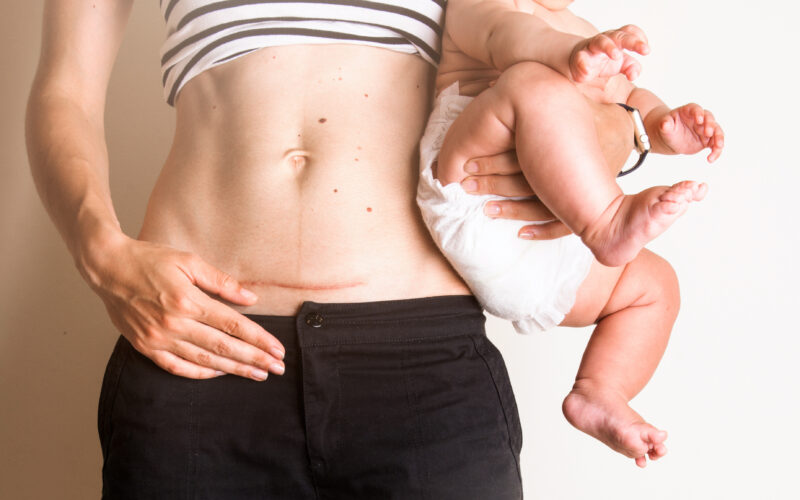
When I went in for my 36-week prenatal appointment for my first child, I was given an ultrasound, and informed that my baby was breech, i.e., her bottom was presenting first in my pelvis, instead of her head. The midwife scheduled me for an external cephalic version (ECV), and when that failed to flip her, the OBs scheduled me for a planned C-section. It was very matter-of-fact, and as a first-time mom, I didn’t question their assertions that surgical birth was the only safe way to deliver my baby.
If you’ve ever had a breech baby, or known someone who has, this story may sound familiar. The medical decision-making flowchart is clear: breech babies get scheduled C-sections. That’s just the way it is.
But obviously that can’t be the way it toujours was. Before ultrasound, before penicillin, vaginal birth was the norm for most of human history, and midwives had to know how to deliver breech babies. So, what changed? The story goes that the Term Breech Trial in 2000 definitively proved that C-section was by far the safer option for breech delivery—and now, decades later, vaginal breech births are rare-to-nonexistent within the hospital setting.
There’s more to the story though, and by the time you’ve heard it, you might be as frustrated as I am.
Before the Term Breech Trial
There’s a popular conception that before the Term Breech Trial, doctors had no idea whether C-section or vaginal birth was safer for breech babies. But according to Dr. Rixa Freeze in her interview with the Evidence Based Birth Podcast, the trend to surgerize breech birth started decades before.
“We had almost already completely shut down vaginal breech birth before we had the evidence backing up that practice. So, in 1970, for example, the national Cesarean section rate for all babies in the U.S. was 5%. And it was about 15% for breech. So, higher, but not crazy, crazy higher, not extremely disproportionate. By the time we hit the 1980s, I think in 1980, it was 66% [Cesarean for breech]. By the time we hit 1985, it was 79%. And by the time we hit the year 2000, it was around 83%. So, it skyrocketed long before we had any strong evidence saying that was a good idea. And the problem is, once you start the trend towards Cesarean section, and once you de-skill your doctors or your midwives, it creates a feedback loop because once you don’t have enough skill and experience, you can’t safely do it anymore.”
The problem is, once you start the trend towards Cesarean section, and once you de-skill your doctors or your midwives, it creates a feedback loop because once you don’t have enough skill and experience, you can’t safely do it anymore.
Keep this in mind going forward. More C-sections lead to less vaginal training, which leads to even more C-sections.
What the Term Breech Trial claimed
“Planned caesarean section versus planned vaginal birth for breech presentation at term: a randomised multicentre trial” (known commonly as the Term Breech Trial) was a 2000 study based out of the University of Toronto in Canada, but run all over the world [1]. It was a randomized controlled trial, (meaning that participants were randomly assigned to their mode of birth, rather than getting to be a part of that decision-making process) looking to compare perinatal mortality and morbidity between planned Cesarean section and planned vaginal birth for fetuses who were breech at term.
Published in The Lancet, the study looked at 2,088 women with singleton breech babies at term and placed them either into the planned C-section group, or the planned vaginal birth group. The study actually ended early because the results they were finding were so dramatic that it was deemed unethical to continue. The study also ended up being fast-tracked for publication, skipping some of the usual peer-review process.
What results were deemed so dramatic that the study had to end early?
The Term Breech Trial researchers observed that:
- Perinatal mortality, neonatal mortality, or serious neonatal morbidity was significantly lower for the planned Caesarean section group than for the planned vaginal birth group.
- There were no differences between groups in terms of maternal mortality or serious maternal morbidity.
They therefore concluded that planned Caesarean section is better than planned vaginal birth for the term fetus in the breech presentation.
In effect, the Term Breech Trial became the final nail in the coffin for vaginal breech birth, following a decades-long decrease in its use in clinical practice.
Criticisms of the Term Breech Trial
In hindsight, the Term Breech Trial is now recognized by many as a flawed study [2].
In hindsight, the Term Breech Trial is now recognized by many as a flawed study.
Conception de l'étude
To begin with, there are some concerns about the way the trial was designed and conducted. Some of these flaws might have been addressed if the resulting paper hadn’t been fast-tracked, but comparing the Term Breech Trial to today’s standards for vaginal breech birth, a few issues stand out.
Questions about healthcare professionals’ skill levels for vaginal breech birth
The skill levels of the doctors in the trial were not well-defined. All that was required was for a healthcare professional and his or her superior to self-attest that they were experienced in vaginal breech birth. This led to uneven standards of care, in an area where provider skill is crucial for safe vaginal breech birth.
Facility quality and protocol variability
The protocols laid out in the study were not well-followed across the board. The quality of the facilities in the study varied widely as well. As a global study, the trial included facilities in all parts of the developed and developing world. Some facilities were “high standard” hospitals with the latest technologies, while others were “acceptable standard” hospitals where it might take an hour to get into an emergent C-section, or where struggling babies would have to be transferred elsewhere to find a sufficient NICU.
Study selection and randomization process
Other concerns revolve around the selection and randomization process. Some of the participants were recruited while they were already in active labor, possibly the worst time to consent to a randomized birth plan. (I’m not a medical researcher or ethicist, but when I read about this aspect of the trial, I came away feeling like it was unethical to randomize a study like this in the first place. Imagine that you’re about to have a baby. What would it take for you to be willing to let an automated phone system determine whether or not you’d undergo major abdominal surgery? As Dr. David Hays said in that same interview with the Evidence Based Birth Podcast, “So a lot of the people that were recruited, were recruited in resource-poor countries, where you have to wonder how freely they chose to do what they did.”)
In addition, some of those randomized to the vaginal group were not good candidates for vaginal birth, especially according to our current understanding of safe practice. For example, babies with hyperextended heads, or very large babies. Many were not evaluated with an ultrasound to rule out these contraindications.
Overcounting of fetal deaths in vaginal group
Finally, the fetal deaths in the vaginal group were over-counted for a variety of reasons. Ten of the 13 reported deaths are questionable, including two stillbirths that “most likely” occurred before randomization, two deaths that occurred after discharge, and three that likely would have survived if the facility had been equipped to perform a C-section quickly enough.
What other breech studies have concluded
Vaginal breech birth is something that takes careful advice and consent, involving the measured consideration of multiple risk factors. Studies that therefore only include very good candidates for vaginal breech birth are where we’ll get better data surrounding its safety. So, let’s compare the results of the Term Breech Trial with some other Prospective Observational studies that have followed up on this question.
The PREMODA Study
The biggest study to explicitly contradict the Term Breech Trial is known colloquially as the PREMODA Study. “Is planned vaginal delivery for breech presentation at term still an option? Results of an observational prospective survey in France and Belgium” was conducted out of the Université Pierre et Marie Curie in Paris in 2006 [3]. The abstract of the PREMODA study reads like a “not all countries” defense against the procedures followed in the Term Breech Trial.
“Because the obstetric practices in that study differed from those in countries where planned vaginal delivery is still common, we conducted an observational prospective study to describe neonatal outcome according to the planned mode of delivery for term breech births in 2 such countries.”
Unlike the United States, France and Belgium did not abandon breech vaginal birth either before or after 2000. And, importantly, the PREMODA study included far stricter guidelines than the Term Breech Trial in terms of who was a good candidate for a trial of vaginal birth, as well as how these deliveries were managed as they happened, including:
- Normal sizes of pelvis, fetus, and head
- No hyperextension of the head (confirmed by ultrasound)
- Frank breech only
- Continuous monitoring
Under these guidelines, and in the hands of skilled and experienced professionals, this study found that “the rate of the combined neonatal outcome measure … did not differ significantly between the planned vaginal and cesarean delivery groups.” In other words, there was practically no difference in outcomes between the planned Cesarean and planned vaginal delivery groups, given the stricter criteria in place (and given that they took place in countries where vaginal breech delivery skills were not already in practice decline).
The PREMODA Study therefore concluded, “In places where planned vaginal delivery is a common pratique et when strict criteria are met before and during labor, planned vaginal delivery of singleton fetuses in breech presentation at term remains a safe option that can be offered to women.” [emphasis added]
The PREMODA Study therefore concluded, “In places where planned vaginal delivery is a common practice and when strict criteria are met before and during labor, planned vaginal delivery of singleton fetuses in breech presentation at term remains a safe option that can be offered to women.”
2022 Spanish meta-analysis
In 2022, a meta-analysis of “maternal and fetal risks of planned vaginal breech delivery vs planned caesarean section for term breech birth” was conducted out of Spain and published in the Journal of Global Health. The abstract opens, “Breech presentation delivery approach is a controversial issue in obstetrics” [4]. No kidding!
The 2022 meta-analysis compared 94,285 breech births across 16 studies between 2010-2020, to get a more honest view of the state of modern breech standards and care. It found, broadly, that the relative risk to the baby was higher in the vaginal delivery group, but that the relative risk to the maman was higher in the Cesarean delivery group.
This is an important balance of risks that women deserve to know about. If you look at the breech baby in isolation, it’s easy to argue that the slightly lower potential risks to the baby are worth erring on the side of caution, and scheduling the C-section. However, if, for example, the breech baby is the firstborn, and the parents hope to have more children, a C-section is effectively kicking risks further down the road, to the next baby’s delivery. That’s because a history of prior C-section adds increased risk of complications like uterine rupture to your next baby’s delivery, even if he’s vertex.
In other words, comparing the risk profiles of vaginal and C-section deliveries is not a black and white affair, and the numbers we’re talking about are very small in terms of absolute risk. In my personal data sample of one person, I’m planning my fourth VBAC after my firstborn was breech and born via Cesarean. (We’ll talk more about advice for personal decision-making further down.)
Current guidelines for breech deliveries
Since the Term Breech Trial, the recommendations for vaginal breech birth, when it’s recommended at all, have tightened down to make it a safer option for those who have the opportunity to pursue it. Guidance varies by country; the American College of Obstetrics and Gynecology recommends:
- Consider both patient wishes and provider training/experience
- Attempt external cephalic version first (Avoiding breech birth in the first place if possible)
- “Planned vaginal delivery of a term singleton breech fetus may be reasonable under hospital-specific protocol guidelines for eligibility and labor management.” [emphasis added]
- Informed consent
- 37+ weeks gestation
- Frank or complete breech only
- No fetal abnormalities, average fetal size, no hyperextension of the head
- Adequate maternal pelvis, adequate amniotic fluid
- Pitocin induction is not recommended
Which all sounds perfectly reasonable, right? These are the natural progression of guidelines from what we’ve seen so far. If anything isn’t going well with the attempted vaginal delivery, trained doctors will advise an urgent C-section to protect the life and health of mother and baby.
The current reality of breech births in the United States
The real problem faced by mothers navigating a breech birth in the United States is the fact we’ve been dancing around since the very beginning of this article, which is that very few doctors in the United States are competent in vaginal breech birth anymore, and that number is not increasing.
The real problem faced by mothers navigating a breech birth in the United States is the fact we’ve been dancing around since the very beginning of this article, which is that very few doctors in the United States are competent in vaginal breech birth anymore, and that number is not increasing.
We’ve pointed out that training in vaginal breech birth has been on the decline since the 1970s, and the Term Breech Trial is one of the dominoes in this vicious cycle of worsening access.
Here’s the reality on the ground: decreased training in vaginal breech birth leads to unsafe facilities for them to take place. Studies in these facilities show that vaginal breech birth leads to adverse outcomes, which leads to hard-line recommendations against it. Everyone with a breech baby is scheduled for a C-section, so why bother training doctors to deliver them vaginally? And, since breech vaginal delivery has been “proven” dangerous (by the Term Breech Trial), those doctors who faire provide vaginal delivery are stigmatized, which makes it both harder to get new doctors trained, and harder for mothers who would prefer to avoid surgery to find the few healthcare professionals still available to deliver them safely.
One choice is no choice at all
In effect, the first step of the ACOG guidelines, “patient wishes and the experience of the health care provider” practically negates the rest of the guidelines. That’s why, if you live in the United States (and many other countries where this domino effect has taken place), and you find yourself with a breech baby at term, you may have only one truly safe option: surgery.
But, you may still be wondering, why does that matter? We know that C-sections are safe for mothers and babies. Most women who deliver via C-section have no long-term complications, and can usually have as many children as they want afterwards. Why would it be a problem if that’s the only option? We’re only talking 3-4% of pregnancies anyway.
Well, for one thing, one choice is no choice at all. Providing no alternative negates patient autonomy in a time when women are incredibly vulnerable already.
But even if you can avoid that discussion by simply not having it, there will always be vaginal breech births, even if they’re not planned. Babies flip last-minute, mothers show up to emergency rooms with cryptic pregnancies, or they get sub-standard prenatal care for other reasons—in other words, emergencies happen. And the more rare vaginal breech birth becomes, and the worse-prepared doctors are for it when it happens, the worse the outcomes will be for the mothers and babies in these situations.
What to do about it
It’s going to be a long, hard climb if we ever want to make vaginal breech birth safe again.
If you are a childbirth professional, please consider getting trained so that you are prepared for a breech birth if you ever need to assist with one, or so you can refer to a specialist if your patient doesn’t want to schedule a surgery. The website breechwithoutborders.orget the pioneering work of OB/GYN Dr. Stuart Fischbein both provide excellent resources and starting points for healthcare professionals and parents alike to educate themselves on breech vaginal births and find training.
What if you find yourself pregnant at term with a breech baby?
My honest advice is, unless you have access to a healthcare professional who can safely and confidently deliver your baby vaginally, schedule the C-section. It’s what I would do if I found myself in that position again. The more I learn about this topic, the more frustrated I become at the state of modern breech birth, but that doesn’t mean I want to risk my health or the life of my baby over it.
Trying to flip your baby
You can also look into external cephalic version (ECV) if you’re eligible for it. There are a few contraindications to ECV, including twins, but generally speaking, if you’d be a candidate for vaginal birth with a vertex baby, you’ll probably be a candidate to attempt ECV at least once.
If your ECV fails, read cet article about other exercises, positions, and treatments you can try to encourage your baby to flip head-down.
Find the safest delivery option available to you and your baby
If you do discern that attempting a breech vaginal birth is a safe and viable option for you, be sure the doctor or midwife you pick is both well-trained and has good success rates for vaginal birth. Be ready to research and fight hard to advocate for yourself. Also, consider the worst-case scenarios: Where would you go if something went wrong? Who would deliver your baby if your vaginal-friendly doctor were unavailable? Finally, if you’d prefer an epidural, know that there’s evidence linking adverse neonatal outcomes with anesthesia used in vaginal breech birth, so it might not be the right option for you [5].
Another mark in the pro-Cesarean decision column is the fact that planned C-sections generally have fewer negative side-effects than urgent or emergent ones. Meaning that if you were to attempt a vaginal birth, and something went wrong requiring a Cesarean anyway, then you’d be more likely to have adverse side effects from that surgery than if you had just scheduled that planned C-section in the first place.
There’s a lot to consider, and there’s really no right answer for everyone, which is what makes the lack of options for breech births in many parts of the world so frustrating. My personal hope is that, within the next quarter century, we’ll be able to pull out of this dive and reverse the trend in breech Cesarean deliveries, so that every mother can have the autonomy to make the right decision for herself, her family, and her breech baby.
Références
[1] Hannah ME, Hannah WJ, Hewson SA, Hodnett ED, Saigal S, Willan AR. Planned caesarean section versus planned vaginal birth for breech presentation at term: a randomised multicentre trial. Term Breech Trial Collaborative Group. Lancet. 2000 Oct 21;356(9239):1375-83. doi: 10.1016/s0140-6736(00)02840-3. PMID: 11052579.
[2] Glezerman M. Five years to the term breech trial: The rise and fall of a randomized controlled trial. American Journal of Obstetrics & Gynecology, 194, 20-25
[3] Goffinet F, Carayol M, Foidart JM, Alexander S, Uzan S, Subtil D, Bréart G; PREMODA Study Group. Is planned vaginal delivery for breech presentation at term still an option? Results of an observational prospective survey in France and Belgium. Am J Obstet Gynecol. 2006 Apr;194(4):1002-11. doi: 10.1016/j.ajog.2005.10.817. PMID: 16580289.
[4] Fernández-Carrasco FJ, Cristóbal-Cañadas D, Gómez-Salgado J, Vázquez-Lara JM, Rodríguez-Díaz L, Parrón-Carreño T. Maternal and fetal risks of planned vaginal breech delivery vs planned caesarean section for term breech birth: A systematic review and meta-analysis. J Glob Health. 2022 Jul 16;12:04055. doi: 10.7189/jogh.12.04055. PMID: 35976004; PMCID: PMC9284475.
[5] Macharey G, Gissler M, Ulander VM, Rahkonen L, Väisänen-Tommiska M, Nuutila M, Heinonen S. Risk factors associated with adverse perinatal outcome in planned vaginal breech labors at term: a retrospective population-based case-control study. BMC Pregnancy Childbirth. 2017 Mar 20;17(1):93. doi: 10.1186/s12884-017-1278-8. PMID: 28320344; PMCID: PMC5359881.