
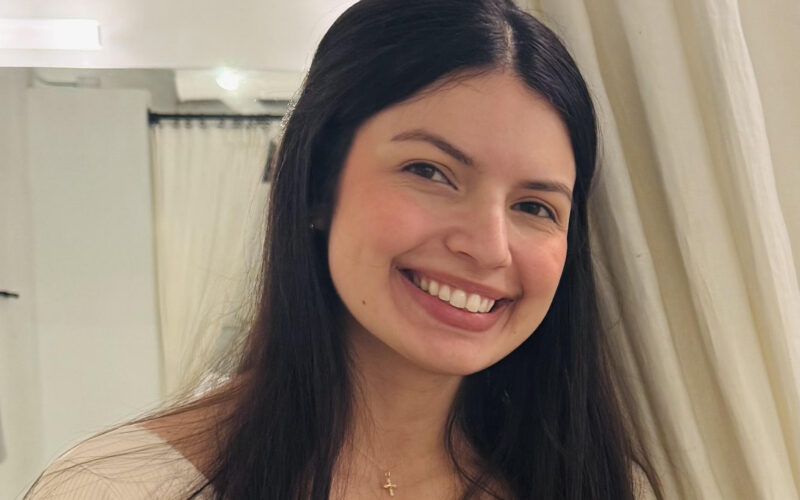
When I began planning my wedding, I envisioned my handsome fiancé, a beautiful ceremony, lively reception, family and friends reconnecting, and my one-of-a-kind white dress. And while those images were front and center amidst the chaos of planning all the wedding details, I also looked forward to our first Natural Family Planning (NFP) class together.
A crash course in womanhood
Even before getting engaged, I felt I understood how NFP worked and had a solid understanding of my cycle, though I often felt burdened by it. Growing up, I experienced severe Síntomas del síndrome premenstrual that interfered with my abilities in school and triggered debilitating episodes of anxiety into adulthood. Instead of my cycle and hormones being a layer of my personhood, I felt that my personhood was subject to the unpredictability and pain that came with each new month. I got used to experiencing enough bleeding to go through multiple maxi pads in mere hours, off-the-wall mood swings, and cramping that made me double-over with nausea, but I had no clue any of these symptoms were abnormal. Instead of my cycle and hormones being a layer of my personhood, I felt that my personhood was subject to the unpredictability and pain that came with each new month.
As I was first experiencing this harsh new reality of life, my mom was going through her own discovery of fertility awareness. Together, we utilized some of the same remedies like vitamin supplementation, prioritizing rest, and eating well to mitigate our symptoms. While these habits helped alleviate some of the pain, the months where I went off-course felt brutal. I went through a majority of my adolescence feeling that my experience shouldn’t be considered normal, but it was mi normal.
Finding a new path to cycle health
In college, I was introduced to Natural Womanhood’s Club Cycle Mindfulness (CMC) program through a friend, and eventually led the group on our campus for 2 years while I completed my degree. During this time, I talked to countless women inside and outside of the club who confided in me about their cycle issues, desires to come off of birth control, and the frustrations they felt in not knowing how their body worked. It was both alarming and frustrating to me that as young women we lacked the basic understanding of how such an important system in our body and essential part of our personhood functioned.
As I learned through the CMC about gráficos and the four distinct phases a woman experiences each month in her cycle, I became more attuned to the emotional and physical needs of my body. Understanding that I couldn’t operate at my fullest one hundred percent of the time made me realize that I had been working against my body instead of with it. It had never before occurred to me that in times of my cycle where I felt exceptionally tired or had more energy, I could structure my days and activities to make the most of how I was feeling. This encouraged a newfound feeling of empowerment. I didn’t have to push myself harder or pretend to be okay if I wasn’t at times, and at others, I could lean into my creativity and heightened energy to partake in the activities that gave me life.
Cycle charting meets family planning
Needless to say, tracking the basics of my cycle became an important practice for me while I was in college. So much so that by the time of my first Natural Family Planning (NFP) class (which my fiancé and I took together as part of our preparation for marriage), I had already tracked 46 cycles!
After my experience as a Club Cycle Mindfulness leader, I thought I knew what to expect from NFP, and was looking forward to applying what I had learned. I walked into the class excited, and in a frustrating turn of events (by no fault of our instructors), left the class utterly distraught and confused. The Método sintotérmico charts were much more complicated than anything I’d used to track my cycle previously, and the calculations, terminology, and family planning rules all jumbled together in my mind. I left our first class feeling dejected and shocked that I felt so lost.
What felt heaviest of all was the realization that I could become pregnant if I made an error on my chart recordings, or didn’t interpret the signs correctly that cycle. When tracking my cycles in college, I had never worried before about becoming pregnant, because my fiancé and I knew we would wait for marriage. But, as we approached marriage and NFP entered the picture, I suddenly felt afraid—not only about becoming pregnant one day, but also about the new layer of depth and commitment marriage would bring into our relationship. I actually said aloud to my fiancé at one point, “Wow, this is getting serious!” (which I immediately recognized was silly to say after three years of dating and one year engaged).
What felt heaviest of all was the realization that I could become pregnant if I made an error on my chart recordings, or didn’t interpret the signs correctly that cycle… as we approached marriage and NFP entered the picture, I suddenly felt afraid—not only about becoming pregnant one day, but also about the new layer of depth and commitment marriage would bring into our relationship.
Looking for answers and finding more questions
Internet advice and the advice of friends who practiced NFP left me even more confused— everyone did something different in their NFP practice, or even more surprisingly, didn’t practice it at all! I felt like I couldn’t relate to anyone, and besides the confusion, what felt worse was the loneliness in trying to seek out practical advice, only to be told “Well, if you get pregnant, it just happens,” or “NFP just doesn’t work all the time.”
To me, charting my cycle wasn’t just a matter of learning how to avoid or achieve pregnancy. With heightened anxiety and observing a shortened monthly fase lútea, I especially wanted to understand what my cycle was trying to communicate to me about my health. Hearing advice from others that I only needed to track fertile times and skip everything else, or not put so much stock into tracking my cycles at all, totally missed the heart of my concerns.
Six months after our NFP class, my fiancé was well-versed in understanding my fears and frustrations. Even though he was already my rock, his gentleness and encouragement throughout all of my ups and downs in this time reaffirmed to me why we chose each other in the first place.
Perhaps part of the frustrations, anxieties, and fears I was feeling were for this exact reason: to turn towards my future spouse and face these questions together. I didn’t have to turn to anyone else to find what would be the best way to move forward—we only needed the time, discussions, and discernment that NFP brought up for us. The more I brought up my feelings to him, the more he would ask about where that thought specifically came from, or help me see how we could make our situation work for preparing for a child one day, and share with me his own dreams for our marriage and future family. These conversations began to fill me with hope and encouraged me to think of actionable steps I could take towards being a more whole, less anxious version of myself for us.
Perhaps part of the frustrations, anxieties, and fears I was feeling were for this exact reason: to turn towards my future spouse and face these questions together. I didn’t have to turn to anyone else to find what would be the best way to move forward—we only needed the time, discussions, and discernment that NFP brought up for us.
Baby steps towards peace
My first step began with investing more time and focus into my prayer life. I reached out to a trusted spiritual director to help me make sense of where God was in my life, especially amidst such a big life transition. Discovering new ways of praying and particular devotions helped me relay my thoughts and worries to God, which in turn helped me feel less burdened and relieved to not need to control every single future situation in my life at this exact moment. Additionally, having that added mentorship of someone who had decades more life experience than I had helped me to see what my marriage and family could look like in the bigger picture.
Next, through continuous charting, I noticed some discrepancies in my observations. I decided to have my bloodwork done by a FEMM healthcare professional to see where I could improve my cycle health, and if there might be a medical aspect to the intense anxiety/depressive episodes I felt particularly in my luteal phase. Before my appointment, I was able to send over about 7 months worth of my charting data. I was so glad I persisted with charting despite my initial confusion and anxieties, because I knew that I had more than enough data to help my healthcare team piece together the patchwork of symptoms related to my cycle health.
Lastly, the most surprising decision I made was to enroll in counseling to help myself learn how to respond more healthily to stress and change—even the happy kind of change that happens when you’re getting married. In reflecting on some defining moments in my life, I recognized my pattern of wanting to control outside factors in the face of unpredictable circumstances. In times of negative or positive change, I gravitated towards needing to have my hands on the outcome and rely on myself solely for results. Learning NFP helped me recognize that I wanted to move into this new phase of my life in a way that wasn’t wholly self-reliant, but would allow me to be open and see the positives in all the new experiences coming my way.
In reflecting on some defining moments in my life, I recognized my pattern of wanting to control outside factors in the face of unpredictable circumstances… Learning NFP helped me recognize that I wanted to move into this new phase of my life in a way that wasn’t wholly self-reliant, but would allow me to be open and see the positives in all the new experiences coming my way.
Hope is healing
Above all, had I not learned about NFP through my particular circumstance, I wouldn’t have recognized the many areas of my life that were crying out for help. Whether they were unresolved issues from my past, my anxiety and need for control, or the problems I noticed cropping up in my cycle, learning about NFP gave me a lens to address these areas from the root, and not bandaid over them or feel compelled to turn to contraception out of fear. Essentially, that is the whole point of NFP—it addresses the health of the whole person beyond just the physical, and creates a unity between spouses that includes emotional and spiritual intimacy.
Although I’m still in the process of working through this season of my life and striving towards the desired end result, I feel more freedom in reaching out for help than I did trying to white-knuckle my way through the difficulties. Learning about NFP can feel like a lonely journey, because sometimes, it is. However, the frustrations and anxieties I felt no longer outweigh the hope I now feel for the future. Even though the questions persist and the unknowns about the future are certain, I can still see the images I described of a beautiful wedding day. Even more exciting than those, though, are the ones I can see of all the days after.