




Si vous ou l'un de vos proches souffrez d'endométriose, vous savez que le simple fait d'être atteint d'endométriose ne suffit pas. recevoir un diagnostic est un processus fastidieux.
L'endométriose est une maladie dans laquelle un tissu semblable à l'endomètre (le tissu sain qui se développe à l'intérieur de l'utérus) se développe. à l'extérieur de l'utérus, provoquant souvent des saignements excessifs, des douleurs pelviennes et la stérilité. L'endométriose touche jusqu'à une femme sur dix, mais il faut en moyenne près de dix ans pour qu'elle soit diagnostiquée. De nombreuses femmes passent des années à souffrir de douleurs débilitantes ou de stérilité avant d'apprendre qu'elles souffrent peut-être d'endométriose - mais même dans ce cas, les médecins ne peuvent pas le confirmer sans une procédure spéciale.
Heureusement, grâce au travail de chercheurs pionniers comme le Dr Katherine Burns (que j'ai eu la chance d'interviewer pour cet article), les échantillons de sang menstruel pourraient un jour s'avérer être une voie potentielle pour le diagnostic non invasif de l'endométriose.
Comment l'endométriose est-elle actuellement diagnostiquée ?
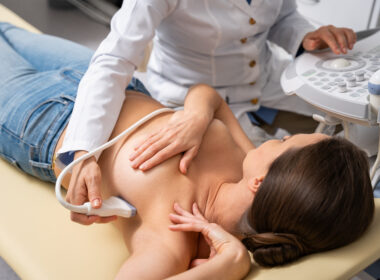
Endo ne peut être détecté lors d'une échographie ou d'un examen pelvien, car les lésions fines sont en dessous des limites de résolution de l'imagerie standard. En outre, les analyses de sang et d'urine sont insuffisantes pour détecter l'endométriose. À l'heure actuelle, le seul moyen pour une femme de détecter l'endométriose est d'obtenir des informations sur les lésions. faire l'objet d'un diagnostic officiel est sous anesthésie générale pour un examen laparoscopique.
Le présent processus consiste pour un chirurgien spécialisé à pratiquer de petites incisions dans l'abdomen d'une femme et à le gonfler avec du gaz carbonique pour créer un espace de travail. Le médecin insère ensuite une petite caméra pour identifier les zones problématiques. Des tissus sont ensuite extraits et soumis à une biopsie pour déterminer s'ils ressemblent à l'endomètre, qui est le tissu censé se trouver à l'intérieur de l'utérus d'une femme. Ce n'est qu'à ce moment-là que la femme peut recevoir un diagnostic définitif.
La plupart des femmes atteintes d'endométriose attendent des années, souvent parce que les médecins suggèrent des méthodes superficielles de gestion des symptômes plutôt qu'une procédure laparoscopique invasive. Même les principales organisations de gynécologues-obstétriciens instruire les médecins à éviter la laparoscopie en raison de son caractère invasif, et les thérapies hormonales suppressives de la poussée comme première option de traitement par rapport à un diagnostic authentique d'endométriose [1]. Heureusement, quelques chercheurs novateurs cherchent une autre voie.
Les recherches du Dr Katherine Burns sur le sang de période
Le Dr Katherine Burns, professeur agrégé au Cincinnati College of Medicine, est l'un des rares chercheurs à s'être penché sur la question. en regardant des échantillons de sang menstruel comme moyen potentiel de diagnostic non invasif de l'endométriose.
Lorsqu'une femme rejette du sang menstruel pendant ses règles, ce sang contient également des tissus et des globules blancs qui, selon les scientifiques, pourraient permettre de déterminer si elle souffre ou non d'endométriose. On a également découvert que ce sang contenait des cellules souches de l'endomètre. a été rétabli en 2007 [2].
Lors d'un entretien, le Dr Burns a décrit le processus consistant à isoler les globules blancs du sang menstruel afin de trouver des changements métamorphiques qui les distingueraient de ceux trouvés dans le contrôle (c.-à-d. le sang non menstruel). procédure de frottis.
Le Dr Burns a proposé qu'un tel test suive la même procédure que le test Cologuard (TM) pour le cancer du côlon - un kit de collecte d'échantillons à domicile pourrait être utilisé et envoyé par la poste à un centre de test. Si un tel test devenait disponible, nous pourrions “éviter aux femmes de subir une intervention chirurgicale tout en sachant qu'elles ont un diagnostic d'endométriose au lieu d'un diagnostic présumé”, a déclaré le Dr Burns.
Si un tel test devenait disponible, nous pourrions “éviter aux femmes de subir une intervention chirurgicale tout en sachant qu'elles ont un diagnostic d'endométriose au lieu d'un diagnostic suspect”, a déclaré M. Burns.
Le manque de financement constitue un obstacle majeur
Malheureusement, en raison des obstacles au financement, le Dr Burns ne sait pas quand un tel test sera disponible sur le marché. “À l'heure actuelle, les taux de financement des NIH et le financement de la santé des femmes sont 30% inférieurs à ceux des années précédentes”, explique-t-elle. Les projets de recherche existants sont bloqués en raison d'un afflux de demandes de subventions et d'un manque de fonds pour les satisfaire. De ce fait, les chercheurs ne sont pas en mesure de maintenir leur personnel et leurs étudiants pour mener à bien leurs recherches.
Le processus d'attribution des subventions prend des mois et implique souvent de compter sur les préférences de trois personnes seulement pour un projet de recherche plutôt qu'un autre. ’Les percées de la recherche sont ce qui change la médecine et l'améliore“, déclare le Dr Burns. En raison du manque de financement et d'approbation des subventions, ”la science de la découverte est limitée... [ce qui me fait] craindre que cela ne fasse avancer la médecine aux États-Unis... Nous devons être en mesure de faire de la science de la découverte et d'explorer pour trouver de nouveaux remèdes“.”
En l'absence de financement public, les entreprises de biotechnologie du secteur privé intensifient leurs activités.
Heureusement, certaines entreprises du secteur privé explorent également des tests comme celui-ci. NextGen Jane (NGJ) est une société de biotechnologie privée à but lucratif de la Silicon Valley fondée en 2014. C'est l'une des quelques petites startups fem-tech qui se sont lancées dans la course au développement d'un test endo à domicile.
NGJ a essayé d'attirer l'attention sur son projet par le biais de son site Internet. campagne sollicitant des volontaires pour envoyer leurs échantillons menstruels. Dans un récent article de The Guardian, Ridhi Tariyal, cofondateur de NGJ, aurait indiqué que son entreprise avait reçu suffisamment d'échantillons pour affiner son kit de collecte et qu'elle était sur la bonne voie pour confirmer le bon fonctionnement de son approche en matière de tests.
Dévoiler le potentiel diagnostique du sang menstruel pour d'autres troubles de la reproduction
D'autres défenseurs ont fait remarquer qu'il ne s'agit là que de la partie émergée de l'iceberg des diagnostics qui pourraient être posés à partir de l'analyse du sang menstruel. D'autres pathologies telles que le SOPK, les fibromes ou les cancers de l'endomètre pourraient un jour être diagnostiquées par le biais de l'analyse du sang menstruel.
Le Dr Burns, qui a souffert d'endométriose il y a quelques années, s'est exprimé sur le sujet. publiquement sur son expérience et sur la manière dont elle l'a amenée à ses recherches actuelles. Lorsqu'on lui a demandé ce qu'elle dirait à une jeune fille souffrant des symptômes de l'endométriose et ne sachant pas quoi faire, elle a répondu : “Vos symptômes sont réels et votre douleur n'est pas normale : ”Vos symptômes sont réels et votre douleur n'est pas normale. Défendez vos intérêts et continuez à consulter des médecins ou des personnes qui vous écouteront.”
Références
[1] Bilan de l'infertilité pour le spécialiste de la santé de la femme : Opinion du comité de l'ACOG, numéro 781. Obstet Gynecol. 2019 Jun;133(6):e377-e384. doi : 10.1097/AOG.0000000000003271. PMID : 31135764.
[2] Meng, X., Ichim, T.E., Zhong, J. et al. Cellules régénératrices de l'endomètre : Une nouvelle population de cellules souches. J Transl Med 5, 57 (2007). https://doi.org/10.1186/1479-5876-5-57


Il serait utile de disposer d'un tel test, mais nous ne voulons pas donner l'impression que le fait de diagnostiquer l'endométriose à l'aide d'un test à domicile permettrait d'éviter une intervention chirurgicale ultérieure visant à retirer l'endométriose. Les contraceptifs hormonaux artificiels et les antagonistes des récepteurs de l'hormone de libération de la gonadotrophine (GnRH) peuvent ou non réduire temporairement la douleur, mais ne résolvent en rien le problème à long terme de l'endométriose. L'étalon-or du traitement de l'endométriose reste l'excision, c'est-à-dire l'ablation des implants endométriaux par un chirurgien spécialement formé. Les femmes méritent mieux et méritent de connaître la vérité.