


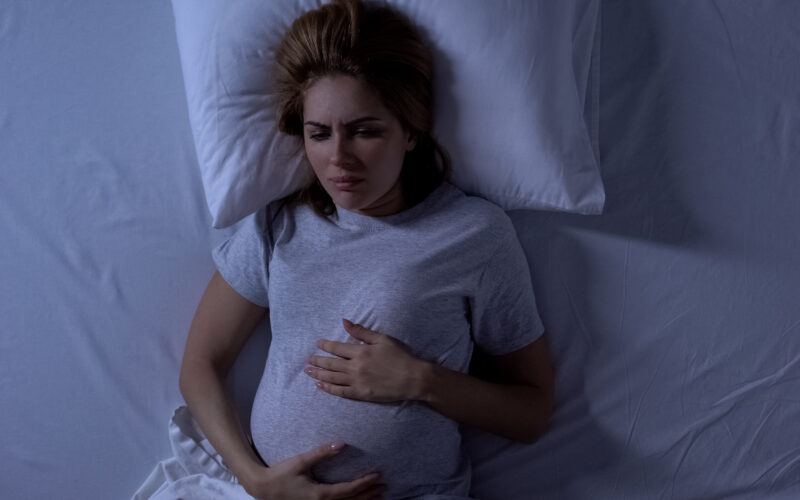
“У беременных женщин возникают проблемы со сном” — это далеко не тот заголовок, который привлекает внимание. Конечно, будущие мамы в третьем триместре, скорее всего, испытывают трудности с тем, чтобы устроиться поудобнее перед сном из-за растущего живота, различных болей и дискомфорта или изжоги, вызванной поздними перекусами. А если им и удается заснуть, сон может быть недолгим из-за неизбежных ночных походов в туалет и/или судорог в ногах. Зевн. Что ещё нового?
Матери, которые плохо спят во время беременности, подвержены риску развития послеродовых аффективных расстройств (PMAD)
Прежде чем отложить решение проблемы бессонницы во время беременности, подумайте о том, что 4 из 10 женщин могут испытывать выраженные, даже лишающие работоспособности симптомы, такие как трудности с уходом за другими детьми или выполнением трудовых обязанностей из-за дневной сонливости, а также колебания настроения [1]. Более того, хроническое недосыпание во время беременности создает для матерей неблагоприятные условия в первые недели и месяцы послеродового периода, когда их ожидает недосыпание, что делает их особенно уязвимый с перинатальными расстройствами настроения и тревожности (PMAD), такими как послеродовая тревожность, депрессия, ОКР, ПТСР и психоз [2]. Это особенно актуально для женщин, испытывающих проблемы с психическим здоровьем до зачатия [3].
И, как и следовало ожидать, связь между депрессией во время беременности и проблемами со сном это работает в обе стороны [4]. Бессонница и усталость — это симптомы депрессии [5]. Проблемы с психическим здоровьем во время беременности приводят к нарушениям сна, а некачественный сон негативно сказывается на психическом здоровье.
Связь между депрессией во время беременности и проблемами со сном носит двусторонний характер. Бессонница и усталость являются симптомами депрессии. Проблемы с психическим здоровьем во время беременности приводят к нарушениям сна, а некачественный сон негативно сказывается на психическом здоровье.
Бессонница во время беременности также представляет опасность для младенцев
Бессонница во время беременности сказывается не только на будущих мамах. Согласно данным, она также может повысить риск преждевременных родов, исследование с 2017 года [6]. Исследования (найденные источники здесь) также указывает на потенциальную связь между бессонницей во время беременности и “влиянием на развитие мозга плода (возможно, через фетальное программирование заболеваний), когнитивное развитие малыша, риск развития СДВГ, а также более слабое социально-эмоциональное развитие от младенческого возраста до раннего детства (возможно, через влияние на поведение родителей)” [2].
У многих женщин бессонница во время беременности начинается задолго до третьего триместра… и продолжается в послеродовой период
Бессонница во время беременности часто начинается на ранних сроках — во втором или даже в первом триместре. Что ещё хуже, она может не пройти сама по себе. А Исследование 2015 года было установлено, что среди матерей, страдающих бессонницей на восьмом месяце беременности, 4 из 10 по-прежнему испытывали проблемы со сном через два года после родов. Это стоит того, чтобы прислушаться и обратить внимание [7].
Как лечить бессонницу во время беременности?
Сначала плохая новость? Даже авторитетные источники в области традиционной медицины (а также в первых результатах поиска Google по запросу ‘бессонница во время беременности’) не упоминаются научно обоснованные методы лечения. Хотя они, возможно, и «засыпают за рулем» в переносном смысле, хорошая новость заключается в том, что бессонницу во время беременности можно лечить, и у будущих мам есть множество эффективных способов.
Когнитивно-поведенческая терапия
Согласно Обзор научных исследований за 2026 год, когнитивно-поведенческая терапия бессонницы (КПТ-Б) может оказаться полезной для беременных женщин так же, как и для общего населения, страдающего бессонницей [2]. КПТ-И состоит из пяти конкретных компонентов: “обучение гигиене сна, контроль стимулов для ассоциирования кровати со сном, ограничение времени пребывания в постели для укрепления сна, релаксация и когнитивная терапия для преодоления неконструктивных убеждений о сне”.”
“Обучение гигиене сна” включает в себя такие меры, как отказ от использования экранов и других источников синего света примерно за час до сна (в исследование, (это называется ‘терапией приглушённым светом’, которая заключается в том, чтобы избегать синего света и использовать вечером только ‘теплый’ свет), а также расслабляться с помощью определённых ритуалов (хотя ритуал не обязательно должен быть сложным) [8]. ‘Ассоциировать кровать со сном’ означает ограничить деятельность и время, проводимое в постели, только отдыхом или сексом. Никакого сидения и работы за ноутбуком в постели или на кровати, никакого бесконечного пролистывания ленты в социальных сетях перед тем, как встать утром.
КБТ-И может проводиться в очном формате или в виртуальном режиме, в том числе с помощью цифровых приложений, таких как Sleepio [2].
Методы, основанные на осознанности
Исследования также подтверждают эффективность методов, основанных на практике осознанности, для лечения “ночного когнитивного возбуждения”, которое многие мамы описывают более разговорными выражениями, такими как “Я не могу заставить свой мозг отключиться ночью”. В частности, метод снижения стресса на основе осознанности (MBSR) “обучает непредвзятому осознанию ощущений, мыслей и эмоций и, как показывают исследования, способствует повышению уровня принятия себя, снижению навязчивых размышлений и улучшению сна…” [2].
Вместо того чтобы погружаться в “вихри” беспокойства или «спирали» размышлений, программа MBSR направлена на то, чтобы помочь людям замечать свои мысли, не «погружаясь» в них и реагируя на них соответствующим образом.
Следует отметить, что, хотя эффективность и осуществимость программы MBSR подтверждены научными исследованиями, требуются дополнительные исследования для оценки того, как долго сохраняются положительные результаты после завершения курса лечения.
Световая терапия
Хотя это и может показаться нетрадиционным альтернативным методом лечения для тех, кто не доверяет фармацевтическим препаратам, световая терапия, также известный как фототерапия, возможно, оказывает наиболее непосредственное влияние на бессонницу по сравнению с когнитивно-поведенческой терапией бессонницы (КПТ-Б) или подходами, основанными на практике осознанности [9]. Это объясняется тем, что воздействие света напрямую влияет на внутренние часы, регулирующие циркадный ритм — цикл сна и бодрствования организма.
A небольшое исследование 2025 года было установлено, что при сочетании с традиционной когнитивно-поведенческой терапией или приемом антидепрессантов беременные женщины, страдающие депрессией, испытывали более выраженное и длительное улучшение состояния, если они дополнительно проходили световую терапию [5]. Участницы экспериментальной группы держали источник яркого света (10 000 люкс) на расстоянии 15–20 дюймов от лица, начиная через 30 минут или менее после пробуждения и в течение 30 минут в день, ежедневно в течение пяти недель. Что особенно важно, положительный эффект от световой терапии сохранялся даже через шесть месяцев после прекращения лечения.
A 2022 исследование сравнили “терапию светом и тьмой”, в которой используется воздействие яркого света плюс конкретные меры по ограничению воздействия синего света в вечернее время, к КБТ-И и к стандартной терапии (традиционное консультирование или прием антидепрессантов) [10]. Исследователи обнаружили, что как свето-темновая терапия, так и КБТ-И оказались более эффективными для женщин в период от 4 до 12 месяцев после родов (не беременных), чем стандартное лечение.
Итоги
Бессонница во время беременности — явление довольно распространённое, но поддающееся лечению, и медицинские работники обязаны заниматься её лечением в интересах как мам, так и их малышей. Когнитивно-поведенческая терапия бессонницы (КПТ-Б), метод снижения стресса на основе осознанности и световая терапия — все это перспективные методы лечения.
Ссылки
[1] Атзмон, О., Кроутер, М. Э., Куин, Н., Кассера, Л., Веллеке, К., Пиннингтон, Д. М., и Бей, Б. (2025). Когнитивно-поведенческая терапия при перинатальной бессоннице: исследование приверженности лечению, воспринимаемой полезности компонентов вмешательства и их связи с результатами лечения нарушений сна. Поведенческая медицина сна, 23(5), 606–621. https://doi.org/10.1080/15402002.2025.2501704
[2] Фелдер, Дж. Н., Макклелланд, Б., Соренсен, К. и др. Поведенческие методы лечения нарушений сна в перинатальный период: обзорный анализ. Обзор по медицине сна Curr 12, 5 (2026). https://doi.org/10.1007/s40675-026-00359-x
[3] Сури Р., Стоу З.Н., Коэн Л.С., Ньюпорт Д.Дж., Берт В.К., Акино-Элиас А.Р., Найт Б.Т., Минц Дж., Альтшулер Л.Л. Проспективное продольное исследование факторов, предсказывающих послеродовую депрессию у женщин с больным анамнезом большого депрессивного расстройства. J Clin Psychiatry. Сентябрь/октябрь 2017 г.; 78(8):1110–1116. doi: 10.4088/JCP.15m10427. PMID: 28297589.
[4] Ladyman C, Sweeney B, Sharkey K, Bei B, Wright T, Mooney H, Huthwaite M, Cunningham C, Firestone R, Signal TL. Обзорный анализ немедикаментозных перинатальных вмешательств, влияющих на сон и психическое здоровье матерей. BMC Pregnancy Childbirth. 23 августа 2022 г.; 22(1):659. doi: 10.1186/s12884-022-04844-3. PMID: 35999501; PMCID: PMC9395885.
[5] Бьянчарди Э., Сферра И., Кастеллани Г., Пинчи К., Маринуччи Э., Адульти И., Квинто Р. М., Ниолу К. Световая терапия в качестве дополнения к стандартному лечению перинатальной депрессии: рандомизированное контролируемое исследование с 7-месячным наблюдением. Riv Psichiatr 2025;60(5):188–195. doi 10.1708/4583.45900
[6] Фелдер, Дженнифер Н., доктор философии; Бэр, Ребекка Дж., магистр общественного здравоохранения; Рэнд, Ларри, доктор медицины; Джеллифф-Павловски, Лаура Л., доктор философии; Праттер, Арик А., доктор философии. Диагностика нарушений сна во время беременности и риск преждевременных родов. «Акушерство и гинекология» 130(3): с. 573–581, сентябрь 2017 г. | DOI: 10.1097/AOG.0000000000002132
Ссылки Продолжение
[7] Сивертсен, Б., Хисинг, М., Дёрхейм, С.К. и др. Динамика нарушений сна у матерей до и после родов: продольное популяционное исследование. BMC Беременность Роды 15, 129 (2015). https://doi.org/10.1186/s12884-015-0577-1
[8] Юн Дж., Хео С. Дж., Ли Х., Сул Э. Г., Хан Т., Квон Й. Дж. Оценка осуществимости и эффективности терапии слабым светом перед сном у взрослых с бессонницей: пилотное исследование. Medicina (Каунас). 14 апреля 2024 г.; 60(4):632. doi: 10.3390/medicina60040632. PMID: 38674278; PMCID: PMC11052339.
[9] LeGates TA, Fernandez DC, Hattar S. Свет как основной модулятор циркадных ритмов, сна и эмоционального состояния. Nat Rev Neurosci. Июль 2014; 15(7):443–54. doi: 10.1038/nrn3743. Электронная публикация 11 июня 2014 г. PMID: 24917305; PMCID: PMC4254760.
[10] Верма С., Куин Н., Астбери Л. и др. Лечение послеродовой бессонницы: рандомизированное контролируемое исследование с тремя группами, посвященное когнитивно-поведенческой терапии и свето-темновой терапии. Психологическая медицина. 2023;53(12):5459–5469. doi:10.1017/S0033291722002616