



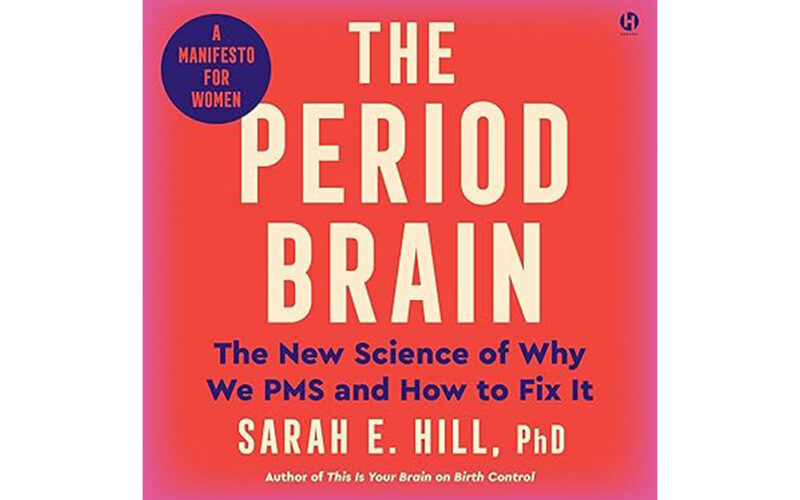
If you’ve been in the women’s health sphere for any length of time, you’ve probably heard of Dr. Sarah E. Hill, PhD. Her 2019 book, Este es tu cerebro sobre el control de la natalidad, ha sido featured on numerous podcasts and in many news articles (along with a revise here at Natural Womanhood). Hill’s new book, The Period Brain, branches off from her original research subject of hormonal birth control, and instead looks at the natural cycle of a woman, asking: why do we PMS? And more importantly: how can we fix it?
Besides being a well-known author on the subjects of women’s health and hormones, Hill is a researcher and professor, holding a Ph.D. in the field of evolutionary psychology. There is an abundance of investigación with her name on it, some of which we’ve even covered aquí at Natural Womanhood. Hill largely publishes research about the menstrual cycle and women’s hormonal health, and she also serves on the advisory board for women’s health start-ups like Flo Health and 28 (también reviewed aquí!).
¿Cuál es el público destinatario de The Period Brain?
The Period Brain is intended for any naturally-cycling woman, especially one who experiences PMS or wonders why she feels a little ‘off’ (or absolutely awful) during the last two weeks of her cycle. The book is “one part science, one part PMS self-help, and one part exposé on how science has mishandled women” (xiii). I would also add that this book is perfect for someone who is truly new to learning about her hormones and how they affect all aspects of her health. It would be a great read for an older teenager or young adult woman struggling with PMS (but would not be appropriate for a young girl, as there are sections of the book that deal directly with how progesterone affects sex and attraction). This book does not focus at all on birth control, since that subject is thoroughly explored in Hill’s previous book.
¿Cuáles son las principales áreas de contenido de The Period Brain?
The Period Brain is broken into three parts. The first is a basic explainer of estrogen and progesterone as they relate to the female cycle and how scientific research has largely ignored what is considered “normal” as it relates to progesterone, specifically. The second breaks down the luteal phase, exploring how it affects mood, sexual drive, nutrition, and lifestyle. And the third section acts as a sort of how-to guide for the luteal phase, aiming to help women restore hormonal balance through a series of health and lifestyle shifts.
Part I: The Female Mystery: Hormones and “Disordered” Women
In part one, Hill begins by asking the salient question: why do we all have PMS? The answer is complicated, she says, but the most important thing to understand is that the luteal phase has a purpose, and many of the things we call “symptoms” are actually just features (not bugs) in the grander purpose of our cycle. There are disorders which can occur within the luteal phase, yes, but the mere fact that women feel differently across the phases of their cycle is not disorder — it’s design.
Part II: Reclaiming Female: Rethinking PMS and Embracing Hormonal Change
After breaking down the basics of estrogen and progesterone in the cycle, Hill then dives into how ignoring progesterone has created the diagnosis of PMS. Instead of understanding that PMS causes a number of biological realities (more on this later) which shift how a woman feels both physically and mentally, the medical field has instead labeled all of these changes as symptoms, thus creating a disorder.
Combating the “bikini science” mentality in medicine and research
As Hill explains, this feeds into the “bikini science” mentality, by which she means the underlying assumption in the medical system that men and women are essentially the same except for the parts which are covered by a bikini. Bikini science has created a host of problems in women’s health, including ignoring the fact that women metabolize pharmaceutical drugs (such as Ambien) differently, and therefore experience unintended side effects which are often not discovered by researchers during clinical trials (43), due to their lack of testing on cycling women. Hill thoroughly explains the problematic nature of scientific research on women, showing how even though there have been improvements in recent years, science still has a long way to go.
The 8 biological realities of the luteal phase
After this detour, we dive into the topic at the heart of the book: the luteal phase. Hill identifies eight biological realities of the luteal phase, explaining that these are just a normal part of “being a human female in the luteal phase” (54). According to Hill, the luteal phase is a time of:
- Huge hormonal changes (massive increases in progesterone)
- Breaking down our immunological defences (due to the body’s instinct to prepare itself for a pregnancy)
- Temperature increase (as is seen in the increase in basal body temperature, aka BBT, at this time)
- Higher energy needs (more calories are required to just exist!)
- Fewer resources to dedicate to everything that isn’t pregnancy preparation (depleted nutrients and less ability to recover from stress)
- Higher cost of social abandonment (we’re more sensitive when our romantic partners or friends aren’t there for us)
- Greater physical vulnerability (joints are looser and we’re more prone to injury)
- Sex that no longer results in pregnancy (causing a nosedive in sexual desire, aka libido)
Looking at this list, it’s easy to point out all of the PMS symptoms that we often experience: moodiness, aches and pains, increased hunger and cravings, lack of libido, brain fog, sadness, and just feeling plain blah. In chapter 6 of The Period Brain, Hill dives into the upsides of these realities (without labeling them as ‘symptoms!’). She discusses how progesterone changes our bodies in these myriad ways and why it’s actually a good thing, plus ways to support our mood during the luteal phase. One of her recommendations is to identify whether or not the emotional changes we experience are a defense (normal hormonal mood change), a dysregulated defense (mood change that has been enhanced by environmental changes such as not getting enough sleep or eating poorly), or a true dysfunction (premenstrual dysphoria disorder, or TDPM).
Hill goes on to talk about PMDD in chapter 10, describing both the reasons why a woman may be experiencing PMDD, the evidence behind using pharmaceutical drugs to treat it, and some potential non-pharmaceutical methods of treating PMDD.
Rounding out the second section of The Period Brain are also chapters on how sex and attraction changes during the luteal phase (in sum: sexual desires goes down, pero luteal phase sex might actually increase feelings of connectedness and promote stronger emotional bonds with a long-term partner or spouse) as well a chapter on how many common medical and psychological conditions can be exacerbated by progesterone and what to do about it. Hill also gives us the data behind a reality that every woman intuitively knows: that we burn up to 11 percent more calories during the luteal phase, meaning that we need almost an extra 200 calories per day during this time (110).
Part III: The Future Is Female and Hormonal: Welcome to the Revolution
Finally, we arrive at the final section of the book, which is largely about reclaiming the luteal phase and supporting proper balance of estrogen and progesterone. Hill opens the chapter by stating that while we don’t have to do anything complicated or expensive to support ovulation and resilience to hormonal changes in the cycle, the things that she recommends doing are “far easier said than done” (182).
Her recommendations are nothing that you probably haven’t heard before—nutrition and movement, quality sleep, supporting your circadian rhythm, managing stress, quitting smoking (and potentially alcohol), and limiting exposure to endocrine disruptors. Hill also recommends that you track your cycle, giving her own quick guide to fertility awareness (mainly focusing on cervical mucus and cervix positioning and texture).
¿Cuáles son los puntos fuertes de The Period Brain?
One of the aspects of The Period Brain which I loved the most was how Hill divided progesterone symptoms into normal biological realities, dysfunction caused by environment and lifestyle, or true disorder. This framework allows the reader to push past the common assumption that every body or brain change you experience in your cycle is a “symptom” that requires treatment. Connecting the dots as to por qué the body slows down, becomes a little more anxious, and needs more food during the luteal phase is extremely helpful if you’re someone who feels frustrated at how you feel before your period.
One of the aspects of The Period Brain which I loved the most was how Hill divided progesterone symptoms into normal biological realities, dysfunction caused by environment and lifestyle, or true disorder. This framework allows the reader to push past the common assumption that every body or brain change you experience in your cycle is a “symptom” that requires treatment. Connecting the dots as to por qué the body slows down, becomes a little more anxious, and needs more food during the luteal phase is extremely helpful if you’re someone who feels frustrated at how you feel before your period.
The other section I found particularly strong was Hill’s chapter on premenstrual exacerbation (PME), which is when preexisting conditions become worsened by progesterone in the luteal phase. Two striking examples of this are that almost half of women who have asthma report that their symptoms are worse in the luteal phase (132) and almost 70% of women with major depressive disorder or bipolar disorder experience worse mental health during the second half of their cycle (133).
Finally, I also loved Hill’s insistence that women need to track their cycles. She champions body literacy, stating that “nothing can replace the huge depth of self-understanding that you can get from simply tracking your own cycle over time” (226). I would have preferred more explicit call-outs to FAM methods, but she does give recommendations to track BBT, cervical mucus and positioning, and LH tests.
The Period Brain’s limitaciones o puntos ciegos
One of the main limitations of The Period Brain is something that might also be thought of as a plus: the vast range of information presented in the book. As Hill mentions in the introduction, she aims to give readers science on progesterone, PMS self-help, and a look into how science has mishandled women. By far, the strongest parts of the book are all of the background science of por qué we experience PMS symptoms, as they are quite similar to the engaging style of Este es tu cerebro sobre el control de la natalidad.
Hill does an excellent job at summarizing research on a topic and making it interesting and digestible for the average reader. However, her sections on bikini science and how medical research has forgotten women read as a bit random (albeit interesting) and do not contribute significantly to the main purpose of the book. Also, her lifestyle recommendations (the “self-help” section of the book) were quite basic and didn’t teach me anything that I hadn’t heard in a dozen other similar books or podcasts. I kept wishing for more of Hill’s bread and butter—the scientific research into the por qué of our bodies—and less of the other stuff.
El veredicto: Comprar, tomar prestado o saltárselo The Period Brain?
En general, The Period Brain is a great read for those who are new to learning about their hormones and wanting to have a greater understanding of how progesterone works in the body. Especially if you are someone who finds your luteal phase to be difficult either physically or emotionally, I would highly recommend buying it.
Sin embargo, The Period Brain is not the go-to book I’d recommend if you are looking to understand your cycle better or are wanting lifestyle recommendations for improving how you feel around your period. If you want more info about charting and hormones, El quinto signo vital would be a better read for you. If you’re looking for tactical advice to improve your periods, Manual de reparación de época would be a good choice. And if you’re instead looking to drill down deeper into nutrition and lifestyle as it relates to fertility, I’d highly recommend picking up Alimentos reales para la fertilidad. Dicho esto, The Period Brain could be a great starting point if you struggle with PMS or PMDD, or you just want to know how to feel better throughout your cycle.
