
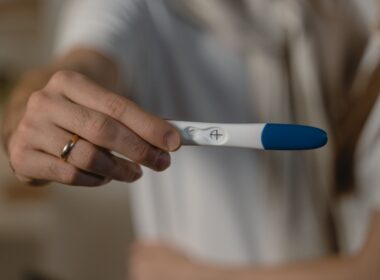



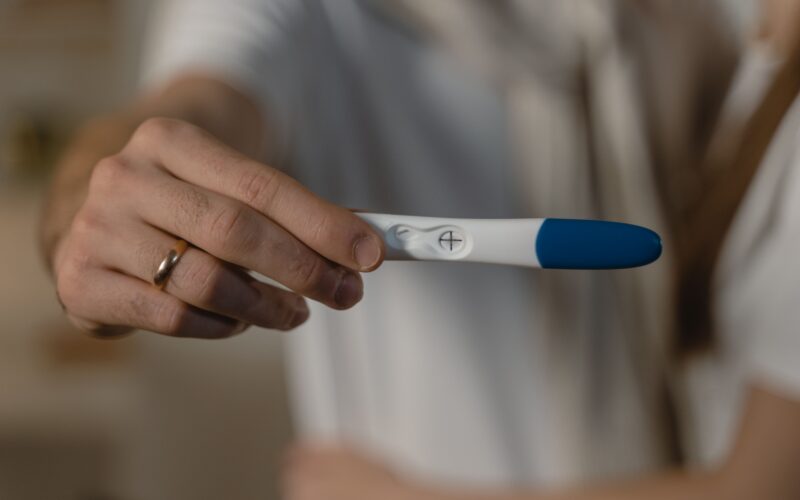
I’ll never forget the moment I saw that second blue line appear on a pregnancy test, and the flood of emotions as I realized there was a baby already growing inside of me. Shortly afterwards, I had a blood test at my doctor’s office that confirmed the positive result. At the time, I didn’t stop to think about how these tests actually worked, but both the at-home urine test and the blood test were looking for the same thing: elevated levels of the hormone known as human chorionic gonadotropin (hCG).
So what is hCG, and what makes it such a reliable indicator of pregnancy? In this article, we’ll discuss what hCG is, what it does, why it’s monitored in early pregnancy (and after a miscarriage), and the various ways it’s used in treating infertility.
What is hCG?
Human chorionic gonadotropin (hCG) is commonly known as the “pregnancy hormone.” It is the first hormone produced by the placenta, which begins to form as soon as the embryo implants in the uterine lining.
hCG plays an essential role in sustaining early pregnancy by signaling the body to start producing more эстроген и прогестерон. By week 10 or 11 of pregnancy, hCG levels taper off, though it still remains elevated above non-pregnancy levels until after giving birth.
hCG plays an essential role in sustaining early pregnancy by signaling the body to start producing more estrogen and progesterone. By week 10 or 11 of pregnancy, hCG levels taper off, though it still remains elevated above non-pregnancy levels until after giving birth.
The role of hCG in treating infertility
hCG is used in both assisted reproductive technology (ART) procedures such as in vitro fertilization (IVF), as well as in NaProTechnology protocols in order to help couples struggling with infertility to conceive.
IVF protocols utilize hCG (sometimes in combination with other injections) to stimulate the growth of multiple follicles and induce ovulation in order to harvest as many eggs as possible to be later fertilized in a lab [1].
By contrast, NaProTechnology and Restorative Reproductive Medicine (RRM) procedures time hCG injections around a woman’s natural ovulation, helping the dominant follicle to open enough to release an egg (which may be helpful in cases of infertility due to weak ovulation or suspected luteinized unruptured follicles, or LUFs).
Healthy levels of hCG during pregnancy
hCG levels are typically measured in milli-international units per milliliter (mIU/ml). Outside of pregnancy, hCG levels are very low—typically 5 mIU/ml or less. An hCG level of more than 25 mIU/ml indicates a pregnancy. At its peak around week 10 of a pregnancy, hCG can reach up to 288,000 mIU/ml.
For most women, hCG reaches 25 mIU/ml between 11 and 14 days after conception. This is around the time when most women are able to get an accurate pregnancy test result: most standard at-home pregnancy tests have a threshold of about 22 mIU/ml, though some early detection tests claim to detect hCG as low as 6.3 mIU/ml.
There is wide variation among individual women when it comes to hCG levels at different stages of pregnancy. In general, however, hCG levels double every 72 hours throughout the first 8-10 weeks of pregnancy. This график shows the expected range of hCG levels throughout pregnancy.
| Weeks since last menstrual period | hCG levels (mIU/mL) |
| 3 | 5-50 |
| 4 | 5-426 |
| 5 | 18-7,340 |
| 6 | 1,080-56,500 |
| 7 to 8 | 7,650-229,000 |
| 9 to 12 | 25,700-288,000 |
| 13 to 16 | 13,300-254,000 |
| 17 to 24 | 4,060-165,400 |
| 25 to 40 | 3,640-117,000 |
Beyond an initial test to confirm pregnancy, most healthcare professionals don’t check hCG levels again unless there is concern about it being too high or low, or if there is evidence of possible miscarriage.
When hCG is outside the normal range
There are a number of reasons why a blood test could indicate that hCG levels are outside the normal range.
Sometimes hCG levels that appear too low or too high indicate that a mistake was made estimating when the pregnancy began. Like the calculation of due dates, the guidelines for hCG levels are based on the timing of the last menstrual period before pregnancy. This means that they are не necessarily aligned with the actual date of conception, especially since many women ovulate earlier or later in their cycles than the standard 14-day point.
In the case of misdating the pregnancy, having hCG levels tested again about 48 hours later can determine whether they are increasing at an appropriate rate. hCG on its own should not be used to determine gestational age.
High hCG
High hCG levels can also result from having more than one embryo present—an early indicator of twins!
In other cases, abnormally high hCG levels indicate a молярная беременность, a condition where two sperm fertilize the same egg.
Low hCG
Low hCG levels can be caused by miscarriage, ectopic pregnancy, and blighted ovum.
A miscarriage will result in low hCG levels that continue to decrease, as the placenta no longer produces hormones to support a developing baby.
В внематочная беременность, the embryo develops outside of the uterus, usually in the fallopian tube. Approximately 1 to 2 percent of pregnancies are ectopic. In most cases, hCG levels will initially increase only slowly, and if the developing embryo dies, hCG levels will decrease [2].
A blighted ovum describes a pregnancy where the fertilized egg travels to the uterus and attaches to the endometrium, and the gestational sac begins to form, but the embryo does not develop due to chromosomal abnormalities. A blighted ovum is the cause of about half of all first trimester miscarriages, and it has been estimated that over 15% of pregnancies involve a blighted ovum [3]. While hCG levels are lower than usual, they can continue to rise, so the presence of a blighted ovum is often unknown until an ultrasound shows an empty gestational sac.
Not a diagnostic tool
hCG levels are never used on their own to diagnose a condition such as a blighted ovum, ectopic pregnancy, or molar pregnancy. The American Pregnancy Association warns against “making too much of hCG numbers. A normal pregnancy may have low hCG levels and result in a perfectly healthy baby.”
hCG and cancer
Elevated hCG levels are also caused by some types of cancer. The highest levels of hCG are produced by хориокарцинома, a type of tumor that usually results from a molar pregnancy in which cells have turned cancerous. This is very rare: only about 1 in 1,000 pregnancies are molar, and fewer than 20% of these turn cancerous.
Другие types of cancer that can produce hCG include рак яичников in women and testicular cancer in men. More rarely, hCG levels can be raised by liver, neuroendocrine, грудь, pancreatic, and gastrointestinal cancers.
Итоги
The presence of elevated hCG in urine triggers a positive pregnancy test result—and does much more! The pregnancy hormone earns its name, directing hormone production to support a baby’s development during the crucial first trimester before taking a back seat to the estrogen and progesterone produced by the placenta from the second trimester onwards.
Ссылки
[1] Theofanakis C, Drakakis P, Besharat A, Loutradis D. Human Chorionic Gonadotropin: The Pregnancy Hormone and More. Int J Mol Sci. 2017 May 14;18(5):1059. doi: 10.3390/ijms18051059. PMID: 28505106; PMCID: PMC5454971.
[2]Tinga DJ, van Lier JJ, de Bruijn HW. Doubling time and hCG score for the early diagnosis of ectopic pregnancy in asymptomatic women. Acta Obstet Gynecol Scand. 1990;69(6):505-9. doi: 10.3109/00016349009013327. PMID: 2284900.
[3] Mitwaly, Abo bakr & Abd El Aal, Diaa Eldeen & Taher, Nermeen & Abbas, Ahmed. (2018). Prevalence of blighted ovum in first trimester of pregnancy: a hospital based study. International Journal of Reproduction, Contraception, Obstetrics and Gynecology. 8. 94. 10.18203/2320-1770.ijrcog20185402.