
Fourth Trimester in Chicago. Sanu in Washington D.C. Ìyá in Fort Worth (Texas). Yuzi in Seattle. The Village in San Francisco. Ahma & Co in Dana Point (California).
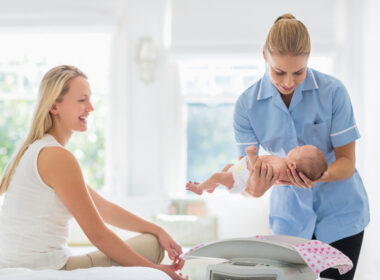
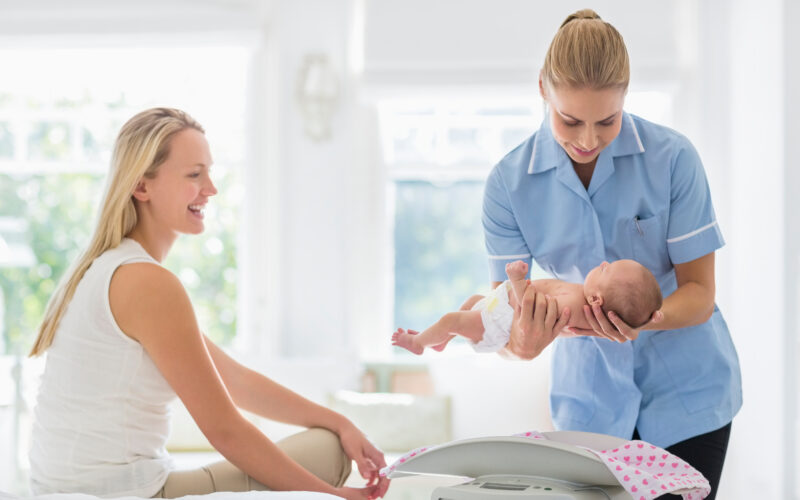
Each of the above is a high-end postpartum care center. At the average center, new mothers (partners welcome, but no older children, at most places) have access to round-the-clock nursery care, as well as “newborn care specialists,” lactation consultants, perinatal mental health counselors, and postpartum doulas. These professionals care for both mom and baby, answer questions, and teach infant CPR and other classes.
Expect sticker shock at a postnatal retreat
Also called postnatal retreats, postpartum retreat centers run mostly north of $1,000/night, and most have a three night minimum.
Between 2023 and 2025, Сайт New Yorker, Allure и Vogue each profiled a postpartum retreat center. Сайт New Yorker article took place in a Taiwan postpartum center, while the other two articles were about domestic postpartum retreats.
Сайт Allure writer paid $850/night for a 3-day stay in a Boram Care en suite after being discharged from the hospital (Boram has since pivoted to in-home postpartum care).
Сайт Vogue author spent several nights in an Ahma & Co suite two weeks after giving birth. (While an early December 2025 Peacock Parent article reported that Ahma & Co runs $1,625/night and has a three-night minimum stay, as of late December 2025 the retreat website quoted $1,740/night for 3-6 nights, with discounts for 7-13 night, 14-30 night, and 31+ night stays)
Many postpartum retreats are located inside high-end hotels or resorts
Just what does that sky-high sticker price get you? In addition to access to various infant- or maternal-care professionals, postpartum retreats include luxury accommodations, from nutrient-dense, chef-prepared meals to massages, facials, and yoga classes. Contrary to what one might think, postnatal centers are not typically standalone clinics but are instead often located in a dedicated wing of a high-end hotel or resort (The Shoshana in Philadelphia is an exception, with a dedicated facility of its own).
At the Ahma & Co. postpartum retreat wing of the Waldorf Astoria Monarch Beach Resort & Club in Dana Point, California, for instance, women who stay 3-6 nights pay $1,740/night and receive access to: “24/7 expert support for postpartum recovery, lactation, and personalized newborn care & education, freshly prepared meals, tonics, and snacks for mom, curated for postpartum nutrition, therapeutic services including massages, sitz baths, and foot soaks, Daily workshops and social hours in Parent Lounge to build your village, Baby Lounge, always staffed and equipped with baby monitors, Luxury resort amenities, including full-service spa and beachside golf.”
Postpartum care centers in the U.S. are patterned after centers in South Korea, Taiwan
Boutique postpartum retreats in the United States are patterned after centers in other countries, especially South Korea and Taiwan, where an estimated 50%-75% of new mothers spend some length of time after giving birth.
The philosophy behind these centers stems from the Chinese concept of zuo yue zi, which translates to ‘sitting the month.’ Zuo yue zi refers to a traditional period of postpartum confinement during which the new mother was expected to stay inside, away from the cold and germs, resting and recovering for her baby’s first 30-40 days.
According to the 2024 New Yorker article, written by a Taiwanese-American woman who spent an entire month in a Taiwan postpartum hotel, “an old folk saying sums up this attitude: ‘During pregnancy, nurture the baby. After pregnancy, nurture your body.’”
Ahma & Co co-founder Esther Park, herself raised in South Korea, told Vogue, “Maternal care [in the U.S.] is focused on pregnancy and birthing. After you give birth, attention immediately shifts to the baby, and moms are left to fend for themselves.”
Сайт Vogue article quoted psychologist and researcher Bridget Freihart, who observed, “Throughout human evolution, new mothers were surrounded by a robust community, not just after giving birth, but in the years that followed. Because modern American society is fundamentally fragmented and highly individualistic, it’s extremely difficult to recreate these supportive conditions.” Unsurprisingly, postpartum mood and anxiety disorders (PMADs), including postpartum anxiety, depression, OCD, and more, are on the rise, and postpartum retreat centers are one (pricy) attempt to recreate the village.
But do postpartum care centers overcorrect, preventing mom-baby bonding?
While postpartum care for the mother isn’t just a nicety but a necessity, do postpartum centers throw out the proverbial baby with the bathwater? Comments on a Hear Her Stories Instagram почта about South Korean postpartum care centers raised concerns about whether they overcorrect, centering maternal rest and recovery at the expense of mom-baby bonding. As one commenter wrote, “I don’t think that’s a thing to be followed, that mothers ‘rest’ while aliens for the newborn take care of the baby. The baby needs the mother and the mother needs support, but not in a facility.”
Another opined [sic], “As someone who lives here its really not as good as what it seems. You have visiting hours for your baby, you cant see them when you want [whilst] they are kept in a separate area to you, and they are formula fed. They babies are washed straight away also so while the care is good for the mother its not a process that allows natural bonding between mother and baby.”
Reality may not be far from the comment section, at least for women who spend weeks on end in a postpartum retreat. In the New Yorker article, the author acknowledged that as time passed, “I was learning a few tricks from the staff, but they did everything for me, and they were better at it. About three weeks in, I began to feel claustrophobic.”
Reflecting back on her experience, the upside was that “Though I didn’t fully understand it at the time, staying at a postpartum center gave me a chance to catch my breath between transitions, before diving into the marathon of parenthood.” At the same time, when the time came to leave, she lacked confidence in her own parenting abilities because, “The hotel had absolved me of responsibility for my son, which created an emotional chasm; its rigid routines had stopped us from learning about him as an individual.”
Where does this leave the rest of us?
For most newly postpartum mothers, at this time, a postpartum retreat is out of geographical–not to mention financial– reach. Fortunately, having a positive postpartum experience doesn’t have to be. Facilitating a new mother’s physical rest and healing (including working with a физиотерапевт тазового дна!), nutritional replenishment, и mental and emotional wellbeing are all steps in the right direction. Additionally, ensuring adequate sunshine, community support, and breastfeeding support are also key.
For most newly postpartum mothers, at this time, a postpartum retreat is out of geographical–not to mention financial– reach. Fortunately, having a positive postpartum experience doesn’t have to be. Facilitating a new mother’s physical rest and healing (including working with a pelvic floor physical therapist!), nutritional replenishment, and mental and emotional wellbeing are all steps in the right direction. Additionally, ensuring adequate sunshine, community support, and breastfeeding support are also key.
Being aware of the emotional signs and symptoms that a new mother needs to get help (including emergency help) is another piece of the puzzle. Transitioning into the role of mother (even if you have an older child or children) isn’t easy, and new mothers сделать have real needs. When we help them in the context of their own homes and families and lives, we promote both mother and baby’s wellbeing. And that doesn’t require high thread-count sheets.